AI & Robotics – from smart tools to smarter ways of working
AI has become a prerequisite for staying competitive. The technology is advancing rapidly and contributes to increased efficiency across all operational areas.
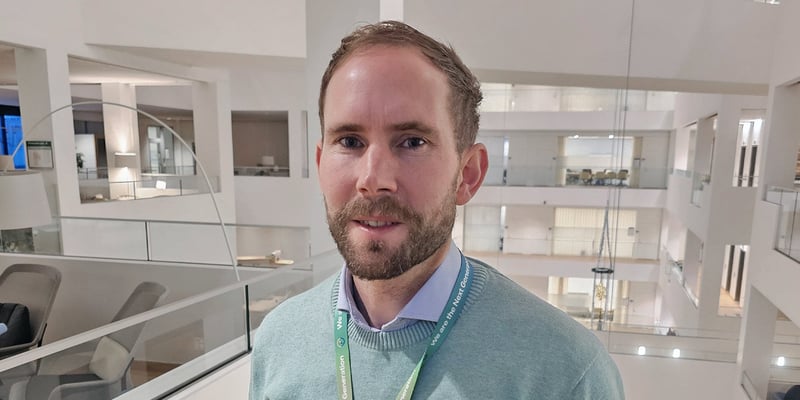
Dag Wästlund, Section Manager, Data Science & AI at Vattenfall R&D.
Through innovative solutions, there is significant business value to be gained – an area where Vattenfall is investing broadly. From production and distribution to customer relations and consumption patterns, AI is present in all parts of Vattenfall’s operations. The business value is clear; more efficient processes, time savings, increased employee safety, higher customer satisfaction, and faster, more accurate analyses.
As technology advances, Vattenfall also sees a growing need to understand how to integrate with existing systems and how to pre-prompt language models – that is, prepare them for users’ questions. This is crucial for employees to quickly and easily access relevant information or guidance on the next step in solving a problem.
This is just the beginning. Right now, the focus is on collecting information for our algorithms and AI models with the goal of streamlining processes and workflows throughout the entire value chain.
Chatbots increasingly important
Chatbots are becoming an increasingly important feature and have several areas of use. Vattenfall is for example currently developing various types of language model systems that enable engineers to quickly get answers to questions about previously performed service and maintenance on power plants. This simplifies the work and preserves knowledge within the company – something that becomes especially valuable during generational shifts and personnel changes.
“The goal is to collect data from previous documentation and inspections carried out on our hydro power plants. With the help of language models, our employees can quickly get an overview and receive step-by-step guidance for potential repairs or when planning upcoming work,” says Dag Wästlund, Section Manager, Data Science & AI at Vattenfall R&D.
Predictive analytics
An important application of AI is predictive analytics. By collecting and analysing data from power plant equipment, Vattenfall can forecast when equipment will wear out, plan maintenance, and thereby avoid operational disruptions while also extending hardware lifespan and reducing cost. For hydro power plants, this is especially relevant as they function like large “batteries”. When electricity production exceeds demand, the plants can pause production and store water in reservoirs to be quickly restarted when demand rises again, which places new demands on service and cost tracking.
Enhanced customer interaction
Self-service options have been available in customer service for over a decade. Despite this, many customers still prefer human interaction. Vattenfall’s sales business have developed the chat bot Nina, which initially handled simple queries. Nina is now being upgraded to better understand customer situations and respond with empathy.
“This upgrade aims to improve the customer experience by increasing the share of cases resolved by the bot. It currently stands at 20–30 percent, with a goal to reach 40 percent in the coming years. The transition is expected to reduce contact centre volumes and shorten handling times before calls are handed off to a human agent,” says Bernard Steenbergen, Head of Service Operations, Customers & Solutions at Vattenfall in the Netherlands. “Currently, customer calls take on average 10–13 minutes, and the goal is to reduce that by 20 percent.”
Robot development is advancing rapidly, and they are becoming increasingly human-like. Soon, we will have robots operating in the physical world that can assist us on an entirely new level – in an environment we are familiar with.
Robots make their entrance
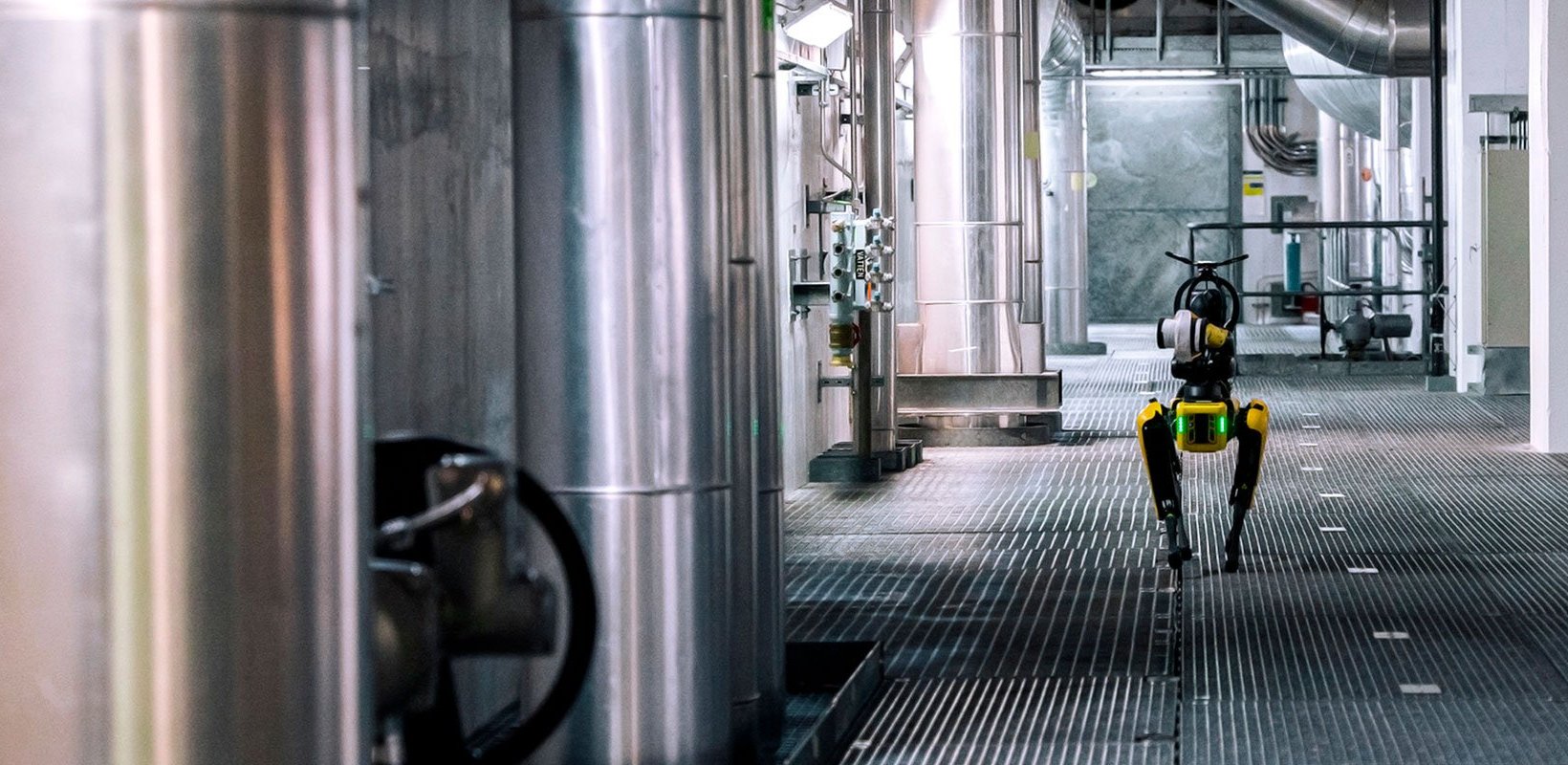
As AI continues to develop, we will also see robots capable of performing high-risk tasks, such as tunnel inspections and welding. Robots can also be used in solo work situations, where a robotic colleague can monitor and alert in case of an accident. Vattenfall is currently conducting tests with the robot dog Spot, developed by Boston Dynamics, to carry out inspection tasks at the Forsmark nuclear power plant.
At power plants with long travel distances, we see future opportunities for robots to perform service work and inspection rounds via remote control. They can independently resolve issues without compromising employee health or safety – for example, during bad weather.
“Robot development is advancing rapidly, and they are becoming increasingly human-like. Soon, we will have robots operating in the physical world that can assist us on an entirely new level – in an environment we are familiar with,” says Dag Wästlund.
Accelerating AI adoption and learning
Vattenfall has successfully rolled out 6,000 Copilot licenses, with 90 percent of licensed employees actively using the tool – an impressive adoption rate. To support this rollout, the company launched the learning journey Me, Myself & AI in 2025.
“The initiative is the result of close collaboration between our IT and Learning & Development teams. It enables employees to upskill and explore AI capabilities more effectively, and the response has been very positive”, says Frida Monsén, Strategy & Portfolio, Learning & Development Vattenfall.
Text by Sandra Widh.
Learn the full story
Download and read our Annual and sustainability report 2025.
More highlights from the report