We deliver and stay the course in a complex world
2025 was a year of sudden shifts. The energy market was characterised by turbulence and geopolitical unrest. Though ambitious climate goals remain steadfast, the pace of the transition varies.
When things change, it is important to find a way forward – together with customers and partners. Vattenfall is determined to continue driving the transition to a fossil-free society – for our customers, for Europe’s competitiveness and for future generations.
During the year, we continued to advance our strategy: enabling people and businesses to become fossil‑free – and doing so in a way that is also sound from a business perspective. For us, this is not a separate sustainability plan, but the very core of our business. We invested SEK 30.4 billion and increased our electricity generation by 3%. Overall, we delivered a solid financial result for 2025.
The cost of energy determines Europe’s competitiveness. The EU still imports around 90% of its fossil fuels, making energy both a matter of cost and security.
Excluding items affecting comparability, the return on capital employed was 10.2% (5.4% in 2024) and was influenced by improved development of price hedging in Vattenfall’s continental markets and a higher contribution from nuclear operations. We continue to have a strong capital structure and the financial key ratio FFO/AND amounted to 53.4% (41.5% in 2024). This creates resilience and the ability to make profitable investments when opportunities arise. Since 2017, we have reduced greenhouse gas emissions from our own operations by 73% and are now taking the next step in our supply chains.
We have created value and results by investing in new capacity, flexibility and competitive offerings for our customers. At the same time, we have focused on keeping our existing assets and facilities in good condition. This is the foundation for continuing to grow profitably while reducing emissions, both for ourselves and for our customers. Another priority is our ability to quickly adapt to changing market conditions.
I am very proud of the commitment and competence that our employees have shown – and the genuine ’can do’ attitude that makes a difference when conditions change rapidly.
Low climate impact increases competitiveness
The cost of energy determines Europe’s competitiveness. The EU still imports around 90% of its fossil fuels, making energy both a matter of cost and security. Compared to countries that have large domestic energy reserves, such as the US and China, fuel costs in Europe are significantly higher. When we replace fossil fuels with fossil-free electricity – from nuclear power, wind, water and solar – we reduce vulnerability, strengthen competitiveness and lower running costs in the long term.
This shift is a development in society that requires courage, collaboration, perseverance and, not least, investments for a fossil‑free future here and now. It is not about adding these initiatives on top of existing investments, but about investing in fossil‑free solutions instead. In the ongoing electrification and this new era of industrialisation, Vattenfall has a key role to play. Fossil‑free electricity is not just a question of the climate, it is a competitive advantage.
Leading role in the transition
Vattenfall is one of Europe’s leading energy companies. We have been involved in driving development through every industrial shift since the early 20th century. Now we are doing it again – and it has never been more important. It is our goal to be a strategic partner that drives value in the transition, for both private customers and companies. Our starting point is our customers’ specific needs and business challenges, and we support them on their journey with solutions that are smart, affordable and sustainable.
Our employees, with 94 different nationalities, are our greatest asset. We are building a culture in which everyone is included, where performance and feedback are part of everyday work and where diversity drives business value. During the year, we have been recognised for consciously working in this area. Among other things, Vattenfall was named a leader in diversity by the Financial Times’ Statista European Diversity Leaders Ranking.
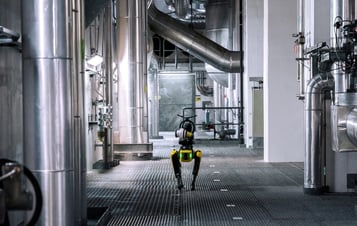
AI and digitalisation are an integrated part of our entire business and an area where Vattenfall is investing broadly. The business benefit is clear. It makes for efficient processes, increased safety for our employees, increased customer satisfaction, and faster and more precise analyses in operations.
By spreading risks geographically and across different types of business activities, we are also able to maintain the investment pace required.
The strength of an integrated energy company
Our diversified and integrated business model makes a difference along the entire value chain, making us resilient and robust when the market fluctuates. Vattenfall has twelve million customers in seven markets, generates approximately 100 TWh of electricity annually and provides critical energy infrastructure, charging networks and energy services.
By spreading risks geographically and across different types of business activities, we are also able to maintain the investment pace required.
Investments for future energy needs
From 2026 through 2030, we plan to make significant investments, SEK 165 billion, of which 56% are growth investments. We will make these investments in, for example, fossil-free electricity generation, electricity grid expansion, and storage solutions.
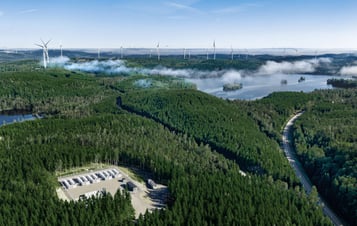
Among the main projects, final investment decisions have been made for the offshore wind farms Nordlicht I and II in Germany and the onshore wind farm Clashindarroch II in the UK. The Zeevonk project in the Netherlands, with offshore wind and solar power, has developed successfully and is now planned to be built in two phases.
On the journey towards new nuclear power in Sweden, we have decided to move forward with two suppliers of modular reactors, American GE Vernova and British Rolls‑Royce SMR. With the industrial consortium Industrikraft, we have taken important steps forward and, among other things, started the project company Videberg Kraft AB. This sends a strong signal that we are taking the demand for new fossil‑free electricity seriously – and that the industry is ready to take the lead.
We have also increased our investments in the distribution operations to strengthen the electricity grids and ensure quality of supply in Sweden. Our investment plan for the next five years allocates SEK 47 billion to this area, enabling new housing and electrified industry as well as supporting the expansion of charging infrastructure and renewable energy. At the same time, we are introducing smart flexibility services for more efficient use of the grid.
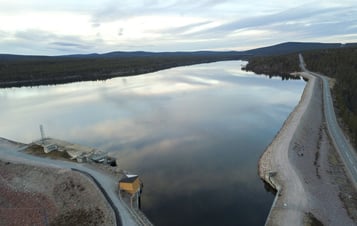
Furthermore, we have initiated important investments in hydro power, including SEK 630 million to increase the capacity of the Harsprånget hydro power plant in the Lule River. We have also ordered the world’s first dam gate made of fossil‑free steel from SSAB for the Stornorrfors hydro power station.
Thanks to our competitive offers, more customers have chosen us as their electricity supplier in the Nordic region. In addition, we are expanding in the area of charging solutions for electric vehicles, where, for example, the city of Hamburg has appointed Vattenfall as a partner in its new public charging network.
The global situation poses challenges, but our direction is clear: our goal of fossil freedom remains firm.
A robust energy system
A stable energy system requires robust electricity grids, a balanced mix of fossil‑free energy sources and storage capacity. Flexibility, both locally and centrally, is also important for achieving increased resilience in the system as a whole.
Our Nordic hydro power plants combine baseload power and flexibility in a way that is unique. To meet market needs, we are now running four expansion projects that together can provide nearly 650 MW of additional capacity by the 2030s. This is a tangible example of how we are strengthening the system, while the transition is underway. Even within nuclear power, work is progressing on developing flexible operations to balance energy systems over days, weeks or longer periods.
Energy storage is provided both through Swedish hydro power and German pumped storage. Large-scale batteries, often in combination with wind and solar power, also play a significant role and we are seeing new business models emerge in this area. During the year, we have entered into three new agreements in Germany and the Netherlands for services related to flexibility and optimisation of battery storage solutions.
Continued clear direction
The global situation poses challenges, but our direction is clear: our goal of fossil freedom remains firm. With profitable investments, more efficient ways of working, and important collaborations, we are creating value for customers, owner, partners and the climate – and thus for society at large.
We have a good business model and the right conditions to continue driving the transition towards a fossil‑free society. It is the courage, commitment and openness of our employees that drives Vattenfall forward on the journey towards a competitive and future‑proof Europe.
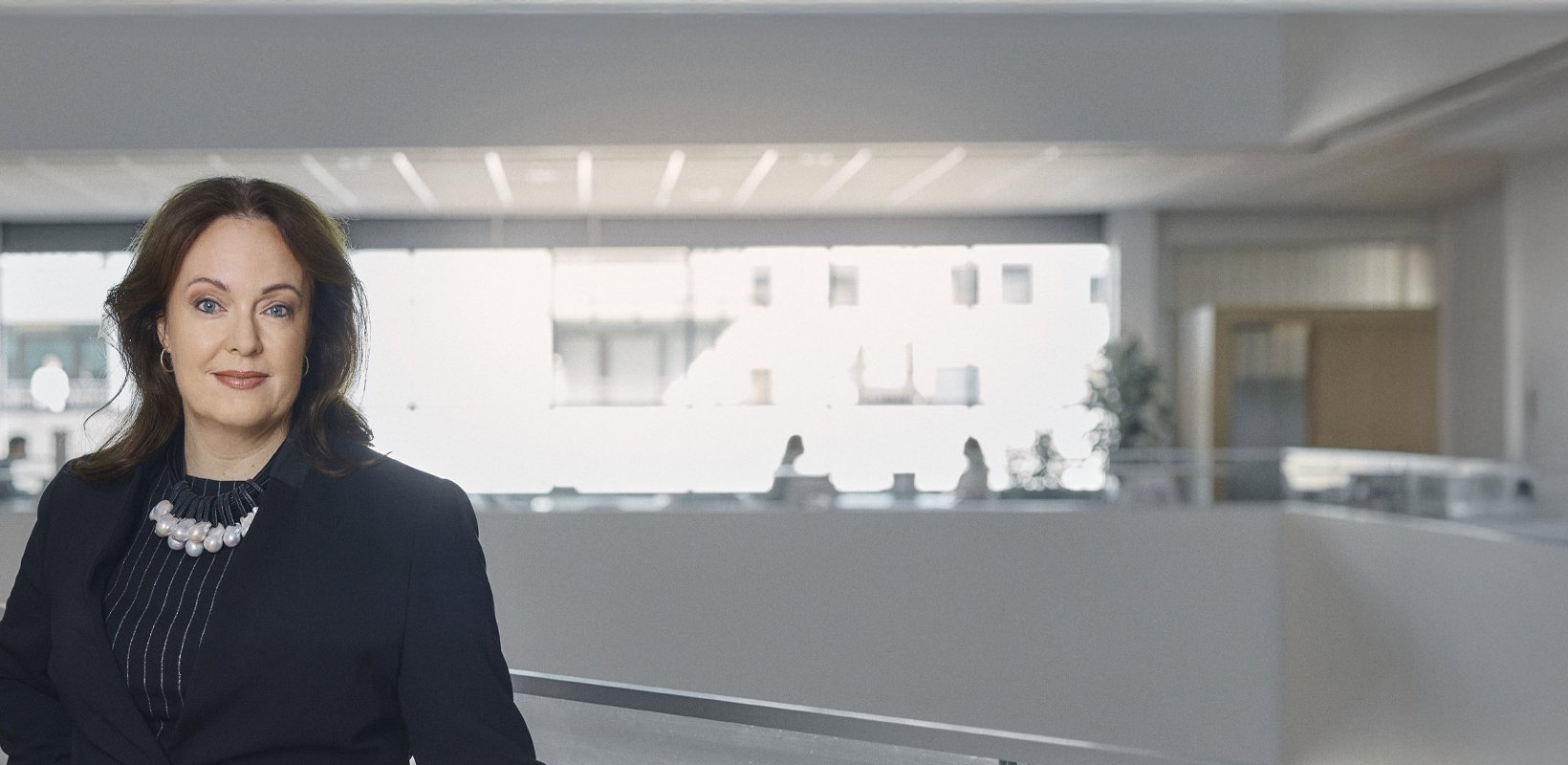
Anna Borg,
President and CEO
Learn the full story
Download and read our Annual and sustainability report 2025.
More highlights from the report