From waste to value: circular innovation in wind energy
As the energy sector is transitioning to fossil freedom, circularity is becoming a key driver. Vattenfall is championing this evolution by embedding circular principles throughout the whole wind farm lifecycle.
The transition to a circular economy is an opportunity with renewable energy playing an important role in driving it forward. As one of Europe's major electricity producers, Vattenfall is a contributor to this shift toward a more resource-efficient future.
A life-cycle approach to circularity
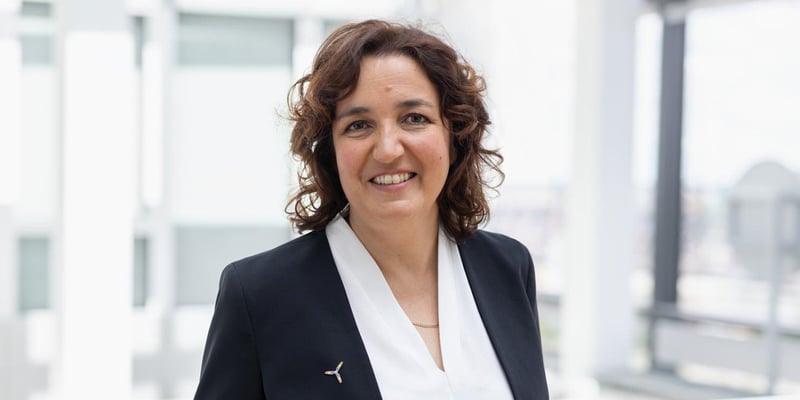
Catrin Jung, Head of Business Area Wind.
Today, 85–90 percent of a wind turbine is recyclable. Vattenfall aims to push this further by designing assets for longevity, sourcing sustainable materials, and prioritising reuse, refurbishing, repurposing and recycling.
By 2030, the company is advancing to target 100 per cent circular outflow of turbine composite materials such as blades, nose cones and nacelle covers. In addition, Vattenfall is supporting this ambition by enforcing an immediate landfill ban on these components.
“Circularity is not just good for the planet – it is essential for building resilient, future-proof renewable energy systems. Whether it is onshore wind, offshore wind, solar or batteries, reusing designs, refurbishing and repurposing components, and recycling with intent help us reduce waste, lower costs and strengthen supply chains. It is how we meet stakeholder expectations and deliver responsible energy for generations to come”, says Catrin Jung, Head of Business Area Wind at Vattenfall.
Circularity is not just good for the planet – it is essential for building resilient, future-proof renewable energy systems.
Permanent magnets: a new frontier
Further to turbine composite materials, Vattenfall has committed to achieving a 100 per cent circular outflow of permanent magnets from decommissioned wind farms from 2030 onwards. This marks Vattenfall as the first developer to commit to a detailed circular economy target for these components. The magnets, essential for direct-drive turbines, contain rare earth elements that are both valuable and environmentally sensitive. Each turbine contains between one and eight tonnes of these magnets. One tonne of permanent magnets would be sufficient for use in approximately 20,000 standard home loudspeakers.
This initiative supports the EU Critical Raw Materials Act, which aims to make the EU more self-reliant in the mining, processing and recycling of critical metals and minerals, to protect the region from increasing international competition for resources.
“Our ambition is to preserve material value, reduce waste and drive responsible sourcing across the entire life-cycle of our technologies. By setting clear circular targets for turbine permanent magnets and composite material, we are not just managing materials – we are building a more resilient, sustainable future for wind energy”, says Eva Julius-Philipp, Director of Environment & Sustainability at Vattenfall Business Area Wind.
Strategic industry partnerships
To further achieve significant waste reduction and material preservation, Vattenfall has formed strategic partnerships with the French company Caremag and the North American company Cyclic Materials, both of which bring advanced recycling capabilities and innovative technologies for recovering rare earth elements.
“The partnerships will offer valuable insights that will enhance industry collaboration and promote broader circularity,” says Anna Krakowinska-Dinis, Business Development Manager, Partnerships at Vattenfall.
From blades to skis: creative recycling
One of Vattenfall’s most compelling examples of circular innovation is the transformation of rotor blades into skis. When the Irene Vorrink wind farm in the Netherlands was decommissioned, Vattenfall partnered with the Norwegian recycling company Gjenkraft to recycle the carbon fibre from decommissioned rotor blades. High-performance skis were manufactured by the company EVI Ski, turning industrial waste into consumer products. This project not only diverted composite materials from landfill, but also triggered innovative solutions and highlighted the potential for cross-border collaboration to foster circularity.
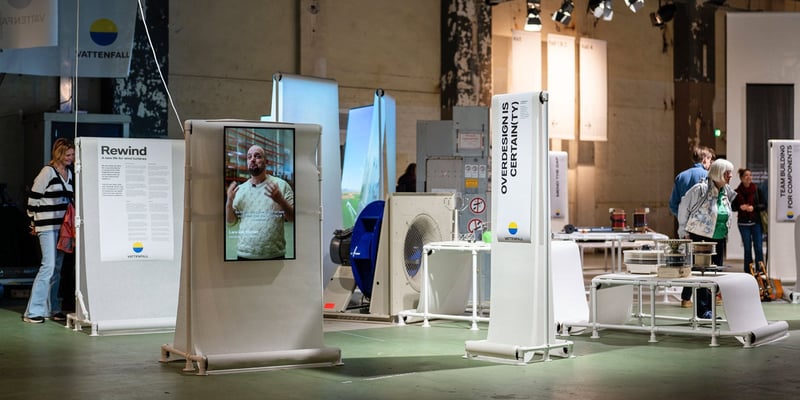
Vattenfall’s Rewind exhibition at Dutch Design Week 2025.
Innovative showcases at Dutch Design Week
Another standout initiative project that exemplifies how circularity can go beyond recycling to include repurposing and redesign is the conversion of a wind turbine nacelle into a fully functional tiny house. Unveiled during Dutch Design Week (DDW) 2024, the 35-square-metre home retains the original fibreglass shell of the nacelle, making it lightweight and waterproof. It is equipped with a heat pump, solar panels and second-hand furnishings.
At DDW 2025, Vattenfall presented *Rewind*, an exhibition showcasing creative ways to repurpose wind turbine components. Visitors could interact with an AI‑powered tool that visualised potential new applications for turbine parts.
Circularity drives resilience
By turning waste into value, Vattenfall is redefining wind farms’ life-cycle. Circular innovation strengthens supply chains, reduces environmental and social impact, and supports fossil freedom.
Circular economy framework for 2030
Vattenfall’s circularity strategy is built on four interconnected pillars.
- Circular sourcing – collaborate with suppliers to secure future resource availability and reduce consumption.
- Circular assets – embed circularity into design and management of assets to reduce resource use, extend asset life and recycle valuable materials and resources.
- Circular innovation – partner to develop new business models and reimagine customer offerings.
- Circular capabilities – build circular awareness and capabilities within the organisation.
Text by Sandra Widh.
Learn the full story
Download and read our Annual and sustainability report 2025.
More highlights from the report