
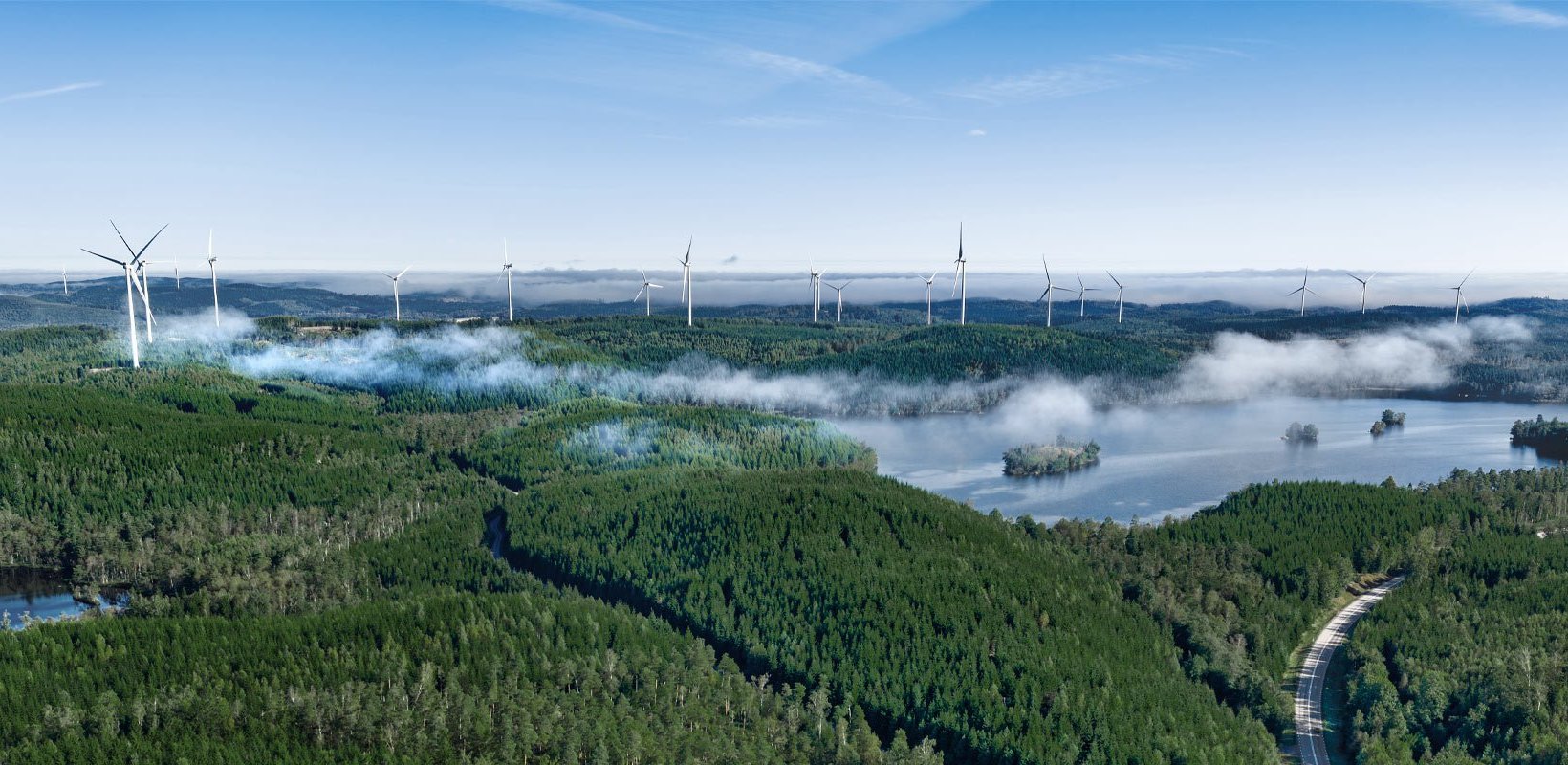
Flexibility enables a fossil-free energy system
In today’s evolving energy landscape, renewable sources are playing an increasingly prominent role. While this shift is essential for achieving fossil freedom, it also introduces greater volatility. To ensure a resilient and robust energy system, flexibility is becoming more critical than ever.
The ability to adjust electricity generation or consumption in real time to keep supply and demand balanced has always been vital in power markets. Traditionally, this has been provided by fossil-based peak production and hydro power. As fossil assets are being phased out and renewables are rising, new and additional sources of fossil-free flexibility are needed.
Wind and solar power are able to offer flexibility when conditions allow, but during low production periods, additional solutions must step in to secure a stable electricity supply. Vattenfall is expanding and optimising its flexibility portfolio across the value chain to navigate these fluctuations. While conventional hydro and pumped hydro can cover the entire range of flexibility needs, batteries can help dealing with short term flexibility needs.
We also develop offerings to unlock flexibility together with our customers, for example smart charging, vehicle-to-grid, electrification of heat and steam production. These various solutions keep supply and demand in balance and act as hidden infrastructure that relieves pressure on constrained networks. They also limit curtailment, lower imbalance costs, and let customers benefit from low – and sometimes negative – prices when renewables are abundant.
“Flexibility is not just essential to a fossil-free energy system – it is the key to building resilience and robustness, enabling smarter energy use, and accelerating the transition toward a sustainable future”, says Annika Ramsköld, Head of Sustainability at Vattenfall.
The challenge of weather-dependent energy
As the share of renewable energy increases, these fluctuations become more pronounced, causing short-term over- or undersupply in the electricity market. This variability demands greater flexibility from power grids and plant operators to maintain stability and meet market demands. Large-scale batteries and pumped storage power plants are used to provide flexible power with pinpoint accuracy. Artificial Intelligence also plays a crucial role in optimising energy production and adjusting it according to short-term market signals of supply and demand.
The power of an integrated utility model
As an integrated utility, Vattenfall’s operations spans generation, optimisation and trading, distribution, sales, services, and flexibility – a model supporting rapid scaling of renewable energy and flexibility solutions. By coordinating investments in wind, solar, hydro, batteries, and smart grids, and by optimising activities along the value chain, Vattenfall can decarbonise not only its own operations but also those of industrial partners and communities.
“Being integrated enables us to act across the entire energy value chain with flexibility connecting the dots. This holistic approach gives Vattenfall a strong position and a competitive edge on the energy market”, says Sjur Jensen, Head of Business Area Markets at Vattenfall.
Energy storage – an important pillar
Energy storage, such as hydro reservoirs, is the cornerstone of a flexible energy system, and hydro power currently represents Vattenfall’s largest capacity source.
“The Nordic hydro power has a unique combination of large scale, base load and flexibility, which we believe will become even more valuable in the electricity system. Therefore, we are running four expansion projects with a possible addition of nearly 650 MW into the 2030’s”, says Lovisa Fricot Norén, Head of Business Unit Hydro Nordic.
Battery storage solutions are rapidly growing. Vattenfall has already several co-located assets in operation where the battery storage shares a grid connection with a wind or solar farm. Next to that Vattenfall is also working on standalone batteries.
“Hybrid projects are the new normal for us. It is no longer a question of whether to add a battery to a solar park, but how large that battery should be”, says Nicola Kleihues, Director Portfolio & Asset Management, Business Area Wind.
Demand response
Another important piece of the puzzle is demand response, which allows consumers to adjust their electricity usage based on grid conditions or price signals and to shift consumption to off-peak hours when demand is low. In this way, Vattenfall’s customers can make use of fluctuating prices. Industries can optimise production schedules or reduce output or stockpile materials to avoid high-price periods, and households can shift usage to non-peak times making more effective use of electric vehicles and heat pumps.
To enhance grid flexibility, Vattenfall Eldistribution is for example offering conditional agreements to a limited number of large customers encouraging them to adjust their electricity use when the grid is under pressure.
New business models evolving
As flexibility grows in importance, new business models are emerging. In May, Vattenfall and Swiss company terralayr signed a usage agreement for a “Multi-Asset Capacity Toll” – a distributed network of battery storage systems. Developed and bundled via a flexibility platform, the seven-year contract covers 55 MW across eight German sites. Vattenfall will optimise part of the capacity in energy trading. “Tolling” means Vattenfall rents the capacity at a fixed price.
That same month, Vattenfall signed an eight-year agreement with energy storage company Return to operate a large-scale battery park (50 MW output, 100 MWh capacity) in Waddinxveen in southern Netherlands connected to the transmission system operator TenneT’s high-voltage grid in the area. The battery will be integrated into Vattenfall’s automated trading processes providing flexibility where it brings the greatest benefit to the electricity market.

Learn the full story
Download and read our Annual and sustainability report 2024.
More highlights from the report


