
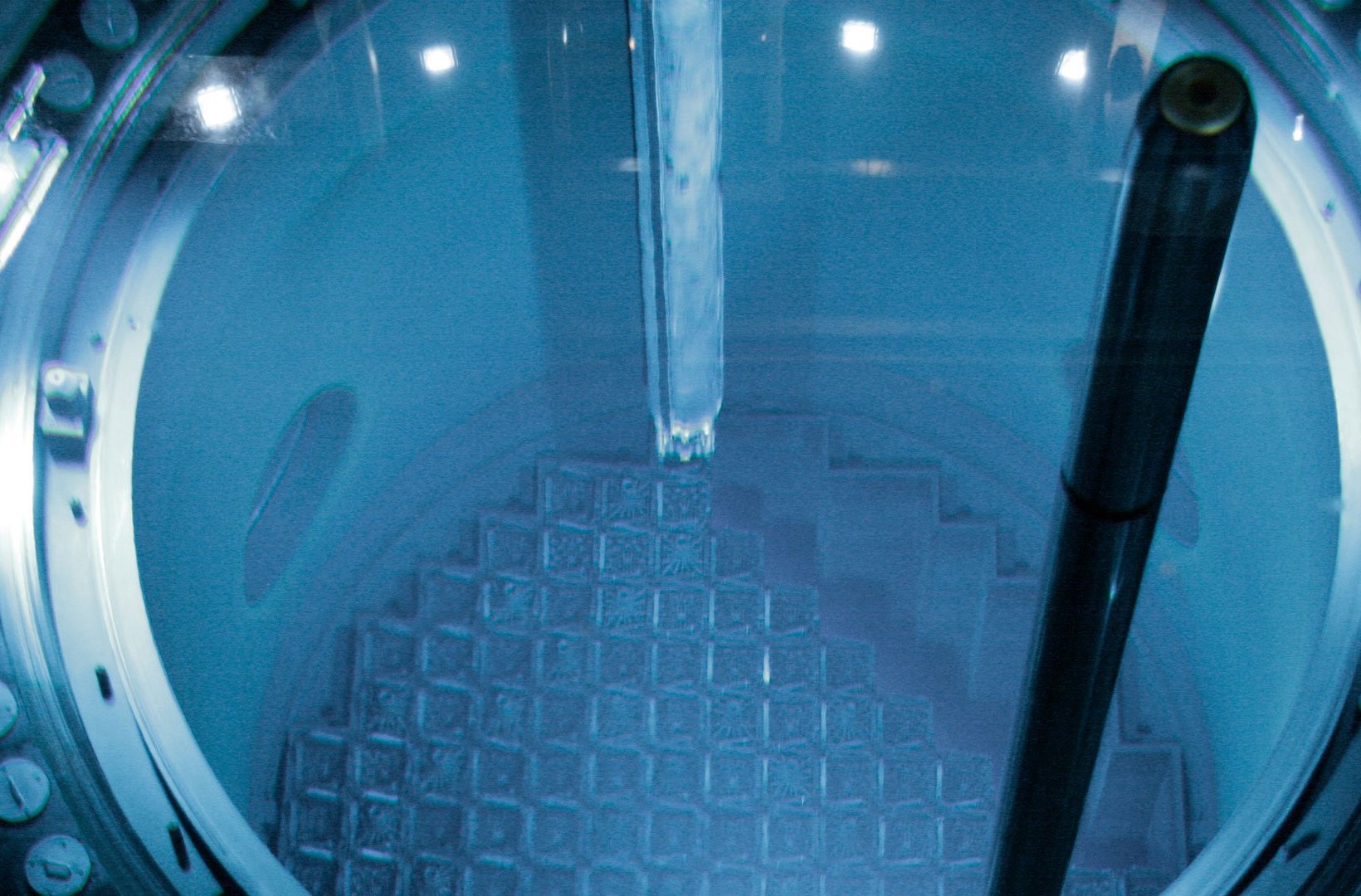
Vattenfall takes part in Estonian pilot study on small modular reactors
New technology can help to reduce Estonia's fossil dependence and give Vattenfall new knowledge.
The Estonian development company Fermi Energia is currently conducting a pilot study to investigate the possibility of building a so-called SMR reactor in Estonia. SMR stands for small modular reactor. Among other things, the pilot study will investigate how far the development of SMR technology has progressed, cost conditions, licensing and, in general, what future there might be for such a reactor in Estonia.
The background is that Estonia has the EU's highest carbon emissions per kilo watt hour of electricity generated. As comparison, the emissions in Vattenfall’s home country Sweden are among the world's lowest. Sweden's electricity generation is today basically fossil-free, thanks to the combination of hydro power, nuclear power and wind power.
Important climate measure
The pilot study work involves Vattenfall but also Fortum and several others. Interest in small-scale reactors has increased in recent years. The question is how mature the technology is, and whether it is ready to be licensed. Everyone participating in the pilot study work is contributing their skills and in exchange gaining more knowledge of how SMR technology could work in practice.
Torbjörn Wahlborg, Head of Vattenfall's Business Area Generation
"This is a way for us to understand how far the development of SMR technology has come. Estonian electricity generation is based to a large extent on oil shale, which is the most carbon-dioxide intensive raw material that exists. A shift in Estonia's electricity generation would be an important climate measure for the whole EU," says Torbjörn Wahlborg, Head of Vattenfall's Business Area Generation.
Following developments
Mats Ladeborn, Head of the Fleet Development department in Vattenfall's nuclear power operations, says the cooperation with Fermi Energia is a matter of gaining more knowledge in one of Vattenfall's many development areas.
Mats Ladeborn, Head of the Fleet Development department in Vattenfall's nuclear power operations
"Fossil-free is a watchword for everything we do. Nuclear power has very low carbon dioxide emissions and can contribute to reducing the use of fossil fuels in the EU. The development of small-scale nuclear reactors looks promising for us, and of course it's interesting to follow technological developments in all the types of power sources we ourselves use for generating electricity," he says.
Read more about how Vattenfall is working to reduce fossil dependence in the company and beyond
See also
Huge road and tunnel project in the UK aims to reshape construction for the future
Construction is one of the hardest sectors to decarbonise. But in the UK, a major infrastructure project aims to reach carbon neutral by using electric machinery and low‑emission materials.
Rethinking cement: cutting emissions at the source
Cement is one of the world’s most widely used construction materials – but also one of the largest sources of emissions. That insight marked the starting point for Swedish company Cemvision,...
IQIP, EnBW and Vattenfall announce full-scale offshore monopile installation using EQ‑Piling technology
IQIP, EnBW and Vattenfall: Offshore installation of a complete monopile using EQ-Piling technology