
- Pumped storage hydropower has become increasingly important as weather-dependent generation has grown.
- Algorithms continuously optimise pumping and generation based on prices, forecasts and plant conditions.
- Vattenfall's six pumped storage plants in Germany provide fast, flexible capacity to stabilise the grid.
- Automation support operations, while human oversight ensures safe and reliable performance.
Pumping water for hydro power production has been done for decades. But new algorithmic tools are now making this method even more valuable for grid stability.
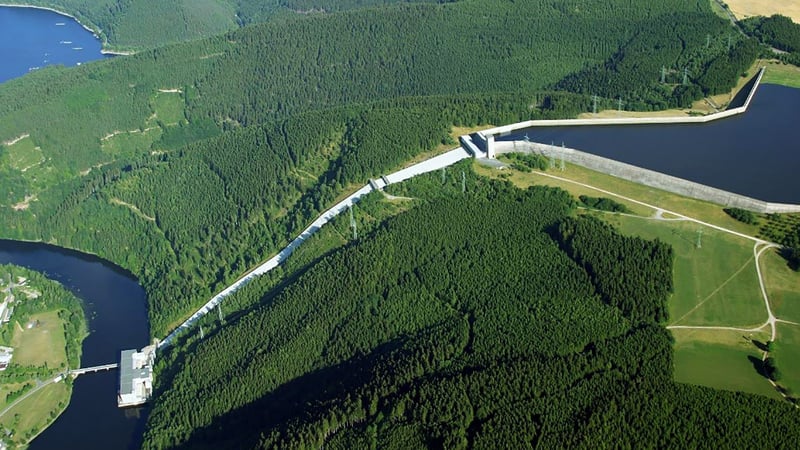
The Hohenwarte II pumped storage plant in Thuringia, Germany. The upper reservoir is an artificial lake which can hold around three million cubic metres of water, enough for the turbines to run at full load for seven hours.
At first glance it may seem wasteful: using electricity to pump water uphill, only to release it later to generate electricity again — albeit with some energy loss. Yet with modern automation and smarter scheduling, pumped storage hydropower has become one of the most versatile assets in a renewable heavy energy system.
Vattenfall owns and operates six pumped hydropower plants in Germany. For many years the operating schedule was straightforward: pump at night when electricity prices were low and generate during the day when they were higher.
Today the system is far more complex. Coal and nuclear capacity has been phased out (nuclear entirely), replaced mainly by wind and solar. Output now varies with the weather, placing greater demands on pumped hydro stations.
A new plan every 15 minutes
Jörg Seidel, who heads the intraday trading and optimisation for Vattenfall’s continental operations, explains how this plays out:
“Today, and especially in summer, solar pushes prices very low around midday, sometimes the prices are even negative. This means we often have two cycles per day: we pump at night, generate in the morning, pump again at noon, and then we generate again in the evening. Adding to that, turbining is often partial, you may want 70 per cent output on a certain time of day, 80 percent the next moment, and so on."
“These small adjustments of the output happen constantly across all the assets and are done every 15 minutes, meaning 96 times per day. Doing that planning and calculation manually would be totally unmanageable.”
The solution is algorithms. They consider all relevant factors — market prices, weather forecasts, reservoir levels, the condition of pumps and turbines, and technical constraints — and recalculate optimal plans for every plant roughly every minute.
The first version, introduced in 2018, was simple: it could only buy or sell the output of a turbine already running. Later, pumps, start–stop decisions and mode switching were added. Today, nearly all operational decisions in the German hydropower portfolio are made autonomously, with the algorithms also placing bids for the next 15 minute market interval.
Huge provider of flexibility
Vattenfall’s German pumped storage hydropower stations form a powerful six pack of assets. Together they deliver 2,500 megawatts — comparable to two large nuclear plants — but with the ability to ramp output up or down within seconds to keep the grid balanced. They act like giant batteries, able to supply power for up to ten hours before needing to recharge.
“Pumped storage hydro is one of the biggest flexibility providers to the German electricity grid,“ says Brit Gericke, Head of Algorithms and Optimisation, who leads a team of 13 specialists responsible for designing the algorithms.
“With these algorithms, we can provide flexibility in every 15-minute period of the day, compared to only a few times per day when planning was made manually.”
The algos make it possible for the plants to deliver both active power and ancillary services — the supporting tools that help stabilise the grid — with far greater precision. The result: a more stable, better balanced power system.
And what about people — are these systems making operators redundant? Gericke disagrees:
“Automation does not remove the need for humans but changes their roles. Operators must understand what the algorithm is doing, why it makes certain decisions, and detect when something is wrong. The complexity has increased enormously and this level of automation is not possible without human oversight.”
See also
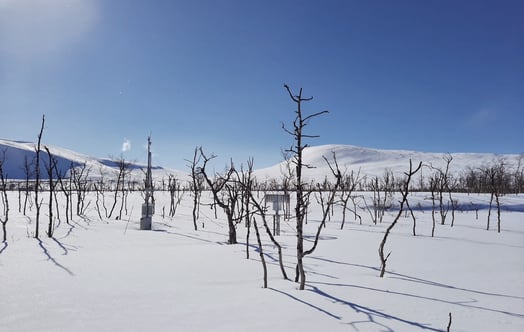
How the snow that controls the spring flood is measured
When winter is at its peak, the Swedish mountain snowpack is measured to assess how much water the spring melt will release – a crucial task that shapres the annual cycle of hydropower.
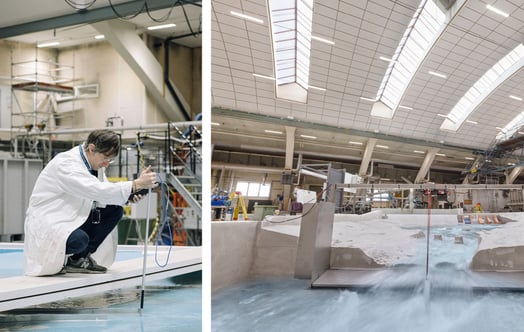
Hydropower at Vattenfall’s R&D centre - where tradition meets innovation
Hydropower has been a reliable, stable and renewable part of the energy system since the late 19th century. However, this does not mean that it is fully developed. The Edit visited Vattenfal...
Vattenfall appoints Anja Graf as new Head of Nuclear Decommissioning Germany
Anja Graf has been appointed as Vice President, Business Unit Nuclear Decommissioning Germany, and Managing Director for Vattenfall Europe Nuclear (VENE) at Vattenfall and will assume the po...