
- Germany’s largest offshore wind farm: Nordlicht I and II will comprise 112 turbines producing enough fossil-free electricity for around 1.7 million German households.
- Years of seabed surveys, environmental studies and the safe removal of WWII sea mines were required before offshore installation could begin.
- Thousands of specialists from different countries are working across foundations, turbines, cables, vessels and permits to deliver the project. Follow our video series "The people behind Nordlicht".
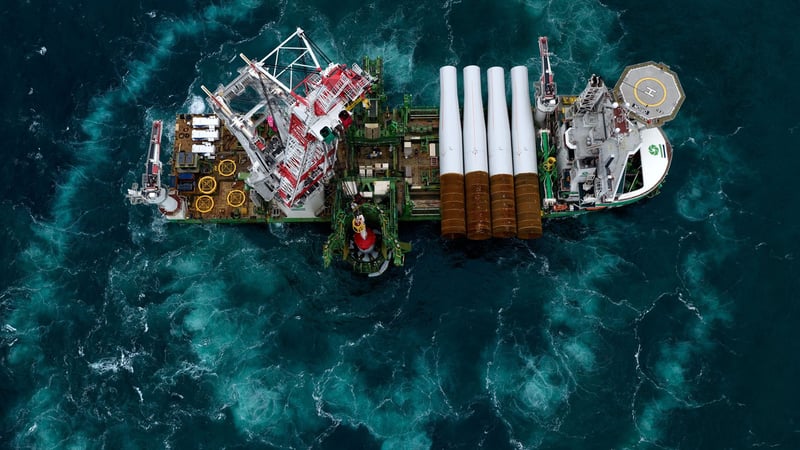
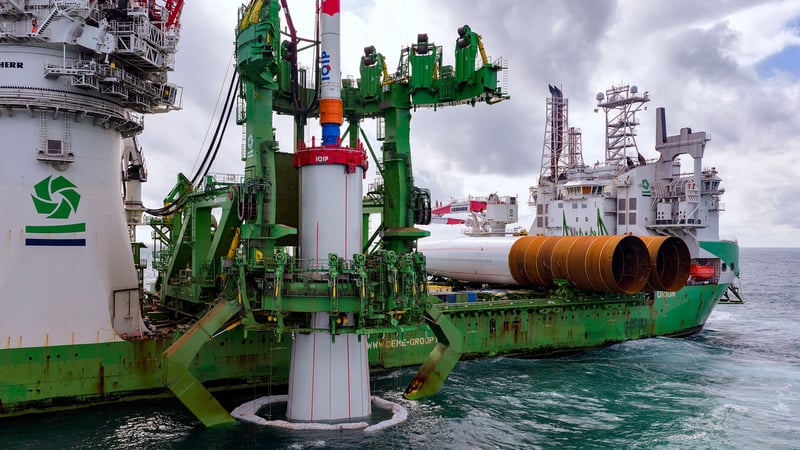
Eighty-five kilometers out in the North Sea intense work is ongoing. Monopile foundations up to 80 meters tall and giant transition pieces are being installed and vessels are moving between ports and the construction site, turning years of planning and manufacturing into Germany's largest offshore wind farm, Nordlicht I.
The Nordlicht cluster consists of two separate projects. Nordlicht I, with its 68 turbines and around 980 megawatts, will be Germany’s largest individual offshore wind farm when commissioned in 2028. The 44 turbines in Nordlicht II will add approximately 630 megawatts when in operation a year later.
Once both are fully operational, the cluster is expected to generate around six terawatt hours of electricity annually, corresponding to the current annual electricity consumption of roughly 1.7 million German households.
The seabed prepared for construction
Work on the project started long before construction vessels arrived on site including teams of specialists surveying the seabed, analysing environmental conditions and investigating what is always a risk in construction projects in the North Sea: unexploded mines left behind from the Second World War.
Last year, large-scale surveys of the seabed detected magnetic anomalies in the area, indicating the presence of metal objects. As a result, three large sea mines were discovered, each with an explosive charge equivalent to 200–300 kg of TNT. These were detonated on site in September 2025. To protect marine life from underwater noise and stress, a specialised vessel laid a double hose ring around the detonation site, creating a curtain of air bubbles that dampened the sound of the explosions. Read more about the activities here. World War II sea mines removed from wind farm site - Vattenfall
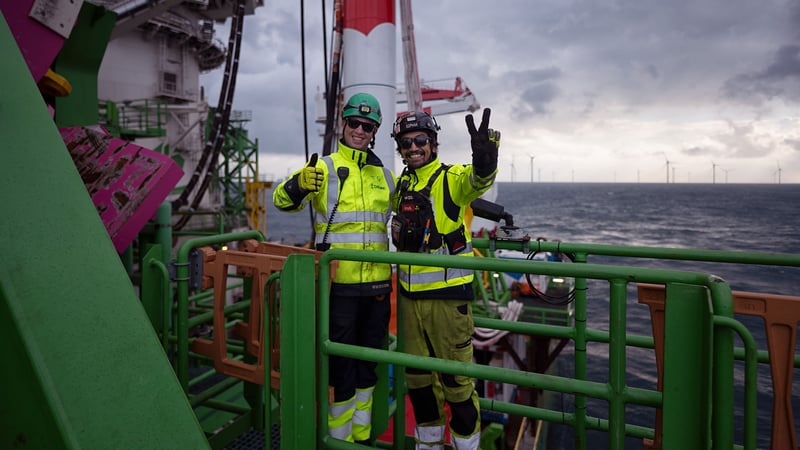
Many nationalities work together
Behind Nordlicht is a project organisation almost as complex as the technology itself. Thousands of people from all over the world work across interconnected packages covering foundations, turbines, cables and other areas of delivery.
“What we see offshore today is the result of years of work by people across many different teams and locations,” says Cyril Moss, Project Director for Nordlicht. “A monopile cannot be installed unless the component, vessel, permits and specialist crews are all ready at the same time. Multiply that across foundations, cables and turbines, and you begin to understand the scale of coordination behind Nordlicht.“
Strengthening Europe’s competitiveness
While Nordlicht is built without state subsidies, the project demonstrates how offshore wind can contribute to Europe's electricity supply as well as support energy security and industrial competitiveness: As electricity demand grows and industries look for new ways to reduce emissions, projects such as Nordlicht can help reduce the dependence on imported fossil fuels and increase the resilience of Europe’s energy system.
The connection to European industry is already present: Through long-term power purchase agreements, companies such as Salzgitter and LyondellBasell have secured access to electricity from the project, helping to support the transition of energy-intensive industries.
Built at scale, with impact in mind
The scale of Nordlicht becomes clear when looking at its foundations. Once completed, the project will stand on 112 monopiles driven into the seabed, and 112 transition pieces connecting them to the turbines above. The monopiles alone weigh up to 1,300 tonnes each.
15 MW Vestas turbines will rise above the foundations. Once operational, a single rotation of one of these turbines will generate enough fossil-free electricity to meet the daily demand of four German households.
Building at this scale also means looking closely at the materials and resources that go into the project. The turbines will include towers made partly with low-emission steel, expected to reduce the towers' total carbon footprint by approximately 16 per cent compared with standard tower production.
Circularity and lower-carbon materials are also being considered elsewhere in the project, including cable solutions using recycled steel and copper, low-emission aluminium, and bitumen-free materials.
At the same time, a comprehensive environmental monitoring programme uses aerial wildlife surveys, vessel-based observations, radar and acoustic monitoring to study how construction and operation affect birds and marine mammals. The findings will help Nordlicht as well as future windfarms to improve planning, introduce effective protection measures and support a nature-inclusive energy transition.
Long-standing achievement
By the time Nordlicht is complete, most of the work that made it possible will no longer be visible: the seabed surveys, environmental monitoring, manufacturing, cable laying and years of engineering and coordination behind the project. What will remain though are the 112 turbines designed to generate electricity in the North Sea for decades.
Facts Nordlicht I and II
- Located 85 kilometres north of the island of Borkum in the German North Sea.
- Consists of two separate sites: Nordlicht I (980 MW) and Nordlicht II (630 MW)
- Nordlicht I planned for commissioning in 2028, Nordlicht II in 2029.
- Total annual power production: 6 TWh
New video series: The people behind Nordlicht
What does it take to build Germany’s largest offshore wind farm?
In our new video series “People behind Nordlicht”, you'll meet the people working on the project. Follow their stories, challenges and achievements, and get an exclusive look behind the scenes of offshore wind development.
New episodes will be released monthly during autumn 2026 on the Nordlicht website.
Register for our monthly newsletter THE EDIT
THE EDIT is Vattenfall's new monthly newsletter. Each issue highlights a new burning issue from the world of sustainable energy and fossil freedom.
See also
Vattenfall Business Area Wind maintains leader status in IRBC assessment
Vattenfall’s Business Area Wind has once again been recognised as a Leader in the IRBC assessment, reflecting continued progress in responsible and sustainable business practices.
Thermal cameras shed new light on bird activity at sea
A thermal-camera and AI-system tested at Vattenfall’s Hollandse Kust Zuid offshore wind farm in the North Sea monitored bird movements around a turbine, day and night. As the technology work...
Vattenfall and Royal Vopak team up to further integrate renewable energy into the Dutch power system
Vattenfall has signed a tolling agreement with Royal Vopak (‘Vopak’) for a portion of the planned battery energy storage system near Meeden in the province of Groningen, the Netherlands.