
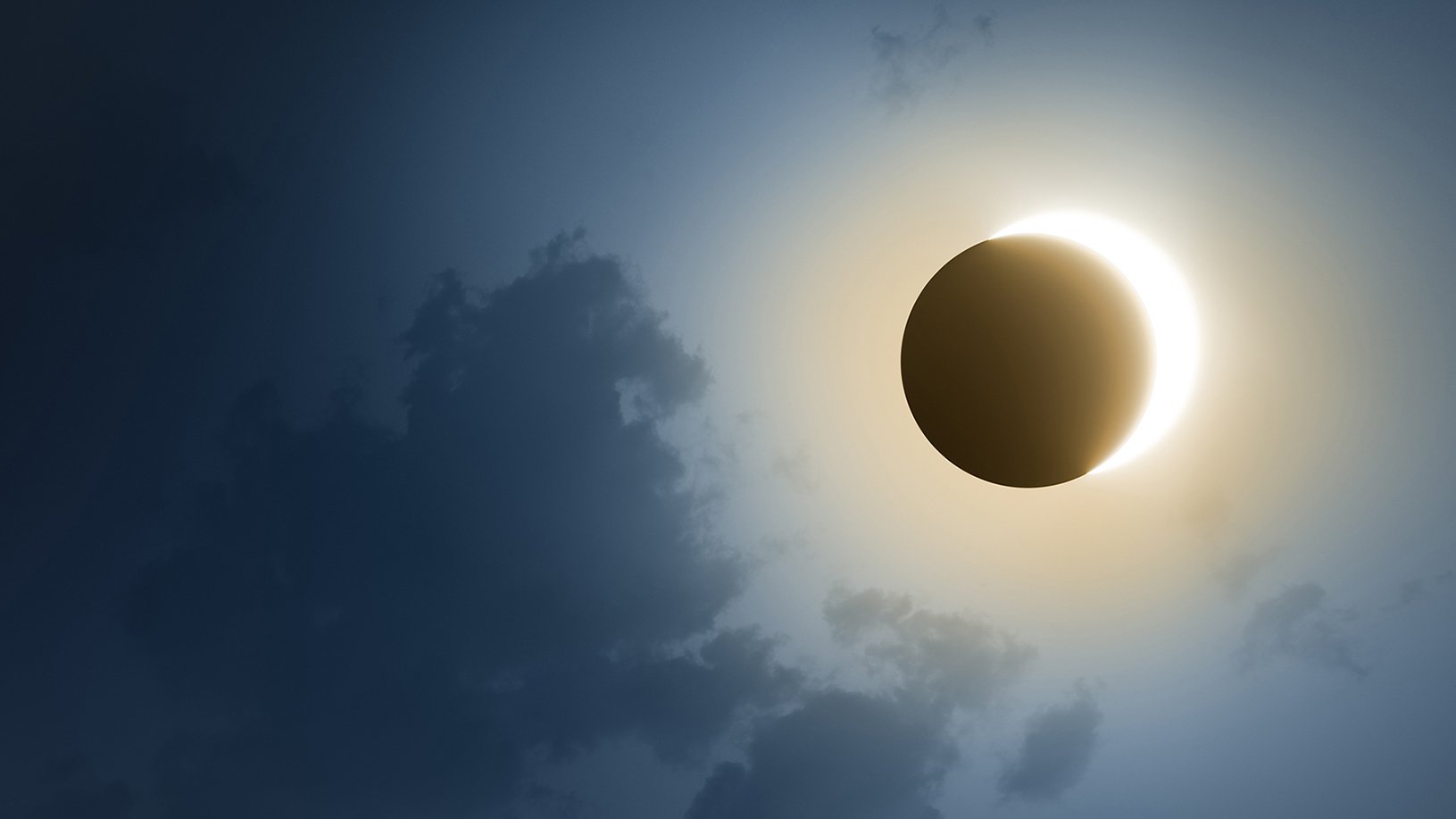
A solar eclipse will temporarily reduce solar power generation across Europe. Yet consumers in Vattenfall's core markets can expect their electricity supply to remain unaffected.
While millions of Europeans watch the solar eclipse on Wednesday evening, energy experts are keeping an eye on a different spectacle: a temporary drop in solar power generation across large parts of Europe. A slight decline is expected, particularly in Vattenfall's key solar markets of Germany, the Netherlands and the United Kingdom. However, consumers need not worry about their electricity supply.
Europe's upcoming solar eclipse will do more than darken the sky. Across the continent, solar power generation is expected to decline temporarily as the Moon obscures part of the Sun. Although reductions could reach almost 10 GW under clear-sky conditions, electricity supplies are not expected to be affected.
The event is an illustration of how renewable energy has become an increasingly important part of Europe's power system and how grid operators and energy companies have learned to manage fluctuations successfully. Vattenfall expert Johanna Fahrenberger explains what happens behind the scenes.
What exactly happens to the energy supply when a solar eclipse passes over Europe?
“For the energy system, the key effect is a temporary reduction in solar irradiance and therefore solar power (PV) generation. At each location, PV output will gradually decrease, reach a minimum and then recover as the eclipse passes. The exact impact depends on the degree of solar obscuration as well as local weather and solar position.”
How large is the expected drop in solar power generation during the eclipse?
“In relative terms, the effect on PV production can be significant. In regions along the path of totality, solar irradiance can temporarily drop to almost zero. In the UK, up to around 95% of the Sun will be obscured in some areas, although the resulting reduction in PV generation is much smaller in absolute terms.
The UK, one of Vattenfalls PV markets, is expected to see a reduction of up to 0.7–1.3 GW of solar generation. Across Europe, the maximum reduction could reach almost 10 GW under clear-sky conditions. However, the eclipse occurs relatively late in the day, when solar generation is already declining. This significantly limits the absolute impact on the power system. The impact in Germany and the Netherlands will be below 1 GW.”
Is it true that wind power generation can also decrease during a solar eclipse?
“Yes, under certain meteorological conditions. The sudden reduction in solar heating during an eclipse can cool and stabilize the lower atmosphere, reducing turbulence and potentially wind speeds near the surface. This effect has been observed during previous eclipses.
However, the effect on wind power generation is much less pronounced and predictable than the impact on solar generation. For today’s eclipse, no significant impact on wind generation is expected under the prevailing conditions.”
Is there any risk to security of supply?
“Overall, no significant risk to security of supply was identified. If there are some uncertainties during the intraday market, the market on which electricity is traded during the day, all relevant teams had been informed in advance and are prepared for the event.”
Is the challenge primarily a technical issue or a coordination issue?
“For the Transmission System Operators (TSOs) the main challenge is to keep the grid stable while the solar power output changes very fast in a very large area.
For the forecasting, planning and dispatching teams in Vattenfall, the event does not pose any significant technical or coordination challenges. Existing processes, preparations, and communication channels are sufficient to manage the expected impacts.”
How are European transmission system operators (ENTSO-E) preparing for this event?
“TSOs across Europe have prepared for the eclipse by informing control room operators and market participants about the expected reduction in solar generation. The highest impact is expected in Germany and Spain due to their large solar capacity.
To support system operation, TSOs receive regular updates from weather service providers and closely monitor solar generation forecasts throughout the event.
In the past, TSOs have increased their required volume for services that help to keep the electricity grid stable. This has not happened this time (neither in Germany, nor in the Netherlands).”
What role does Vattenfall play in managing temporary fluctuations of this kind?
“For Vattenfall's conventional assets in Germany and the Netherlands, no significant operational changes are expected, largely due to the timing of the event. Renewable assets are also not expected to require special operational measures.
However, Trading, and Operational teams will closely monitor market developments, particularly prices that arise in order to maintain a constant balance between supply and demand for electricity, to ensure an appropriate response to any short-term market fluctuations.”
Will European households notice anything?
“Nothing will change.The eclipse will be relatively short, and the electricity system has sufficient flexibility to cope with such fluctuations.”
|
Viewing the solar eclipse safely Anyone who wants to watch the solar eclipse should always use special eclipse glasses that meet the international safety standard ISO 12312-2. Regular sunglasses, cameras, binoculars or improvised filters do not provide sufficient protection. Check the glasses for damage beforehand and make sure children only view the eclipse under supervision. Also during a partial solar eclipse, eye protection is needed throughout the entire event. |
Picture above article: AdobeStock/Peter Schreiber
See also
Vattenfall batteries secure fossil-free electricity for Way Out West festival
The Way Out West festival in Gothenburg is one of the biggest in Northern Europe. This year the music festival it is powered by fossil-free electricity and battery storages from Vattenfall.
Vattenfall builds combined wind and solar park in south-west Germany
Hybrid park Hommerdingen-Biesdorf is Vattenfall’s first combination of wind and PV in Germany and sets standards for modern, cost-efficient, and grid-friendly energy generation.
Thermal cameras shed new light on bird activity at sea
A thermal-camera and AI-system tested at Vattenfall’s Hollandse Kust Zuid offshore wind farm in the North Sea monitored bird movements around a turbine, day and night. As the technology work...