
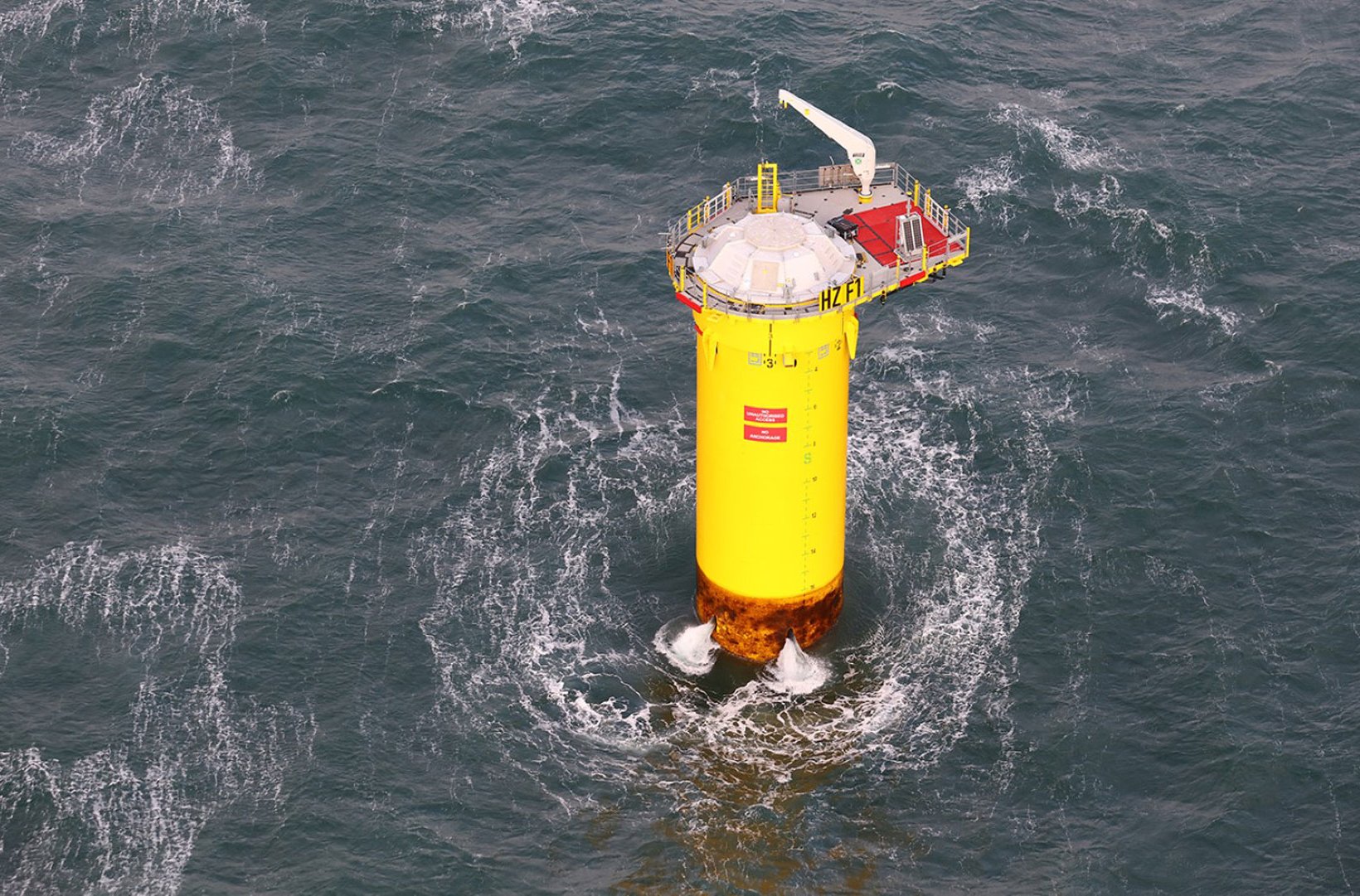
Turbine foundation design creates new home for marine life
Vattenfall has joined forces with Dutch nature conservation organization De Rijke Noordzee on a study to find out how the nature inclusive design of turbine foundations can support marine life. The study is performed at Hollandse Kust Zuid, the biggest offshore wind farm in the world.
Water replenishment holes in the wind turbine foundations offer an opportunity for fish and other marine species to enter and leave again. The joint study of Vattenfall and De Rijke Noordzee is the first time that research is conducted into what the water replenishment holes could mean for marine life.
Video player requires marketing cookies.
To view this content please click here to allow marketing cookies.
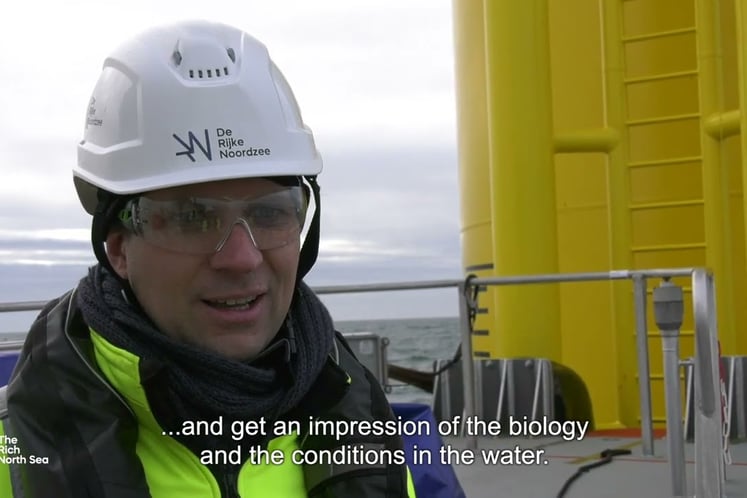
The study is aimed at finding out to what extent the inside of the turbine foundations can be used by marine life to settle, shelter and as a feeding ground. The study is conducted at the Hollandse Kust Zuid wind farm, located 18 to 34 kilometers off the Dutch coast, between the city of The Hague and Zandvoort,
“If the results meet our expectations, this will boost marine biodiversity”, says Erwin Coolen, program director of De Rijke Noordzee. “Nature inclusive design is the future. I am proud we are working with Vattenfall on these kinds of innovative solutions, that will provide our country with sustainable energy while strengthening the environment at the same time.”
Royal Netherlands Institute for Sea Research NIOZ is involved in the study too.
Blueprint for future wind farms
The elliptical openings measure approximately 30 centimeters by 1 meter and are located above the seabed and just below the water surface. Over the next couple of years data will be collected on several occasions to check the development of biodiversity. Last winter, scientists from De Rijke Noordzee carried out their first series of measurements. Findings will be included in a toolbox called “Nature development in wind parks” that De Rijke Noordzee will develop. Its open-source character makes it easy and cost-efficient to reuse in new projects.
Nature-inclusive design
Vattenfall wants to increase biodiversity in wind farms and gain more insights. Gijs Nijsten, responsible for sustainability at Hollandse Kust Zuid:
“Offshore wind is growing rapidly and will continue to expand significantly over the next years. We are constantly looking for ways to minimize the impact our projects have on the ecosystem. Continuous innovation and modification of turbines has led to an ever improving balance between sustainable produced electricity and a healthy ecosystem.”
Hollandse Kust Zuid wind farm
- The world’s largest offshore windfarm
- Built without subsidies
- Capacity 1,500 MW
- Located 18 to 34 kilometers off the Dutch coast
- Operational 2023
- Owed by Vattenfall and BASF
See also
Vattenfall Business Area Wind maintains leader status in IRBC assessment
Vattenfall’s Business Area Wind has once again been recognised as a Leader in the IRBC assessment, reflecting continued progress in responsible and sustainable business practices.
Thermal cameras shed new light on bird activity at sea
A thermal camera and AI system tested at Vattenfall’s Hollandse Kust Zuid offshore wind farm in the North Sea monitored bird movements around a turbine, day and night. As the technology work...
What it takes to build one of Europe’s largest offshore wind farms
In the German North Sea, the first visible signs of Nordlicht wind farm are beginning to emerge above the sea surface. By 2029, 112 wind turbines will make a strong contribution to the count...