
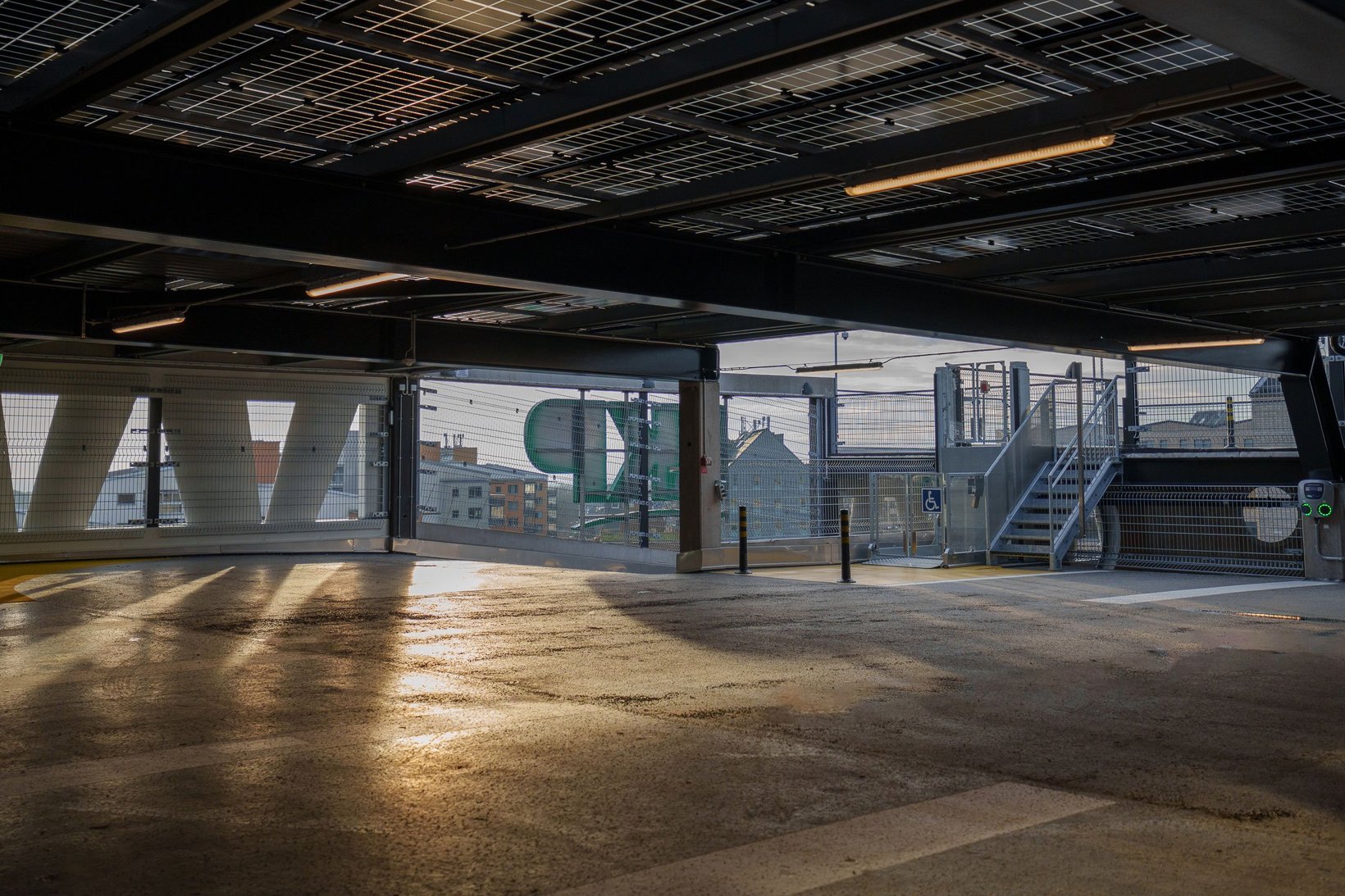
Europe's first 'wind power-built' car park inaugurated
The new Niels Bohr car park in Lund was recently inaugurated, a building partly constructed from disused rotor blades from wind turbines. The building is the first of its kind in Europe and has a façade made from rotor blades from Vattenfall's now decommissioned Nørre Økse Sø wind farm.
"It's a very smart idea and a really nice building," says Anne Mette Traberg, Vattenfall's Country Manager for Denmark.
The car park is owned by Lunds kommunala parkeringsbolag (LKP) and is located in the new Brunnshög district on the outskirts of Lund, in the south of Sweden. It consists of 365 parking spaces on five floors, including 40 charging points and a storage battery. Vattenfall has donated 57 rotor blades to the construction project, which have been used to create so-called 'curtain walls' – non-load-bearing walls that cover large parts of the façade.
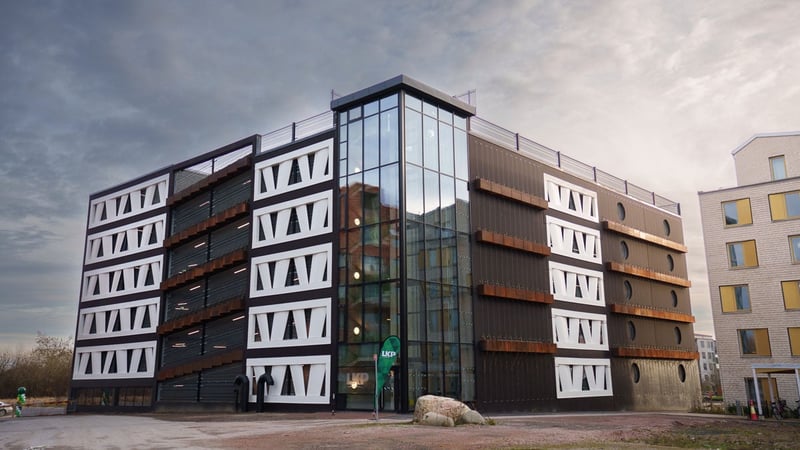
Photo: Hadil El-Imam
Eye-opener
Architect Jonas Lloyd got the idea for the car park when he read a magazine article about the American wind industry and its challenges in recycling disused blades. Rotor blades are designed to withstand wind and weather for decades and are therefore made of various composite materials such as glass and carbon fibre. This makes the blades extremely durable but also challenging to recycle.
"I read that in the US, many of the blades are buried, and I thought they could be put to better use. It's not just an environmental problem, but also a waste," he says.
So, when LKP ordered a new car park, Jonas and his colleagues designed one with rotor blades. The idea behind the building has always been to make a statement for sustainable architecture in every way. In addition to the rotor blades, the façade also consists of pollinator-friendly plants and the roof is covered with solar panels, connected to a battery for charging cars at night. Jonas Lloyd is pleased with the result.
"Above all, I am pleased that we are promoting sustainability and that the building has become a symbol of sustainability. It should serve as an eye-opener. When you see the building, you should stop and think: they managed this, what can I do?”
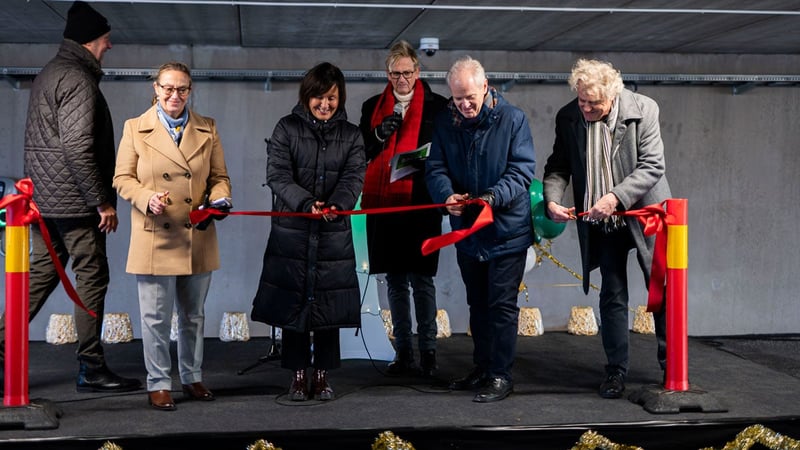
Photo: Hadil El-Imam
Visible and concrete evidence
With over 1,400 wind turbines in several countries, Vattenfall is one of Europe's largest wind developers. To reuse, refurbish, repurpose, and recycle rotor blades and other parts of wind turbines is therefore a natural and important part of the company’s wind operations. According to Anne Mette Traberg, it is important to show the significance of circularity for Vattenfall, including how rotor blades form an integral part of this approach. It was therefore obvious to offer end-of-life blades when the question arose.
"This is visible and concrete proof that sustainability can meet the cost, schedule and safety requirements of a project," she says.
Vattenfall has long been working on advancing circularity in its wind turbines, with a particular focus on rotor blades. When a wind turbine is decommissioned, the company investigates whether the blades can be sold to another company or project. Alternatively, they are used, for example, as frames for solar panels or insulation material. Vattenfall has even had skis made from old blades.
Vattenfall has also introduced a ban on sending used blades to landfill and has set a target to reuse, refurbish, repurpose, and recycle blades, nose cones, and nacelle covers to 100% by 2030. This may seem like an ambitious goal, but Anne Mette Traberg is optimistic: at present, only a small proportion falls outside circularity, and technology is advancing.
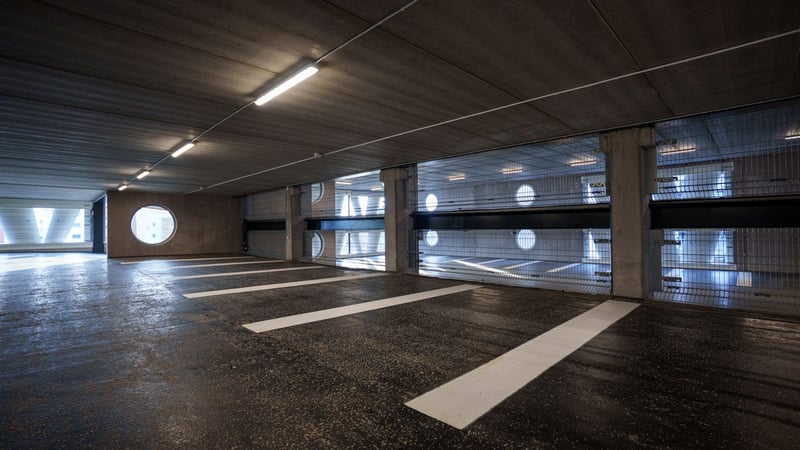
Photo: Hadil El-Imam
Courageous board
The developer LKP, which manages 28,000 parking spaces in the municipality, is very proud of its new car park. CEO Paul Myllenberg is all smiles despite the temperature being just above zero degrees inside the car park where the inauguration is taking place.
"It turned out really well. Reality exceeded expectations," he says, but admits that a few eyebrows were raised at LKP when they saw the drawings for a building made from old wind turbine blades."Fortunately, we have a courageous board," he says.
LKP does not rule out the use of rotor blades in future projects. Of the 57 blades donated by Vattenfall, a number remain with no clear use yet. Paul Myllenberg has an idea, however.
"We have launched a competition where people can submit suggestions on how the blades can be used. The best suggestion will win a month's free parking in our car parks!
Read also: Vattenfall expands circular targes on wind turbine components
See also
Climate-smart material choices reduce emissions in electricity production
The climate impact of the energy sector is not just about how electricity is produced, but also about the materials used to build new facilities. This is why Vattenfall is working to introdu...
More renewables, less gas: how Europe’s energy system has changed since the war in Ukraine
Replacing Russian gas and accelerating fossil free energy are top priorities in the European Union. Four years after Russia’s full scale invasion of Ukraine, the transition is clearly under ...
Vattenfall highlighted as a driving force in new sustainability analysis
A new sustainability report highlights Vattenfall as a leading example in building consumer confidence around climate change. The analysis shows that trust in Vattenfall is growing faster th...