
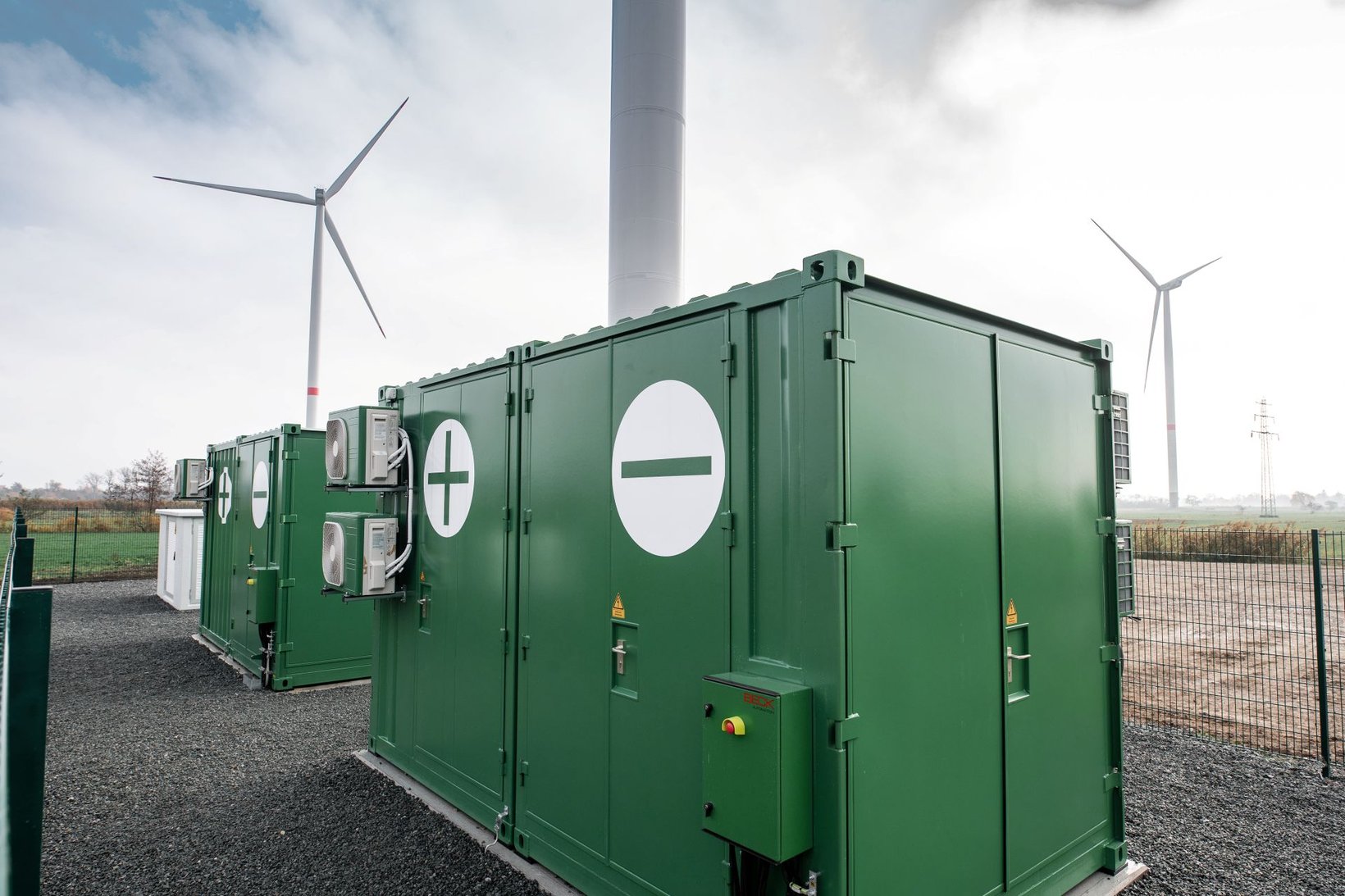
- Battery storage demand is soaring as wind and solar expand.
- Falling costs and grid‑stability needs drive rapid adoption.
- Hybrid parks combining renewables and batteries are becoming standard.
- New leasing models accelerate access to large‑scale storage.
Europe’s battery boom is accelerating fast, delivering the long‑awaited flexibility renewables need. As wind and solar surge, large‑scale storage is finally stepping into its crucial role.
Until recently, battery storage solutions have grown steadily but modestly. Now, as wind and solar power expand rapidly, the demand for efficient energy storage has become essential. In response, both the number and capacity of large batteries are surging across Europe.
SolarPower Europe forecasts a nearly 500 per cent growth in the European battery market between 2024 and 2029 – a clear signal that this technology could finally be taking off.
A changing energy system
Batteries provide flexible power with pinpoint accuracy needed to stabilise the grid, making it resilient and balanced even during periods of excess renewable power generation. Smart algorithms also play a crucial role in optimising energy production and adjusting it according to short-term market signals of supply and demand.
In regions without alternative flexibility sources like hydro, batteries are essential for managing overproduction and preventing the curtailment of renewables – a challenge especially visible in Germany and the Netherlands, where negative electricity prices have occurred.
Industrial customers can manage their consumption more flexibly by capping peak loads, with so-called peak shaving. This technique lowers power load during periods of high demand, helping to cut costs.
Key drivers
The main driver of this trend is the growing share of intermittent energy sources. As wind and solar parks expand, periods of surplus production increasingly outpace demand, leading to price volatility and even zero or below-market rates, and curtailment of renewable output. Batteries’ ability to store overflow energy and release it when demand rises safeguards the value of renewable power.
Another driver is changing consumption patterns such as households installing solar panels and the rise of EV charging. This puts further stress on the grid, making stabilisation technologies essential.
A third reason is the sharp decline in battery costs, making storage investments far more attractive. According to the International Renewable Energy Agency (IRENA), battery storage prices have fallen by as much as 93 per cent between 2010 and 2024.
Vattenfall’s Erik Suichies, Head of Wholesale Customers comments:
“Over the past decade, we have seen that the cost for battery technology has reduced tremendously. In combination with the growing value of shifting loads between hours during the day, batteries now represent a financially sound solution for grid flexibility. For at least the coming 10 years, it will be very economical to build and optimize batteries.”
Hybrid parks: unlocking the best of each energy source
Large battery storage systems paired with wind and solar parks are becoming increasingly common across Europe. These integrated setups, also known as hybrid parks, balance the feed-in for greater stability of the power grid. Hybrid parks combine different energy sources to maximise their strengths. For example, a hybrid park that links wind power with battery storage ensures continuous production, and a reliable energy supply – even when the wind is not blowing. This makes it an invaluable asset for delivering critical system services.
Vattenfall owns or operates several hybrid parks around Europe. One example is Sweden’s first commercial hybrid power park at Hjuleberg, developed in partnership with Swedish pension company Skandia. Commissioned in the summer of 2024, the park is among the most advanced of its kind in Europe. It combines twelve wind turbines with a total capacity of 36 MW and a 30 MW battery storage system, all managed by advanced, purpose-built algorithms.
Other Vattenfall projects include the hybrid parks Höge Väg in Halland and Bruzaholm in Småland, Sweden, as well as Ray in northern England, Pen y Cymoedd in Wales, and Haringvliet Energy Park in the Netherlands.
“Hybrid projects are the new normal for us. It is no longer a question of whether to add a battery to renewable park, but how large that battery should be”, says Nicola Kleihues, Director Portfolio & Asset Management, BA Wind.
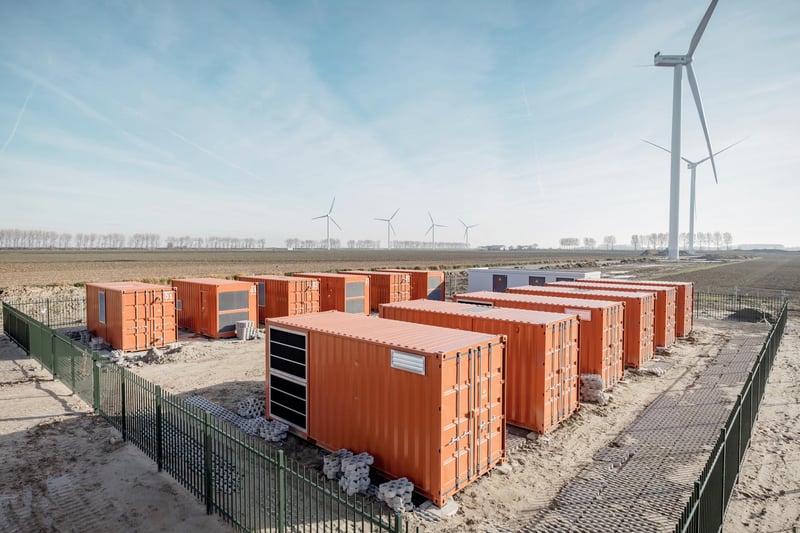
Vattenfall’s newly built Haringvliet Energy Park in the Netherlands is the largest hybrid park in Europe to date.
New business models evolving
As the need for flexibility grows, new business models are emerging. In 2025, Vattenfall signed three agreements securing over 200 MW of battery storage capacity to rent and optimise. Leasing battery capacity rather than owning the actual batteries reflects a shift in approach. It reduces project timelines and accelerates access to flexibility without tying up capital in constructions.
The latest contract is for the Dutch Leopard battery where Vattenfall will be able to store up to 400 MWh and charge or discharge at a maximum capacity of 100 MW. In May, a capacity optimisation agreement was signed with Swiss company terralayr for a distributed network of battery storage systems. Developed and bundled via a flexibility platform, the seven-year contract covers 55 MW across eight sites in Germany. That same month, Vattenfall entered an eight-year agreement with energy storage company Return to operate a large-scale battery park in southern Netherlands – 50 MW output and 100 MWh capacity – connected to the transmission system operator TenneT’s high-voltage grid.
“The projects will come online in 2026 and 2027. By leasing capacity from these batteries, we can make use of them soon and avoid long development lead times, says Erik Suichies.”
Within reach
After years of steady progress, large-scale battery storage is finally on its way to deliver the flexibility that Europe’s energy system has long needed. This development is enabling renewables to thrive without compromise, paving the way for a future where fossil-free power is not just possible, but dependable. If this momentum holds, the long-anticipated breakthrough will finally be within reach.
“We are fully committed to making the energy system fossil-free. Batteries are essential for creating stability in this system, and that is something we see for at least the coming 10 years. Battery storage is not just a technical solution – it is a strategic enabler in Europe’s energy transition and as we move forward, it will ensure reliability, affordability, and sustainability”, says Erik Suichies.
Batteries: Benefits for the energy system
The advantages of battery storage are numerous and span the entire energy ecosystem.
- Grid stability: Batteries help maintain frequency and voltage, ensuring a reliable power supply even during fluctuations.
- Renewable integration: Storage of excess wind and solar energy to be used when production drops.
- Peak shaving: Reduction of electricity consumption during periods of highest demand to avoid strain on the grid.
- Backup power: Can provide critical resilience during outages, safeguarding operations and communities
- Decarbonisation: Batteries enable the introduction of more renewable power production, reducing reliance on fossil-fuels.
See also
How algorithms are boosting pumped storage hydropower
Pumping water for hydro power production has been done for decades. But new algorithmic tools are now making this method even more valuable for grid stability.
How the snow that controls the spring flood is measured
When winter is at its peak, the Swedish mountain snowpack is measured to assess how much water the spring melt will release – a crucial task that shapres the annual cycle of hydropower.
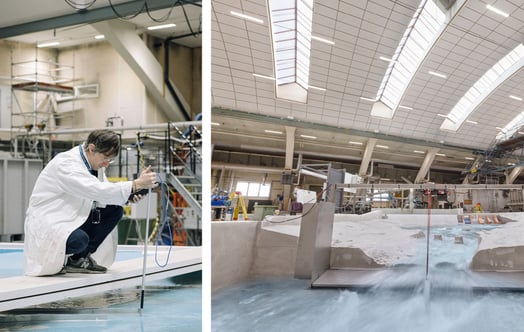
Hydropower at Vattenfall’s R&D centre - where tradition meets innovation
Hydropower has been a reliable, stable and renewable part of the energy system since the late 19th century. However, this does not mean that it is fully developed. The Edit visited Vattenfal...