
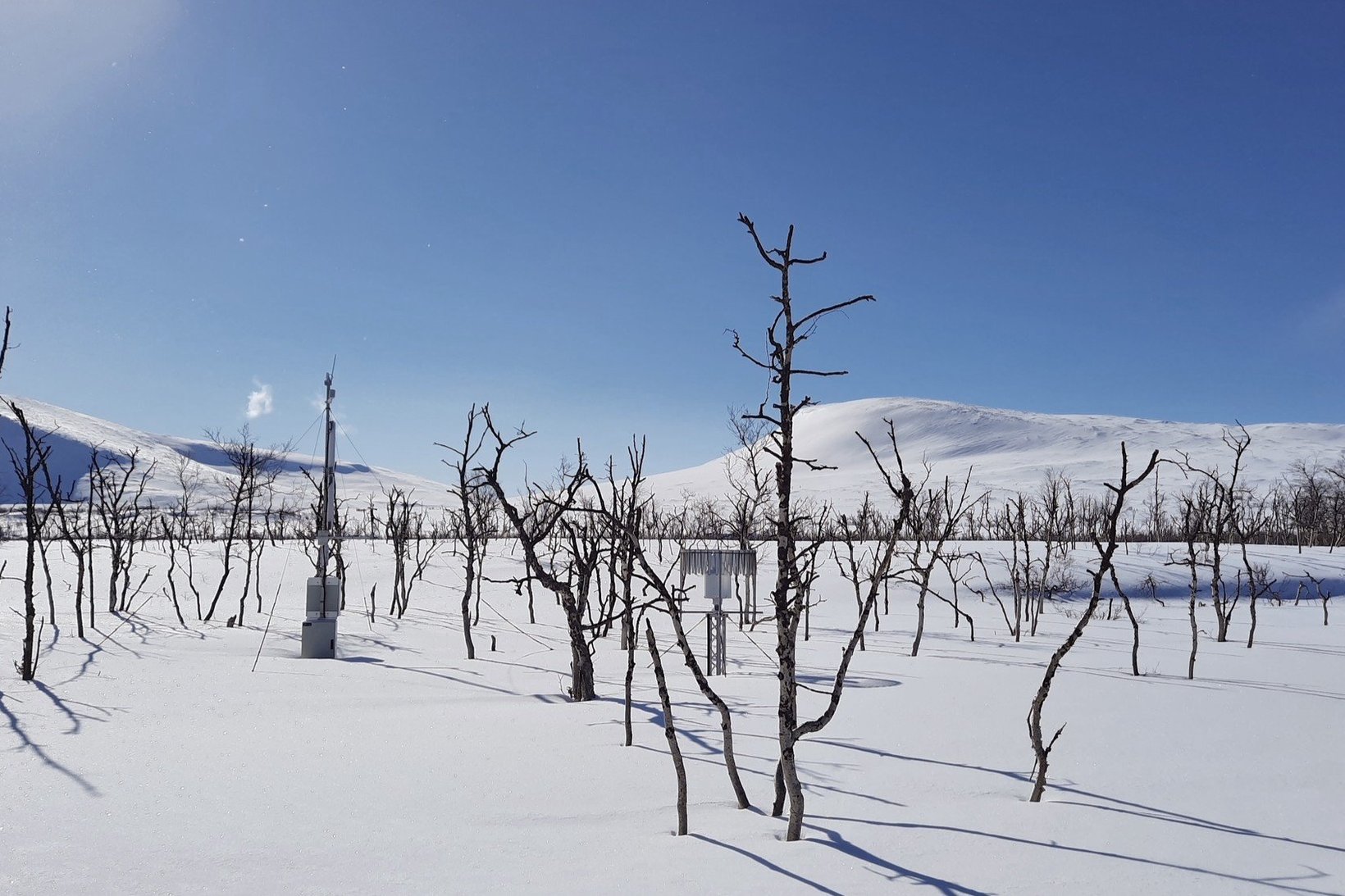
- When winter is at its peak, the snowpack in the Swedish mountains is measured through manual ground checks and complementary helicopter-based radar.
- Vattenfall's Hydmet stations provide continous data on temperature, precipitation, wind and water levels in remote mountain areas.
- All measurements are incorporated into Vattenfall's hydrological model to assess how the spring flood may develop.
- The results form an important basis for planning reservoir regulation, risk management and hydropower production during the spring melt.
When winter is at its heaviest in the Swedish mountains, a crucial task begins – one that shapes the annual cycle of hydropower. Through ground-based snow measurements, radar technology from helicopters and Vattenfall’s own weather stations, experts map out how much water to expect when the snow begins to melt.
The Swedish mountain region is vast: 165,000 square kilometres, accounting for 40 per cent of the country’s total area. It is also here that the heaviest snowfall occurs in winter; snow that melts in spring and flows into the rivers in the valleys, where a large proportion of Sweden’s hydroelectric power is generated.
The most power producing river is Lule River. At the end of March, when the snow cover is stable and often at its highest level, hydrologists head out to measuring points along fixed lines in the landscape marked by ten posts. Here, they check the snow depth using a snow tube and take samples to determine the weight of the snow, which reveals how much water it contains.
“Roughly half of all precipitation in our forecast area falls as snow. We still use the same method as in the 1940s. This allows us to compare year on year and track trends over time,” says Susanne Nyström, hydrologist at Vattenfall.
The method is simple but robust – and thanks to the long time series, it is a very valuable indicator of how spring water flows may develop.
Helicopter measurements provide the bigger picture
To complement the manual measurements, radar measurements from a helicopter are also used. An antenna is mounted beneath the helicopter, and around 400 kilometres of fixed routes are measured within the forecast area. The travel time of the radio waves through the snow is affected by how deep and densely packed the snow is.
“The measurements from the helicopter are a supplement to the manual ones. Together, the two methods provide a strong picture of the snow conditions in the mountains,” says Susanne Nyström.
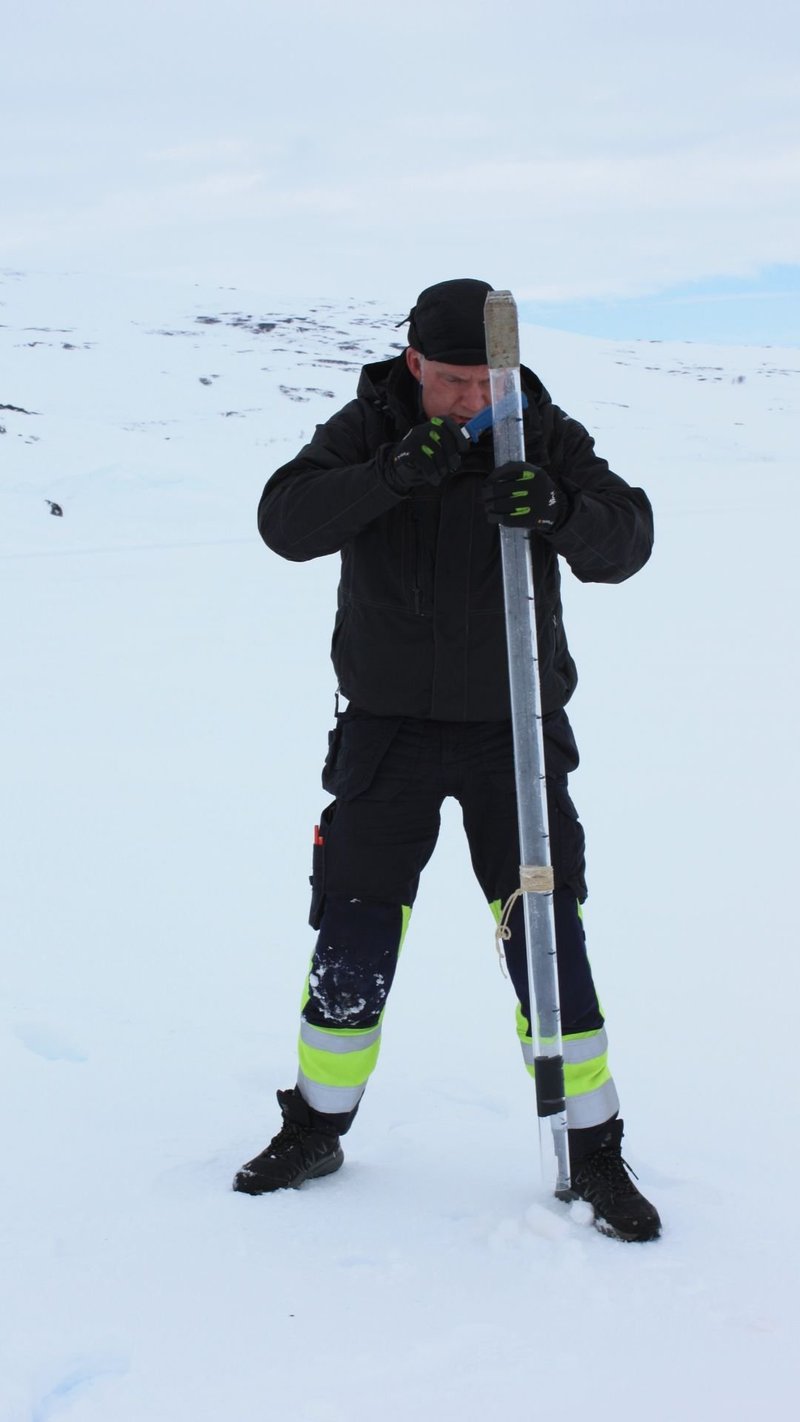
In the Swedish mountains, hydrologists check the snow depth using a snow tube and take samples to determine the weight of the snow.
A dense data network in the mountains
To obtain a comprehensive picture of weather and snow conditions, Vattenfall has around ten of its own Hydmet stations located in the mountain regions. The stations measure temperature, precipitation, wind and water levels, and report hourly values daily via satellite communication.
“The stations provide data from areas where no one else is currently measuring. This makes a huge difference when we’re trying to understand the bigger picture,” says Susanne Nyström.
The data is incorporated into Vattenfall’s hydrological model for the Lule River.
From the mountains to the forecast – how the data is used
Once the snow measurement data has been collected, it is compared with Vattenfall’s hydrological model, which is updated daily with precipitation and temperature data. The model is used to assess how the spring flood might develop.
“The snow measurements help us to see how much water is stored in the snow. It’s an important check on the model’s calculations,” says Susanne Nyström.
In the long term, the next-generation model is expected to be able to incorporate the data from the snow measurements directly – something that could provide more accurate forecasts.
The variations of winter are evident in the small details
Formal snow measurements form the basis – but sometimes the differences between winters are only noticeable to the naked eye. Susanne tells us about a hut on the Norwegian border that she often passes in winter.
“Some years it’s almost completely covered in snow, other years it stands almost bare. That says a lot about how different winters can be and what the wind does to the snow cover,” says Susanne Nyström.
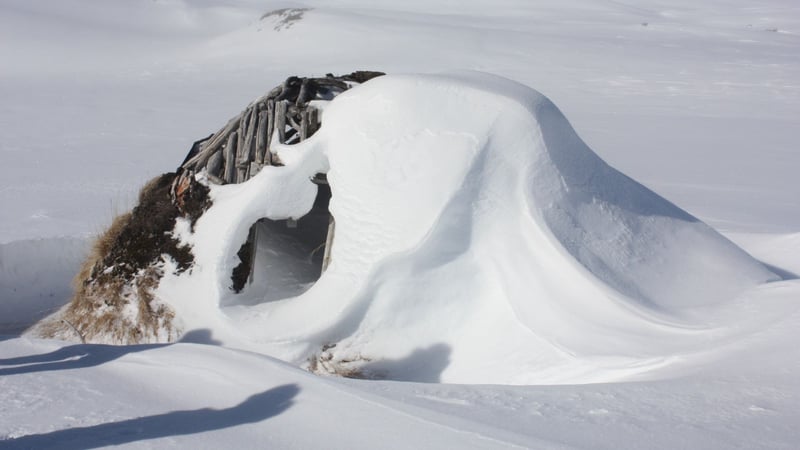
The small hut on the Norwegian border shows how much winter conditions can vary. Some years it’s almost completely covered in snow, other years it stands almost bare.
A solid foundation for spring
As the spring flood approaches, the measurements have already been compiled, analysed and incorporated into the planning. This is when the work become most tangible – in the decisions on how the reservoirs are to be regulated, how risks are to be managed and how hydropower production is to take place during the intense spring period.
“Estimating how much snow there is and, consequently, how large the spring flood might become is a central part of the hydrological work. This is often where the annual planning begins,” says Susanne Nyström.
How snow measurement works – in brief
- Manual snow measurements
Carried out at the end of March. Snow depth and weight are measured along fixed lines marked by ten posts to calculate how much water the snow contains. - Radar measurements from a helicopter
Measurements are taken along approximately 400 km of fixed routes in late March–April. The radar measures how quickly the radio wave travels through the snow, which depends on snow depth and density. - Hydmet stations
Around ten stations measure and report weather data daily via satellite communication. The stations complement the Swedish Meteorological and Hydrological Institute’s (SMHI) network of stations. - How the snow data is used
The results are an important complement to Vattenfall’s hydrological model for assessing how high the spring flood might be.
Sign up for our newsletter THE EDIT
THE EDIT is Vattenfall's new monthly newsletter. Each issue highlights a new burning issue from the world of sustainable energy and fossil freedom.
See also
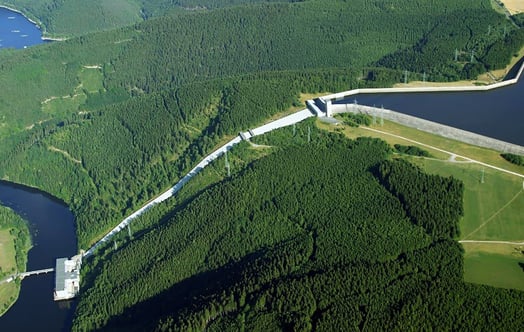
How algorithms are boosting pumped storage hydropower
Pumping water for hydro power production has been done for decades. But new algorithmic tools are now making this method even more valuable for grid stability.
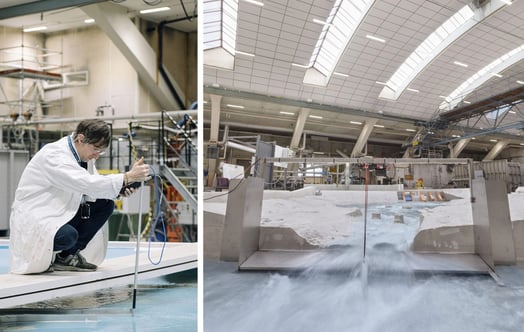
Hydropower at Vattenfall’s R&D centre – where tradition meets innovation
Hydropower has been a reliable, stable and renewable part of the energy system since the late 19th century. However, this does not mean that it is fully developed. The Edit visited Vattenfal...
Climate-smart material choices reduce emissions in electricity production
The climate impact of the energy sector is not just about how electricity is produced, but also about the materials used to build new facilities. This is why Vattenfall is working to introdu...