
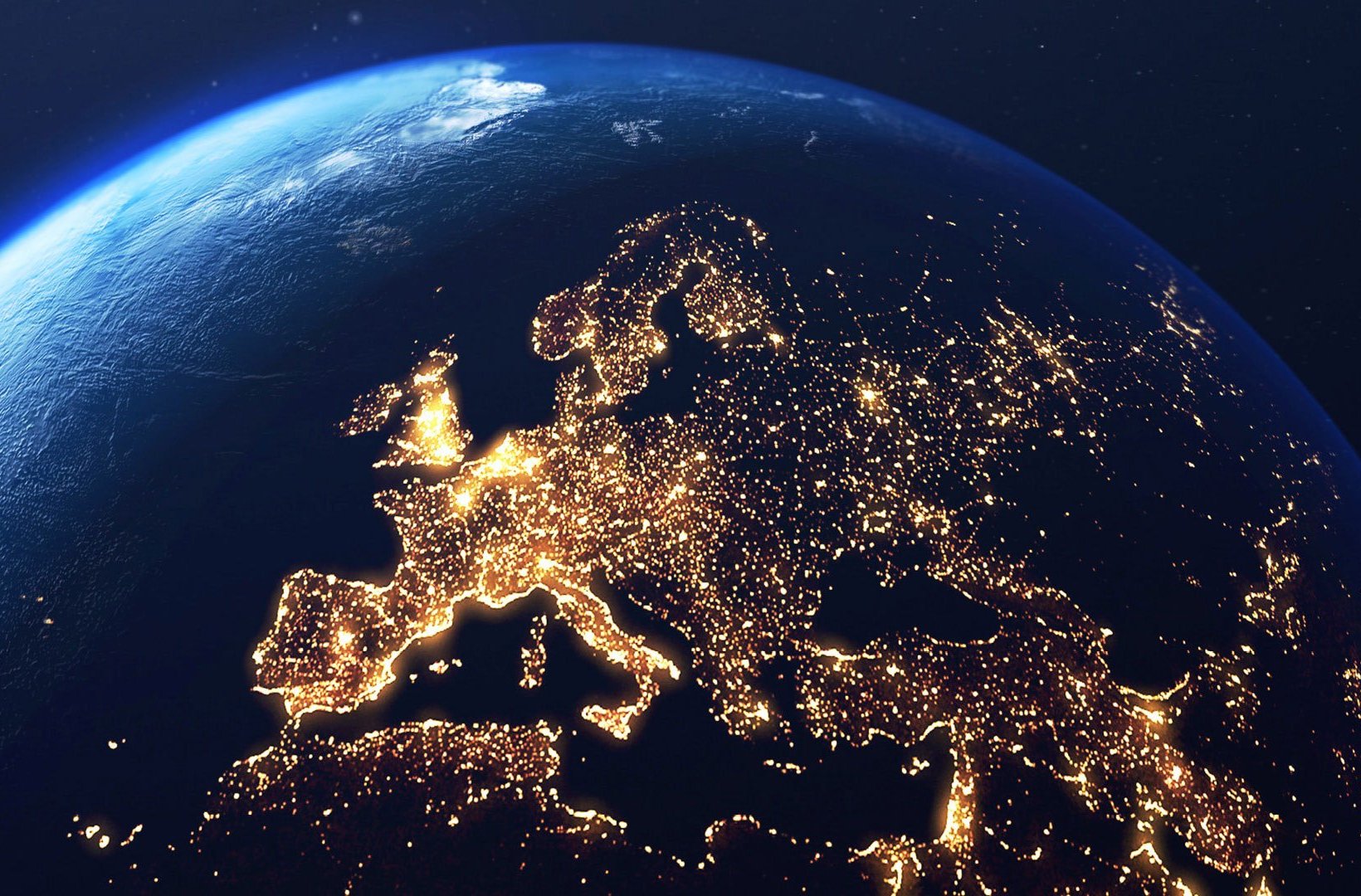
Renewable resilience for the European energy system
In a new report Eurelectric is looking for ways to make the European energy system more resilient in uncertain times. Renewables are part of the solution.
Kristian Ruby, Secretary General of Eurelectric, describes it as being in the middle of a ‘post-apocalyptic science fiction film’. In fact, the memory he recounts is from Lviv in south-western Ukraine, where he was just a year ago. The secretary general of Eurelectric, the European electricity industry federation, was in the area to visit a thermal plant, which, despite three years of repeated bombing and 13 or 14 direct missile hits, continued to function. Ruby describes blown-out windows covered with plywood, partially demolished roofs, piles of gravel and cement, but also people that fought hard to keep the plant running.
Since then, the Russian offensive has only intensified – and the attacks have increasingly targeted the Ukrainian electricity system.
“The system is now stretched and destroyed to a level it hasn't been before, and that's in the midst of the most severe winter that we've seen in a few years. It was very important and moving to see how people deal with such a war situation on the ground. The effort of people in the power sector trying to keep the system afloat is heroic.”
The reason why attacks are directed at the electricity system is simple: it is both the backbone of civil society and an extremely important military resource. If it is knocked out, resilience is also damaged.
The questions about resilience and security have become more urgent in recent years. Eurelectric has just released the report Battle-tested power systems: resilience and preparedness for Europe's energy sector, which draws on lessons learned from the war in Ukraine to paint a picture of how the European electricity system can become more resilient and secure.
For a relatively long time, there was no need to think along these lines, as peace reigned on the European continent and the world's superpowers were relatively easy partners to work with. For the past 30 years or so, there has been security support from the United States, easily accessible energy from Russia and an inflow of cheap products from China for Europe.
Today, the situation is quite different. And European countries and energy companies, as well as the EU, need to be prepared for that. One such example is that the EU member states together almost filled up the gas storage facilities already during October in 2023 as well as in 2024, to ensure abundant reserves before the cold seasons.
“Some say it’s easy to have a plan, until you get a blow to the face. Then you need to fall back and regroup. But you know what’s even more detrimental? To not have a plan at all. Given the current state of the world we need to have a completely different approach when it comes to organizational readiness across all levels.”
How do you build that resilience? For Eurelectric and Ruby, it's mostly about preparedness. We need, for example, to set up crisis teams, share information and stockpile necessary equipment. On a larger scale, a widespread and multifaceted system is also important.
“One of the strongest ways to build resilience is via decentralized power production. If you have an extremely dispersed structure for power production, expensive missiles will do relatively less damage than if you have massive power plants.”
Part of the decentralisation is also about building resilience through renewable energy at a very, perhaps even extremely, local level. – In individual households today people have solar panels and a little battery, and that's how they are able to supply the minimum of electricity for cooking and for powering the devices so that they can still be in touch with relatives.
It would be easy to think that in uncertain times, with an unpredictable world around us, we would put the brakes on development and return to old habits. However, Ruby believes that increased security goes hand in hand with the transformation of the electricity system.
“The silver lining to a dark sky is that fossil freedom is not only a climate mantra in this era, it's also an energy security mantra. Even if there for example is a stop of supplies of equipment for an electrified energy system you already have solar panels and wind turbines on the ground that will continue to produce for the next 20 years.”
Renewable fossil-free energy is simply part of how Europe builds resilience and independence.
“The electric system and the electric society we're building is one that is ultimately going to be more energy secure because of the energy sources that we have in Europe; the wind that blows in Europe, the sun that shines in Europe, the geothermal supplies that we have underground and the water that flows through our hydro plants. We need to leverage all these sources of domestic energy to make sure that we are good and ready should a difficult time come.”
Sign up for our newsletter THE EDIT
THE EDIT is Vattenfall's new monthly newsletter. Each issue highlights a new burning issue from the world of sustainable energy and fossil freedom.
See also
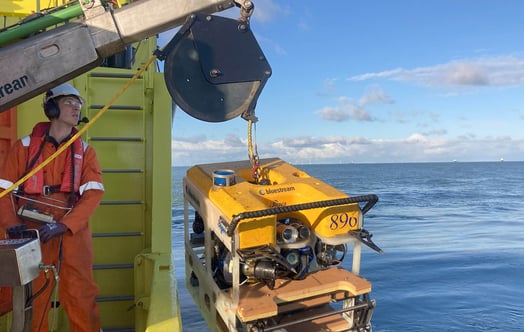
Surveying marine growth on offshore wind turbine foundations in the North Sea
There is no doubt that building offshore wind turbines affects marine life. But what exactly are the effects and what can we learn from them? To provide insight, a new remote-controlled tool...
From a distance: how satellites change the way biodiversity is monitored
Data collected from satellites are becoming more and more common when monitoring biodiversity. How can satellite pictures be best used? And what can we learn from them?
Climate-smart material choices reduce emissions in electricity production
The climate impact of the energy sector is not just about how electricity is produced, but also about the materials used to build new facilities. This is why Vattenfall is working to introdu...