
Vattenfall at Almedalen 2026: building a resilient electricity system in an uncertain world
How do we ensure a secure and resilient electricity system in an uncertain world? During this year’s Almedalen, Sweden’s annual political forum on the island of Gotland, Vattenfall brought together Ukraine’s ambassador to Sweden, Sweden’s Chief of Defence and the Director-General of SMHI to discuss what happens when the electricity system is put to the test – drawing on experiences from Ukraine.
During the seminar ‘Electricity is hope – what lessons can we learn from Ukraine about the importance of a resilient electricity system?’, Vattenfall’s President and CEO Anna Borg was joined by Ukraine’s Ambassador to Sweden Svitlana Zalishchuk, Sweden’s Chief of Defence Michael Claesson, Håkan Wirtén, Director-General of the Swedish Meteorological and Hydrological Institute (SMHI), and Annika Viklund, CEO of Vattenfall Eldistribution, to discuss how to build resilience in practice in light of the experiences from Ukraine.
“We know that the energy system is under systematic attack, and it is, of course, difficult for those of us living in peaceful conditions to understand what it actually means when there is no electricity. That is why it is so important to listen to Ukraine and learn from how they have worked to build resilience in the energy system under difficult conditions,” said Anna Borg.
Video player requires marketing cookies.
To view this content please click here to allow marketing cookies.

Watch the film shown at the opening of Vattenfall’s seminar “Electricity is hope” during Almedalen (English subtitles available).
Resilience emerges in a crisis
A functioning electricity system is often taken for granted. Experiences from Ukraine show how quickly this can change – and how people and businesses are forced to adapt. When a stable electricity supply can no longer be relied upon, everything from heating and communications to healthcare and everyday life is affected.
“We have learned that resilience is not something you possess, but rather a reaction to the challenges you face. We are fighting for our values, our history and the right to shape the future – and that is what defines our resilience,” said Svitlana Zalishchuk.
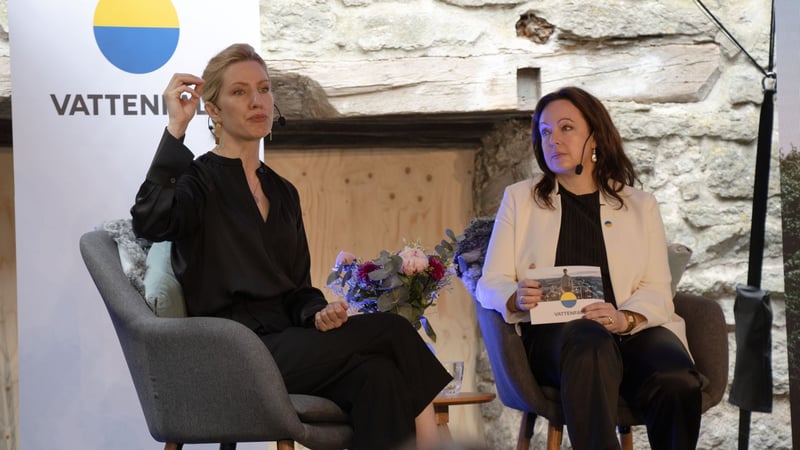
Svitlana Zalishchuk, Ukraine’s Ambassador to Sweden, and Anna Borg, President and CEO of Vattenfall, during Vattenfall’s seminar at Almedalen Week on 24 June 2026.
The electricity grid as part of total defence
The experiences from Ukraine highlight the importance of the electricity system for societal resilience. This is also evident in how the role of energy is described from a defence perspective.
“Energy supply is essentially everything – it is present in every component of both the resilience and society. What is so unique about Ukraine is how they are constantly working to restore normality and keep everyday life going. There, energy is part of the lifeblood of society,” said Michael Claesson.
The issue of the energy system’s resilience is therefore no longer merely a technical one, but to a large extent a matter of security policy.
“Vattenfall has a major responsibility, as we own a great deal of energy infrastructure in both Sweden and other European countries. We must therefore invest to maintain availability and prepare for how we will respond when disruptions occur,” said Anna Borg.
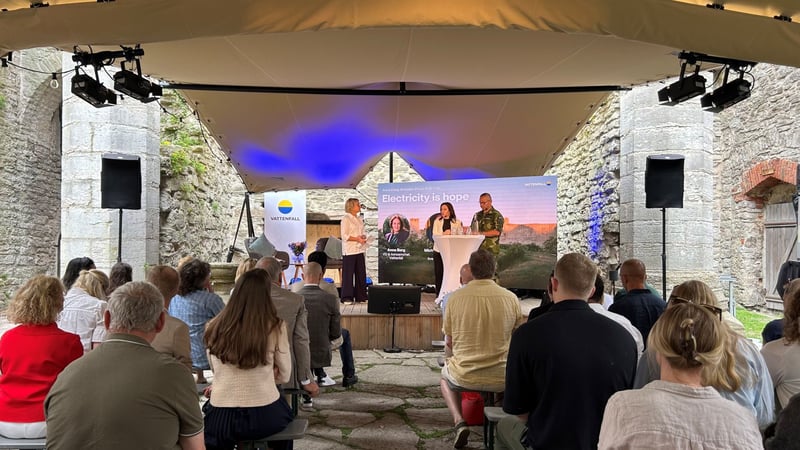
Sweden’s Chief of Defence Michael Claesson and Anna Borg, President and CEO of Vattenfall.
New demands on the electricity grids in a changing climate
Whilst the security situation is changing, new demands are being placed on the electricity system as a result of climate change. Extreme weather and increased strain mean that the need for resilience is growing.
“We are already seeing more extreme weather events – floods, heatwaves and storms – and this is affecting the wider infrastructure, including energy systems,” said Håkan Wirtén.
For the electricity grids, this means a new normal.
“The weather is affecting our electricity grids more than before – with more lightning strikes, ice build-up on power lines and flooding. This affects both how we build and where we locate our infrastructure”, said Annika Viklund.
She also describes how the demands on the electricity system are changing fundamentally:
“The electricity grids must function not only when everything is as usual, but also when something goes wrong – whether it is due to the weather or a changed security situation”.
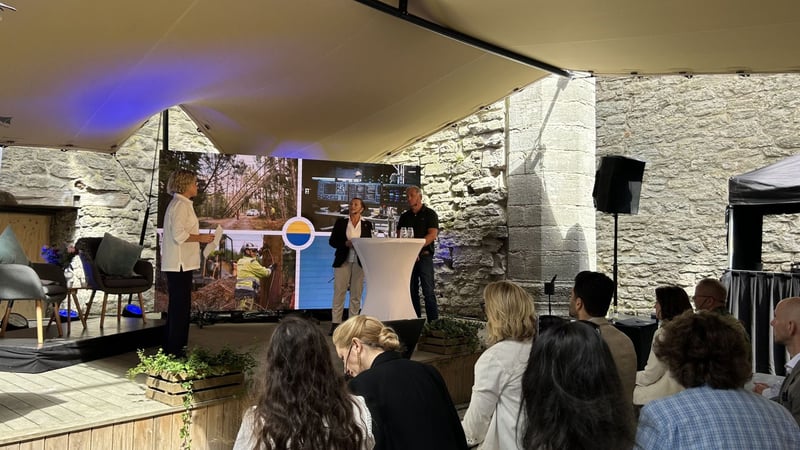
Annika Viklund, CEO of Vattenfall Eldistribution, and Håkan Wirtén, Director-General of the Swedish Meteorological and Hydrological Institute (SMHI).
Investments will determine the pace of progress
To meet these challenges and a changing security situation, extensive investment in the electricity grids is required. This involves both expanding capacity for electrification and modernising a grid where large sections are approaching the end of their technical lifespan. At the same time, the systems need to be made more robust to cope with greater stresses.
“We are expanding the electricity grid to meet increased demand, we are investing in existing infrastructure, and we are making the systems more robust. Last year, we invested 11 billion kronor – and whilst one rarely regrets investments in infrastructure, one may well regret not making them,” said Annika Viklund.
What is needed going forward?
Whilst the demands on the electricity system are increasing, the focus going forward will be very much on preparation and collaboration. Stakeholders from different parts of society need to be able to act together and take responsibility for their own part.
“For energy to work, many other things must also work – and for many other things to work, energy must work – for example, telecoms, food supply and transport. It is not just about technology, but about the ability to keep society running”, said Anna Borg.
Broad participation during Almedalen
In addition to the main seminar, Vattenfall took part in a large number of discussions during the week, both as co-organisers and panellists. Among other things, Anna Borg took part in a seminar organised by Videberg Kraft, which focused on the plans for new nuclear power on the Värö Peninsula in Sweden, the industry’s growing electricity needs and the trade-offs required to take the project forward.
Overall, the discussions during Almedalen centred on how crucial electrification is for competitiveness, the climate and geopolitical independence. AI was also a major topic.
“It is clear that energy issues permeate almost everything – from security and the climate to technology and competitiveness. “If we are to succeed with electrification, collaboration is needed between industry, politics and the authorities. After the week in Almedalen, my sense is that there is a broad consensus on the direction and an increased focus on how we take the next step,” said Anja Alemdar, Head of Public Affairs in Sweden at Vattenfall.
The seminar can be viewed (partly in English) on Energiföretagen’s Play channel.
See also
Why showing up matters – beyond Pride Season
Vattenfall publicly advocates for the right of every individual to be themselves.
Vattenfall appoints Anja Graf as new Head of Nuclear Decommissioning Germany
Anja Graf has been appointed as Vice President, Business Unit Nuclear Decommissioning Germany, and Managing Director for Vattenfall Europe Nuclear (VENE) at Vattenfall and will assume the po...
Vattenfall and Ukrhydroenergo launch knowledge exchange on the future of hydropower
Vattenfall and Ukraine’s state-owned hydropower company, Ukrhydroenergo, have launched a long-term knowledge exchange on the role of hydropower in future energy systems. Through the collabor...