
Why weather expertise matters more than ever
As more electricity comes from wind and solar power, accurate weather forecasts are becoming increasingly important. Better forecasts help lower costs and make the energy system more efficient.
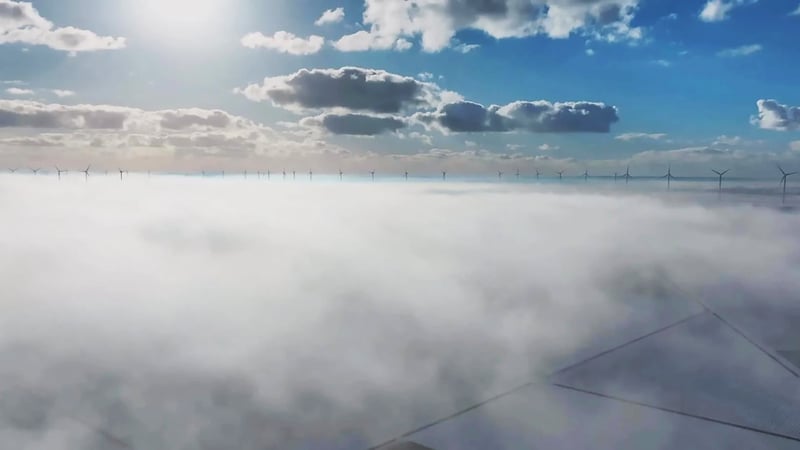
Vattenfall’s Prinses Ariane onshore wind farm in the Netherlands. Photo: Sander Bel, Vattenfall.
The power mix is changing rapidly: the more electricity is generated from wind and solar, the more trading, market optimization and the management of an increasingly flexible energy system depend on weather conditions – and the more costly inaccurate assumptions can become. Accurate forecasts and meteorological expertise are therefore essential for efficient market participation and overall system stability.
At Vattenfall’s energy trading operations in Hamburg, Malte Rieck works in the Weather and Forecasting team at precisely this intersection. “The weather is my toughest examiner because it continuously reveals whether forecasts and assumptions were correct”, he says.
From weather to market
Electricity generated by wind and solar farms is forecasted and marketed based on weather predictions. This is done both for the day-ahead market (for delivery the next day) and the intraday market (for delivery on the same day).
“We estimate the output of our assets for the following day as accurately as possible and then submit these volumes as bids to the market,” explains Malte Rieck. The Weather and Forecasting team prepares generation forecasts for Germany, Netherlands, the UK as well as for Vattenfall’s Scandinavian assets.
The uncertainty inherent in weather-dependent generation remains a constant challenge. If more or less electricity is generated than forecast, the difference must be either bought or sold at short notice on the intraday market. Alternatively, the grid operator may need to intervene, resulting in expensive balancing energy costs.
“There is no such thing as 100 percent accuracy when forecasting wind and solar output. Part of the outcome depends on how the weather actually develops up until generation takes place,” says Rieck. The goal is therefore not perfection, but relative performance: “We want to be more accurate than the market and keep forecasting errors as low as possible.”
Avoiding balancing energy and limiting costs
Differences between forecast and actual generation can still be corrected shortly before delivery through intraday trading. The aim is to minimize balancing energy costs, because the larger the deviation, the more balancing energy has to be procured – creating additional costs for the responsible market participants.
Ultimately, accurate forecasting is also a cost factor for the overall system, Rieck explains:
“The more precisely wind and solar generation can be predicted, the less balancing energy is needed. This increases the overall efficiency of the system and, in the long term, helps to reduce allocated costs and market prices for consumers.”
Greater volatility
As the share of weather-dependent generation grows, the market becomes more dynamic – and, at times, more extreme.
“Market fluctuations have increased significantly in recent years – price movements are much more pronounced today,” says Rieck. He starts each day by analyzing weather conditions and assessing short-term risks that could affect generation, from thunderstorms and wind gusts to safety-related shutdowns or snow covering solar panels.
Negative electricity prices have also become a common occurrence on sunny spring and summer afternoons, when large amounts of solar power enter the grid simultaneously. Supply exceeds demand and prices fall below zero.
“In those situations, we often curtail generation on a large scale to avoid additional costs,” says Rieck.
AI improves accuracy
The growing dependence on weather-driven generation means a steadily increasing demand for data. To make forecasts more reliable, the Weather and Forecasting team continuously combines weather forecasts, power market models and additional data sources – increasingly with the support of artificial intelligence. To achieve the highest possible forecasting quality, different weather and power models are blended into an optimized forecasting mix.
Overall, the development is clear: more renewable energy requires more flexibility – in grids, storage systems and electricity demand.
“In the future, we will need to manage energy intelligently – storing it, shifting it and balancing it,” says Rieck.
Depending on circumstances, energy will be used directly, stored temporarily in large-scale batteries or pumped-storage facilities, and in the future potentially decoupled in time through hydrogen production. Smart meters and dynamic tariffs will also be essential to enable consumers to adjust their electricity consumption more flexibly.
See also
When emissions become cheaper, the cost to Europe risks rising
As energy prices rise, pressure mounts to reduce the price of carbon emissions. But making the EU’s emissions trading system cheaper risks becoming a costly outcome for Europe – ...

“Don’t mess with ETS!”
The EU Emissions Trading System (ETS) and the electricity market design have acted as pillars of the transition and delivered affordable energy and fossil-free investments for the last decad...
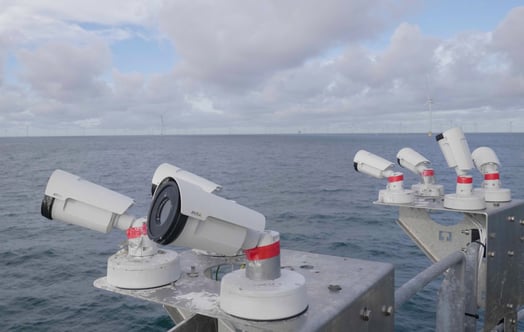
Thermal cameras shed new light on bird activity at sea
A thermal-camera and AI-system tested at Vattenfall’s Hollandse Kust Zuid offshore wind farm in the North Sea monitored bird movements around a turbine, day and night. As the technology work...