
Vattenfall at COP 31:"We want the whole world to be on board.”
Missing the 1.5°C climate goal is a setback, but not a reason to slow down. At COP31 Vattenfall’s Annika Ramsköld saw frustration, but also growing momentum around electrification, business action and collaboration.
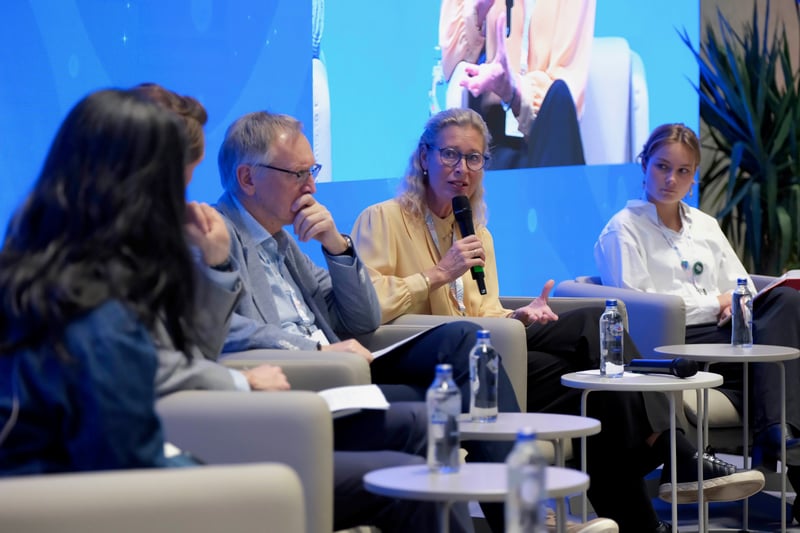
2026 has been a year in which the effects of climate change have been felt across the world. It looks set to be one of the warmest years ever recorded, while extreme weather events such as tropical storms, floods, wildfires and extreme heat have become increasingly common.
At the end of October, the UN announced that the goal of limiting the global temperature rise to no more than 1.5°C would not be met. The organisation said it was still possible to mitigate the worst consequences of climate change, but that changes had to happen – and fast.
This formed the background when decision makers met in Antalya, Turkey, in November for the UN’s climate conference COP31. We talked to Vattenfall’s Vice President for Corporate Sustainability Annika Ramsköld.
The UN report was disheartening, to say the least. What has the mood been like at COP31?
“There have been mixed feelings. There is frustration that it is now clear we will not be able to meet the climate target of 1.5°C, but also a sense that there is fresh momentum. Businesses in particular are very proactive, emphasising that they have solutions and evidence that certain approaches work.”
Negotiations on a final document have broken down. How serious is this?
"Of course, we would all have liked the countries to have agreed on wording regarding the phasing out of fossil fuels. There is always a lot of focus on the negotiations and what the end document of the COP entails. But we should remember it’s a consensus document, consisting of the smallest common denominator that the 198 members could agree on. In fact, there are many actors who are moving faster, doing much more and joining initiatives such as ‘Transition Away from Fossil Fuels’ to drive the transition forward. And the fact that the EU has now stood its ground against the oil-producing countries and refused to agree to wording that makes no mention of fossil fuels may even have a positive impact on the future process."
Why is it still important for Vattenfall to keep pushing ahead and remain committed to the 1.5°C target?
“Because those targets still set the framework for everyone who wants to be part of the transition. The Paris Agreement and the 1.5°C target have provided predictability and confidence about where we are heading, which has unlocked a great deal of investment. That is why Vattenfall has invested in significantly more generation capacity. That is why we have seen investments in the electrification of heavy industry.”
You have attended several previous COP conferences. What has been the biggest difference this time?
“In the past, I felt that businesses were driving progress while politicians in a way stood on the sidelines. What I have seen clearly this time is that politicians involved in the negotiations are like sponges when they hear what businesses are doing or want to do. They really want to understand the practical barriers businesses face, what politicians need to do to accelerate progress and how they can help. Focus has moved from what to how. What else strikes me being at COP, is that we Europeans are sometimes in our own bubble, discussing how quickly we are moving. But going into some of the other country pavilions, I see so many things and so much development happening. Just look at China where more than half of the cars are electric. So, I think that we in Europe actually have to speed up and go from words to action.”
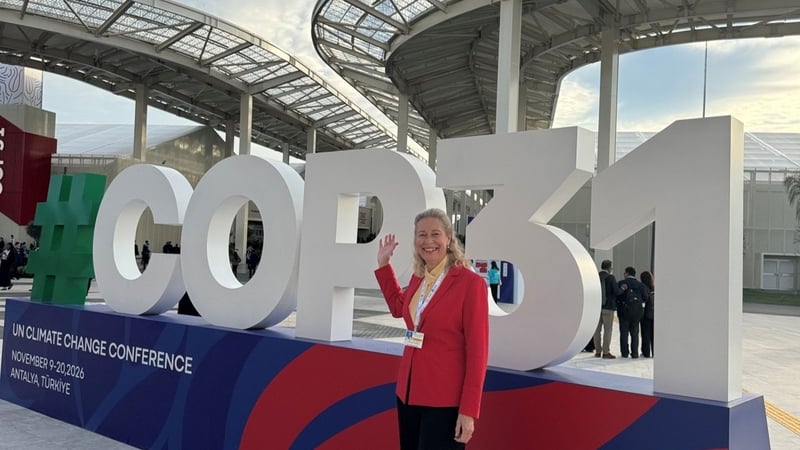
What has been the most interesting part of the programme you attended?
“I really enjoyed a discussion we had with the International Organisation of Employers about the skills we will need to deliver electrification. It turned the usual perspective on its head. The focus is often on having the technology in place to enable the transition, but do we actually have the right skills to implement it? Do we have all the engineers, technicians and business developers we need to deliver everything we want to achieve at the pace required? Attracting new employees so that not everyone becomes a YouTuber, as well re-skilling and upskilling our current employees via trainings will be incredibly important the years ahead."
We know that cooperation with other businesses and organisations is increasingly important. Have you noticed a greater willingness to collaborate following the UN’s announcement on the climate?
“Yes, definitely. We will not be able to deliver all these breakthrough technologies, such as fossil-free cement or steel, unless we get the entire value chain and ecosystem working together. The whole production process needs to be transformed, and ideally everything needs to happen at the same time. That means everyone in the ecosystem has to make decisions almost simultaneously. Collaboration is absolutely essential if we are to make this happen.”
In the ongoing revision process for the European Emissions Trading System, some stakeholders want to weaken the system. How has this discussion been received at COP31?
“The ETS has certainly been discussed among the European participants here. I have spoken to other businesses and having a clear carbon price is absolutely vital for them, just as it is for us. Otherwise, the investment simply will not happen. The fact that we currently have substantial subsidies for the fossil fuel industry, while lacking an adequate carbon price, could prove devastating. Without a carbon price, we will not have the market forces that are absolutely essential to drive progress. But we also need to scale up a robust international carbon market. At present, less than 30 per cent of the world has a price on carbon, and that figure needs to rise. We want the whole world to be on board.”
More about COP31
For more insights on Vattenfall and COP31, watch these interviews with Annika Ramsköld from We Don’t Have Time at the UN climate conference.
On Global Carbon Pricing: Interview with Annika Ramsköld, Vattenfall, from COP31
The Decade of Electrification - Interview with Annika Ramsköld, Vattenfall, from COP31
See also
From theory to practice – how circularity could permeate companies’ value chains
Most companies recognise the importance of circularity, but turning ambition into action remains a challenge. What does it take to move from ambition to action – and make circularity part of...
Why electrification cannot wait
When fossil-fuel prices rise, households and businesses feel the impact. Switching to fossil-free electricity can reduce that exposure. Europe worked hard to increase fossil-free electricity...
Vattenfall and Copenhagen Infrastructure Partners choose Siemens Gamesa turbines for Zeevonk offshore wind farm
Vattenfall and Copenhagen Infrastructure Partners (CIP), through their joint venture Zeevonk, have selected Siemens Gamesa as turbine supplier for Phase I of the Zeevonk offshore wind farm o...