

The Museum of Fossil Fuels shows bleak future for gasoline
Within a generation, gasoline and diesel could be placed in museums. At the end of this summer, Vattenfall opened the Museum of Fossil Fuels, the first of its kind, in Stockholm.
Do you remember the smell of gasoline? Or the noise from the highway traffic through the city?
For more than 100 years, gasoline and diesel have fuelled cars and other vehicles all over the world, helping people transport goods as well as each other. Today, batteries start to replace car gasoline tanks at an accelerating pace, and the fossil era may end sooner than many people think. So where will the knowledge and experience of petroleum fuels be preserved for the future? At a museum, of course.
Video player requires marketing cookies.
To view this content please click here to allow marketing cookies.
Visitors are taken on a time travel
In fact, the museum already exists. In August, the futuristic exhibition the Museum of Fossil Fuels opened its doors in Stockholm, Sweden.
The museum is a kind of time machine where visitors are taken on a journey into a rather near future where all cars are already electrically powered, and where only the older generation has memories of what it looked like at a gas station. In the various booths and rooms this is illustrated in sound, picture, video and smells.
– By stepping forward a number of years, we want to give a sense of what life will look like, a generation ahead in time. In this way, we want to show that we are serious about our goal of enabling our customers to live fossil-free within a generation,” says Sofia Mankert, communications manager at Vattenfall.
Charging networks for electric cars are an important step
The technological development to reduce climate impact is fast today. Vattenfall’s researchers work in a number of areas, such as methods for fossil-free steel manufacturing, hydrogen power generation and not least to develop and expand the infrastructure for electric car charging to facilitate for people to choose to buy an electric car.
– It can be difficult to imagine how society will be changed in a future where all transport is fossil-free . That is why we decided to try to create part of that future, while at the same time pointing to the enormous role that fossil fuels played in society's development,” says Susanna Hurtig, head of Vattenfall's charging-network InCharge in the Nordics.
More cities next year
The Museum of Fossil Fuels was shown in Stockholm for four days at the end of August 2019. The ambition is that next year the exhibition will go on tour in Vattenfall's other markets in Northern Europe.
Facts
InCharge is a European charging network with thousands of charging points throughout cities and in rural areas.
Read more here: Vattenfall InCharge
See also
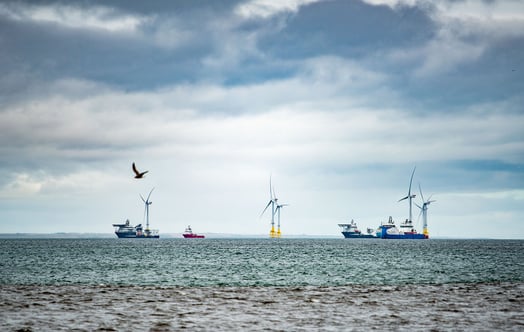
How birdlife and offshore wind power interact
How are birds affected by offshore wind power – and how can new technology help us understand the subject better? Extensive studies are underway at offshore wind farms to understand how bird...
Scientists agree: Biodiversity loss is now a business risk
Animal and plant species are disappearing at an unprecedented rate. This also has serious consequences for the economy, according to an intergovernmental scientific report that also sets out...
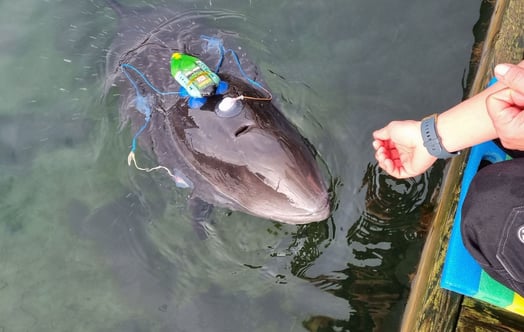
Unique study fills gap on effects from electromagnetic fields on marine mammals
Can harbour porpoise detect electromagnetic fields and are they affected? In a pioneering research project Vattenfall aims to find out, together with Danish and Swedish universities.