
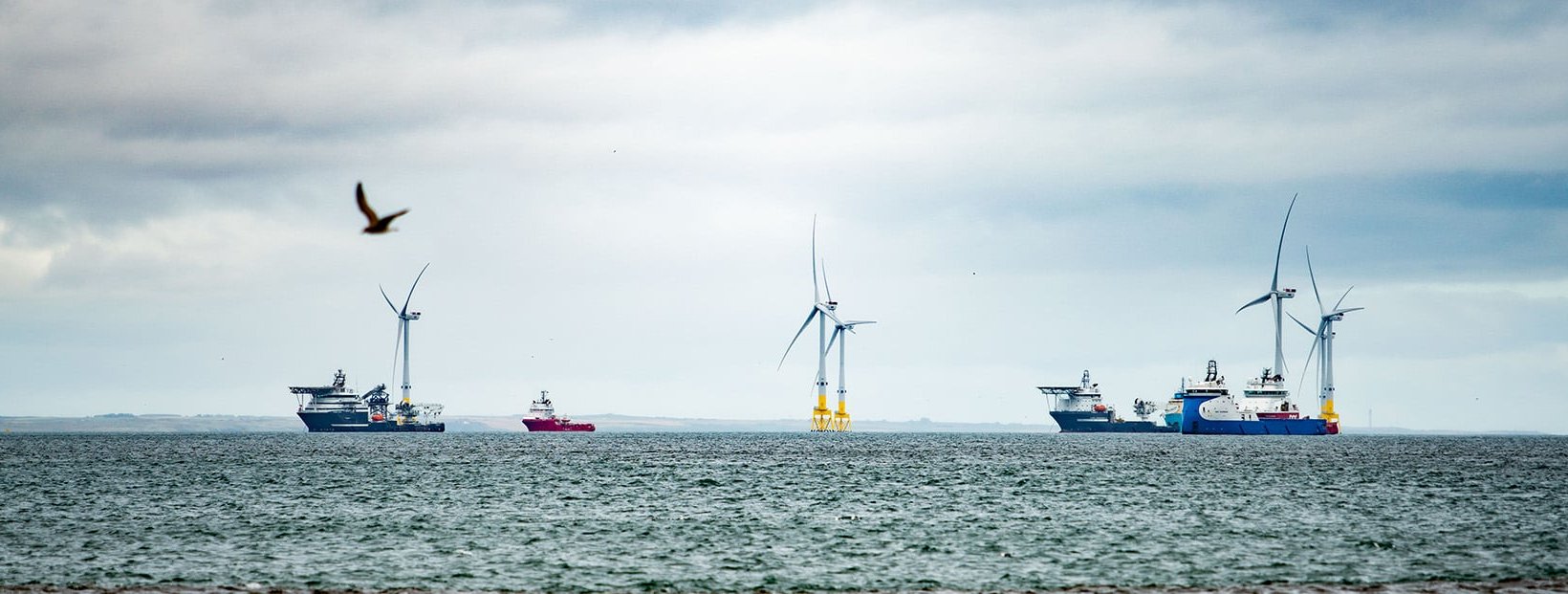
- Long‑term studies at offshore wind farms are used to better understand how birds move and interact with wind turbines.
- Monitoring at the Aberdeen Bay offshore wind farm shows that bird collisions were not detected during the study period.
- Observations indicate that many birds adjust their flight paths well before reaching wind turbines.
- New technologies such as cameras and AI enable more detailed, long‑term data to support permitting and responsible wind power development.
How are birds affected by offshore wind power – and how can new technology help us understand the subject better? Extensive studies are underway at offshore wind farms to understand how birds move in areas where wind power is being developed. New findings from a study in Scotland show that collisions are rare – and that many birds adapt their flight paths.
The expansion of wind power is a central part of the transition to a fossil-free energy system. At the same time, it raises questions about how wildlife is affected. For birds, which often move across large areas and share the same airspace as wind turbines, the interaction is complex.
To reduce uncertainty regarding the impact of wind power on birdlife, Vattenfall has for a long time conducted studies related to biodiversity, both on land and at sea. One of the most recent studies was carried out at the offshore wind farm off Aberdeen Bay in Scotland.
For around two years, bird movements have been monitored around one of the wind turbines during daytime. The data has been analysed both manually and using artificial intelligence, trained to identify birds, their movement patterns and any collisions.
The results show that no collisions were detected during the monitoring period.
Results that challenge previous assumptions

Aonghais Cook, Senior Principal Consultant at Biodiversity Consultancy.
One of those who has followed the study is Aonghais Cook, Senior Principal Consultant at Biodiversity Consultancy and formerly of the British Trust for Ornithology. He has worked on bird studies linked to offshore wind power for over 15 years and has been involved in several projects, including the study at Aberdeen.
“We now have nearly two years of intensive data collection from turbines where one would have expected to see at least a few collisions, if they were common. The fact that we see none at all is a strong result, although one must always interpret it in context,” says Aonghais Cook.
According to Cook, the study is important because it is based on long-term monitoring and provides actual observations, rather than assumptions, helping to strengthen the evidence base used to inform projects permits and mitigation measures.
“Seabirds are affected by many factors. That is why it is important to have a solid knowledge base based on actual observations of how they move around wind turbines, so that we can continue to develop them in a responsible manner,” says Aonghais Cook.
Birds adjust their flight paths
This study is in line with previous research at Aberdeen showing that seabirds actively change their flight paths before reaching the wind turbines. As early as 100–200 metres away, many species begin to adjust their course and fly around the turbines.

Jesper Kyed Larsen, bird ecologist at Vattenfall.
Jesper Kyed Larsen, bird ecologist at Vattenfall, is working to gather the knowledge needed to better understand the impact of wind power on birdlife.
“Birds are generally skilled at navigating their surroundings. What we see is that they are highly aware of the wind turbines and adapt their flight paths,” says Jesper Kyed Larsen.
At the same time, he emphasises that collisions can still occur, and that the results should therefore not be interpreted as definitive.
New technology enables more detailed knowledge
The use of cameras and AI is an innovative, new method in bird studies relating to wind power. The technology makes it possible to collect large amounts of data over a long period of time, something that was previously difficult to achieve using manual observations alone.
“Collisions are rare occurrences. To understand when and how they happen, continuous monitoring is required, and that is where automated systems are crucial,” says Jesper Kyed Larsen.
More than just collisions
Bird studies in relation to wind power are not solely about collisions between birds and rotor blades. It is at least as important to understand how birds move in and around wind farms and how different species use landscapes and marine areas over time.
In previous studies, Vattenfall has tracked birds in a variety of environments, both at sea and on land. Among other things, land-based studies in Denmark have focused on how large birds such as cranes and geese move through the landscape and pass through areas with wind farms. At the offshore wind farm Hollandse Kust Zuid in the Netherlands, studies are being conducted to document the extent to which migrating birds collides with the wind turbines and under what circumstances. These types of studies are used as a basis for permit processes and contributes to a broader understanding of birds’ movement patterns.
Despite numerous studies, however, there are still questions that require further investigation.
“This is a complex area where there are still gaps in our knowledge. It concerns behaviour, movement patterns and how different species use the landscape over time,” says Jesper Kyed Larsen.
Knowledge as a basis for decisions and permits
The conditions affecting how birds are impacted by wind power vary between different locations, species and environments. Therefore, the results of a single study can never be generalised directly, but must be placed in a broader context.
In many countries, knowledge of birds’ movement patterns is a central part of the permitting process for wind power, particularly in areas where important migration routes pass through or where sensitive species are present. Regulatory requirements, such as temporary shutdowns of wind turbines during mitigation periods, are often based on the precautionary principle. This means that requirements are sometimes based on a worst-case scenario as knowledge is limited. It is therefore important that new knowledge is not only generated, but also used to advise and refine current and new requirements.
“We are entirely dependent on working together with researchers and other experts in the field to ensure that the results are scientifically sound. At Aberdeen, long-term monitoring shows that seabird collision risk is substantially lower than pre-construction assumptions, highlighting the importance of real-world data in decision-making and project permitting,” says Jesper Kyed Larsen.
Part of a long-term effort
Both Cook and Larsen point out that research continues to evolve. New technologies, such as thermal cameras and improved AI models, make it possible to study even nocturnal birds and situations with poor visibility – areas where knowledge gaps still exist.
“The Aberdeen study is an important result in itself, but also part of a long-term effort where data from many locations, species and methods are combined,” says Jesper Kyed Larsen.
Cook also highlights the value of investing in long-term bird studies and how the results are handled.
“It is valuable when energy companies invest in long-term studies with clear methodology and are open about the results. This type of work contributes important knowledge that can be used both in research and in future environmental assessments,” says Aonghais Cook.
The ambition is that the research will provide better evidence base for issues where both climate benefits and consideration for biodiversity need to be taken into account. Taken together, the studies conducted so far indicate that many bird species are very good at avoiding collisions with wind turbines. At the same time, collisions are only one aspect of how birds may be affected. Potential displacement effects – where wind farms cause birds to avoid feeding areas – also need to be better understood and are an important part of ongoing and future research.


Sign up for our newsletter THE EDIT
THE EDIT is Vattenfall's new monthly newsletter. Each issue highlights a new burning issue from the world of sustainable energy and fossil freedom.
See also
Vattenfall Business Area Wind maintains leader status in IRBC assessment
Vattenfall’s Business Area Wind has once again been recognised as a Leader in the IRBC assessment, reflecting continued progress in responsible and sustainable business practices.
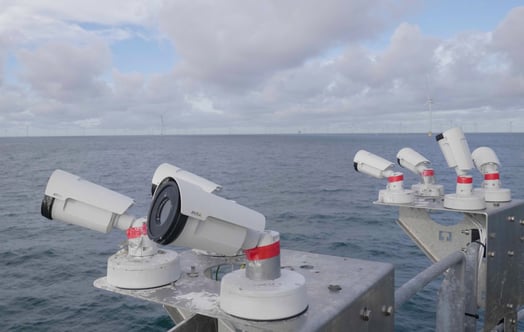
Thermal cameras shed new light on bird activity at sea
A thermal camera and AI system tested at Vattenfall’s Hollandse Kust Zuid offshore wind farm in the North Sea monitored bird movements around a turbine, day and night. As the technology work...
What it takes to build one of Europe’s largest offshore wind farms
In the German North Sea, the first visible signs of Nordlicht wind farm are beginning to emerge above the sea surface. By 2029, 112 wind turbines will make a strong contribution to the count...