
Can harbour porpoise detect electromagnetic fields from sea cables and are they affected? In a pioneering research project Vattenfall aims to find out, together with Danish and Swedish universities.
Video player requires marketing cookies.
To view this content please click here to allow marketing cookies.
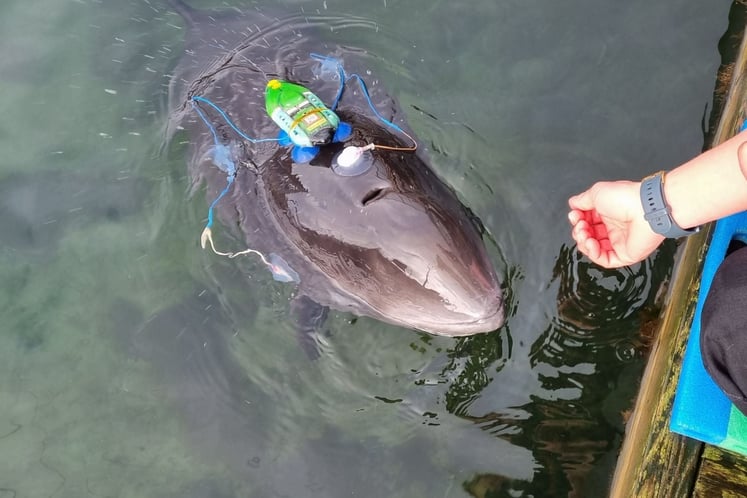
In carefully designed research studies, trained harbour porpoises take part in experiments that use only positive reinforcement and no coercion.
Offshore wind farms relies on subsea cables to transport electricity to shore. Like all electrical infrastructure, these cables generate electromagnetic fields (EMF). How these fields affect animals is an area that remains largely understudied.
A joint project, EMPACT, between Vattenfall and universities in Denmark and Sweden is now tracking harbour porpoises to investigate and better understand whether – and how – these marine mammals detect or respond to these fields. Insights from the study could inform how future cables are installed and help shape the design of new wind farms.
Research on marine mammals in offshore wind has focused mainly on underwater noise and its effects. Much less is known about the potential impacts of electromagnetic fields - EMF. This knowledge gap matters because harbour porpoises are protected, ecologically important and widely distributed across northern European waters.
That is why Vattenfall, the University of Southern Denmark and the Swedish Royal Institute of Technology have joined forces in a project to learn more about how harbour porpoises respond to electromagnetic fields in their marine environment.
“The most robust experimental studies in this area have only emerged within the last five years, “says Adam Smith, researcher at the University of Southern Denmark. “For a long time, the issue was mostly discussed in theoretical terms: whether these harbour porpoises might use magnetic fields for navigation over long distances in the ocean. However, German studies on bottlenose dolphins showed very clearly that they can detect electric fields, and that made us ask whether harbour porpoises might be able to do the same,”
Studying possible behavioural change
Smith has been involved in the collaborative harbour porpoise project since its launch in 2024, working alongside Joanna Sarnocinska-Kot, a bioscience expert at Vattenfall. The researchers started by analysing data from earlier studies that had been performed on wild porpoises. By means of small, non‑invasive electronic tags, temporarily attached to the animals using suction cups, these studies tracked the movements, diving behaviour and exposure to electromagnetic fields. The results were important but partly inconclusive:
“When we looked at the studies, we found three completely different behavioural responses when an animal was above a cable,“ Sarnocińska-Kot says. “In the first case the animal did not change its swimming or hunting pattern at all. The second animal swam to the surface as it crossed the cable and stopped feeding, and the third animal swam down to the seabed and fed almost constantly while following the cable.”
In 2025, to deepen knowledge, the project proceeded into a second phase involving Fjord&Bælt Science Education Centre, which is a combined public outreach and research institution for trained harbour porpoises located on the Funen island in Denmark.
At the Fjord&Bælt centre, trained porpoises take part in carefully designed research studies that use only positive reinforcement and no coercion. In this case, the studies compare different levels of electromagnetic fields to identify possible response thresholds, or in other words, at what point the fields begin to induce porpoise behavioural change. By comparing these values with EMF from subsea cables, it will help understanding how wild porpoises may respond in the marine environment.
Influence on future wind power design
Harbour porpoises are the most common marine mammal species in the North Sea, They are also considered particularly sensitive to disturbance. At the same time, the North Sea is an area where offshore wind development is forecast to accelerate in the coming years. In January, leaders of the North Sea countries set a target of 100 GW offshore wind power until 2040.
“That’s why it’s crucial that we understand how human activities are affecting these populations. Electromagnetic disturbance has been in the background as a possible issue for some time, but there has not really been an opportunity to address it properly until now,” says Adam Smith.
The final results from the porpoise project are expected during 2027. These could have practical implications for the future design of offshore wind farms and their infrastructure as offshore wind continues to expand as part of the energy transition.
“EMF is an emerging concern and there are still important knowledge gaps that need to be addressed. This is why we believe, it is important to collect scientific data to better inform the discussion. To do this, we need to understand the EMF levels generated by subsea cables, the levels to which animals are exposed, and how they respond to them,” Sarnocińska-Kot concludes.
Part of a broader, long‑term effort
The EMF research is part of Vattenfall’s Biodiversity protection in Wind and Solar (BioWinS) programme, an in‑house R&D initiative that goes beyond regulatory requirements to better understand how to mitigate negative impacts and foster positive impacts of wind and solar farms on nature. Through more than 60 collaborative research projects so far, the objective is to close knowledge gaps and to test innovative solutions to promote nature-inclusive renewable energy development.


Sign up for our newsletter THE EDIT
THE EDIT is Vattenfall's new monthly newsletter. Each issue highlights a new burning issue from the world of sustainable energy and fossil freedom.
See also
Vattenfall Business Area Wind maintains leader status in IRBC assessment
Vattenfall’s Business Area Wind has once again been recognised as a Leader in the IRBC assessment, reflecting continued progress in responsible and sustainable business practices.
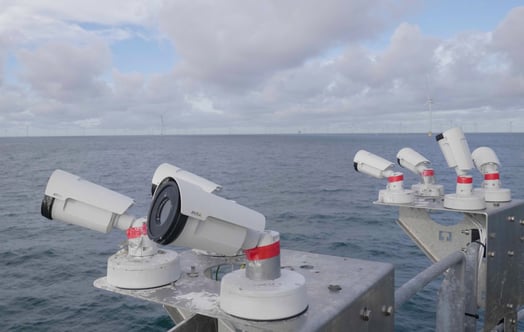
Thermal cameras shed new light on bird activity at sea
A thermal camera and AI system tested at Vattenfall’s Hollandse Kust Zuid offshore wind farm in the North Sea monitored bird movements around a turbine, day and night. As the technology work...
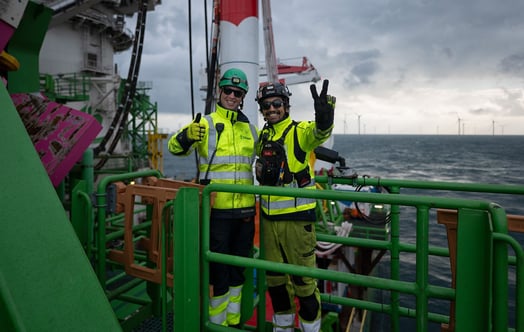
What it takes to build one of Europe’s largest offshore wind farms
In the German North Sea, the first visible signs of Nordlicht wind farm are beginning to emerge above the sea surface. By 2029, 112 wind turbines will make a strong contribution to the count...