
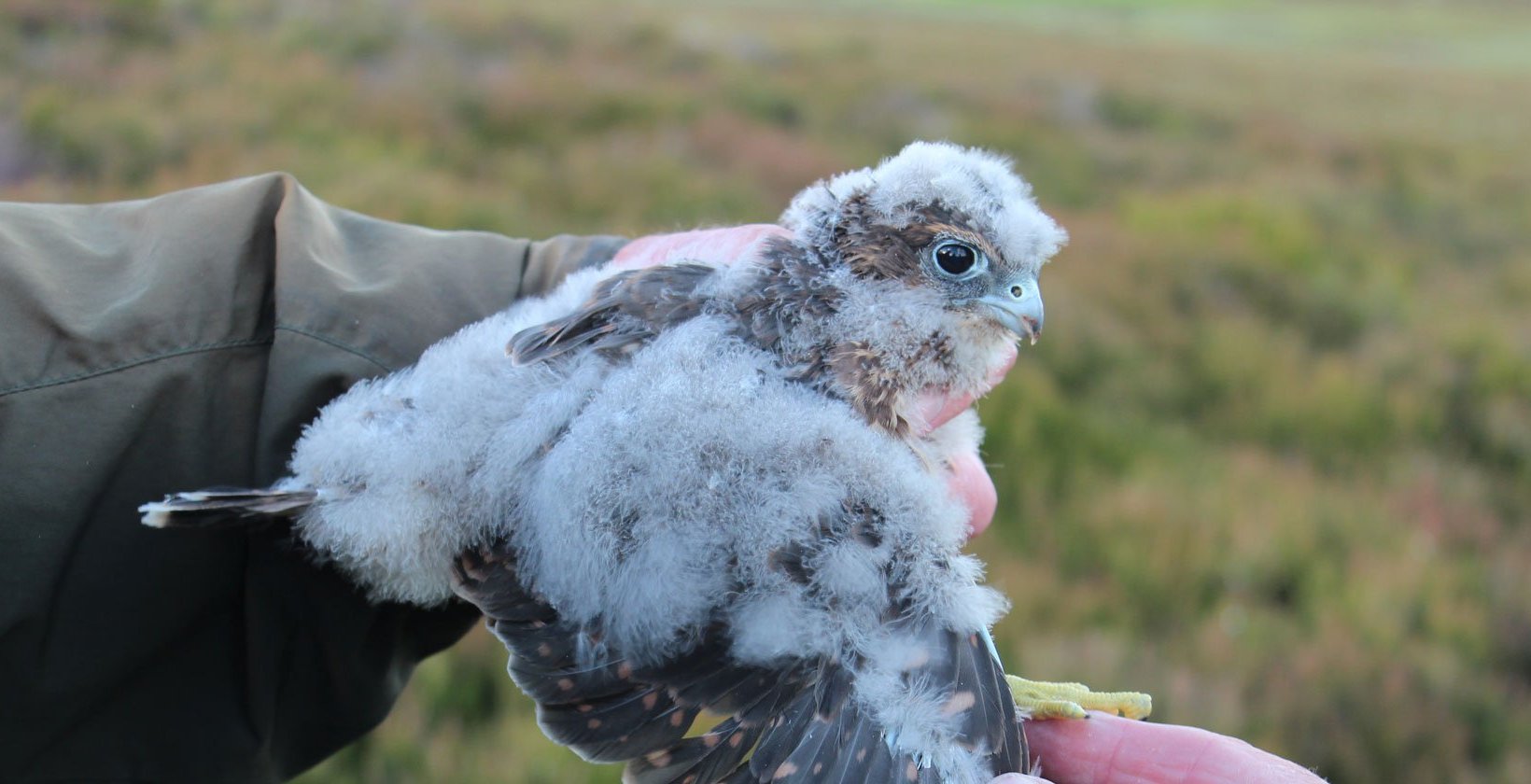
With only 1000 pairs in the UK, the merlin is red listed in the country. One of the habitats where the bird has successfully bred is Vattenfall’s Ray wind farm in north-eastern England.
The merlin, Britain’s smallest bird of prey, has suffered a decline in the past, with an estimated population of around 1,000 pairs in the UK. In 2015 it was alarmingly added to the UK Red List of Birds of Conservation Concern.
One of the sites where merlins breed is Ray wind farm in Northumberland in the north east of England. Since 2017, when the 16 turbine wind farm was inaugurated, 23 merlin chicks have fledged here, making the wind farm area one of the best in the region for merlin, according to Paul Galloway from Northumbria Ringing Group, which is a group of volunteers who monitor bird populations in the area.
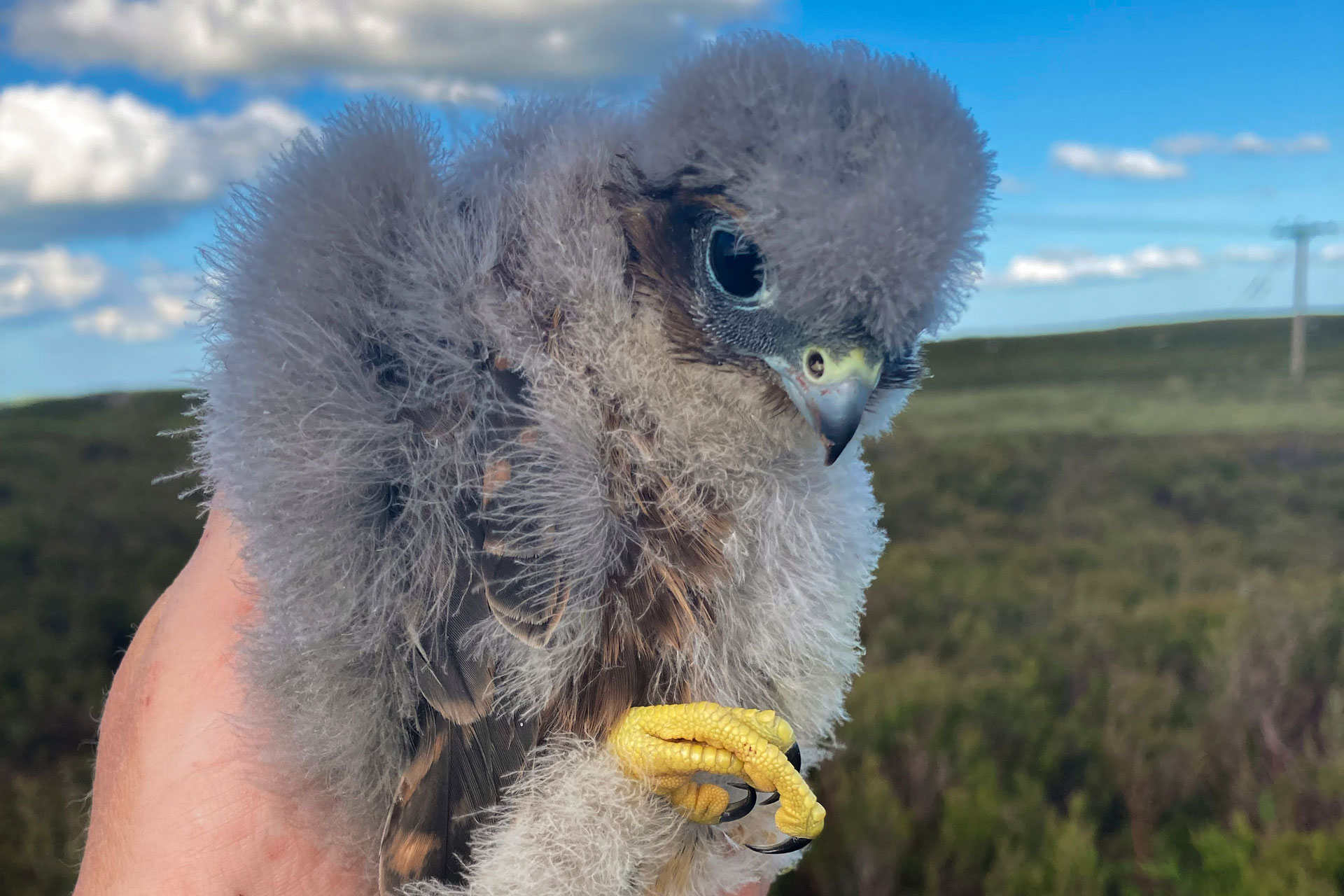
“Merlins have attempted to breed on Ray wind farm every year since 2017, and with fledged young birds recorded in all but one of those years it is one of our most successful sites. We are particularly grateful to Vattenfall, along with other like-minded landowners, for their collaboration and ongoing support with monitoring efforts,” Paul Galloway says.
Vattenfall, who owns and operates Ray Wind Farm, has worked closely with key bodies during the construction and operation of the wind farm to protect the environment:
As part of the Habitat Management Plan, improvement works were undertaken to restore sensitive habitats such as blanket bog by re-wetting the surrounding area. Works are also being undertaken to encourage the regrowth of heather, improving biodiversity overall including the population of insects – a food source for a number of birds of conservation concern in the local region. Measures are also put in place each year to minimise disturbance of the nesting merlins. This year, the efforts have contributed to five new merlin leaving their nest.
“It's really great to see another five merlin chicks fledged at Ray this year,“ says Robin Cox, Environmental Specialist at Vattenfall. “It is hoped that our ongoing collaboration with the Northumbria Ringing Group will continue to see this trend of successful breeding attempts by merlin as well as other upland species such as curlew and golden plover.”
See also
Vattenfall Business Area Wind maintains leader status in IRBC assessment
Vattenfall’s Business Area Wind has once again been recognised as a Leader in the IRBC assessment, reflecting continued progress in responsible and sustainable business practices.
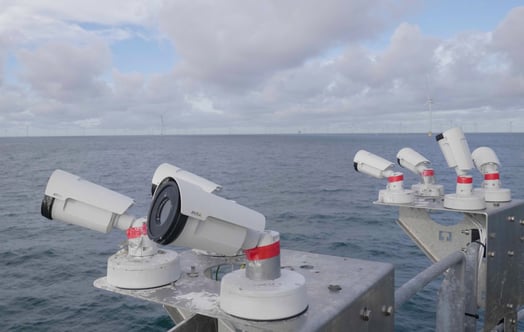
Thermal cameras shed new light on bird activity at sea
A thermal-camera and AI-system tested at Vattenfall’s Hollandse Kust Zuid offshore wind farm in the North Sea monitored bird movements around a turbine, day and night. As the technology work...
What it takes to build one of Europe’s largest offshore wind farms
In the German North Sea, the first visible signs of Nordlicht wind farm are beginning to emerge above the sea surface. By 2029, 112 wind turbines will make a strong contribution to the count...