
Vattenfall reviews HySkies project scope
Vattenfall and Shell are reviewing the scope for the HySkies electrofuel project with the ambition to find new partners to join Vattenfall. While this will delay the project the ambition to investigate the production of synthetic sustainable aviation fuel (SAF) towards 2030 stays.
In 2021 Vattenfall took the initiative to develop the HySkies project together with Shell, aiming to speed up the transition towards electrofuels for aviation. Now Vattenfall and Shell have agreed to open up the collaboration for potential other partners to join Vattenfall.
”When new cross border partnerships, like HySkies, are developing there can be adjustments in its early stages, such as the feasibility study phase. However, Vattenfall believes strongly in the opportunities of the Forsmark region to decarbonize heavy industries, and we are now reviewing the scope for producing electrofuel for the market towards 2030”, says Per Sundell, Senior Business Developer, Vattenfall.
While Shell has expressed to see a future in the HySkies project, including opportunities for future potential collaborations , currently there is a different belief in timelines for the project to be realized.
With Vattenfall´s high belief in the opportunities of the Forsmark region to decarbonize heavy industries through fossil free electricity, hydrogen and captured CO2, the full potential is currently under review and investigations are ongoing to identify potential suitable industrial partners to join our ambitions towards a fossil free future.
Facts:
- Electrofuel is a type of SAF (Sustainable Aviation Fuel).
- Instead of using fossil feedstock, fossil free electricity, recycled carbon dioxide and water will be the only inputs to the process of making electrofuel. Electricity will mainly be used to make hydrogen via electrolysis.
- Rather than be released, the carbon dioxide from a district heating facility will be captured and used for electrofuel production. When electrofuel is combusted by aircraft engines, the captured carbon dioxide is released into the atmosphere after being utilized a second time. This will not ad new carbon dioxide into the atmosphere.
- The raw materials planned to be used are fossil free electricity from the Swedish electricity grid and carbon dioxide collected from Vattenfall’s combined heat and power plant in Uppsala, where approximately 200,000 tonnes of carbon dioxide can be recovered per year.
- Today’s aircraft are certified to fly with a maximum of 50% SAF depending on production pathway and the remainder with traditional aviation fuel.
- Our annual planned SAF production of 80,000 ton would strongly contribute to the Swedish national targets of a fossil free domestic air travel and corresponds to about 30% of the needed Jet fuel to reach that target.
See also
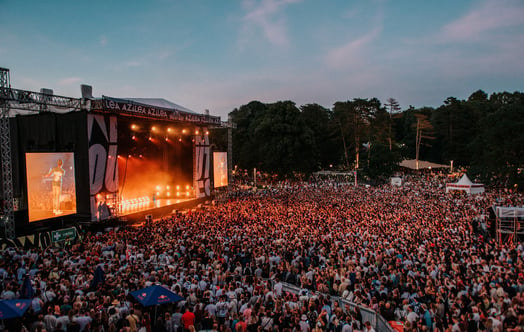
Vattenfall batteries secure fossil-free electricity for Way Out West festival
The Way Out West festival in Gothenburg is one of the biggest in Northern Europe. This year the music festival it is powered by fossil-free electricity and battery storages from Vattenfall.
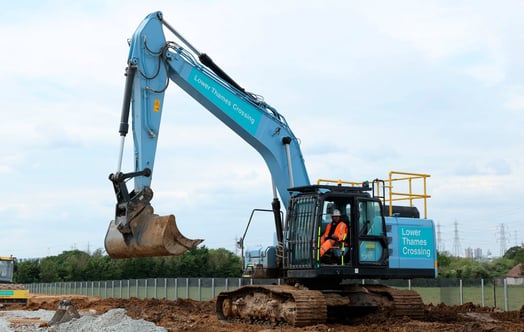
Huge road and tunnel project in the UK aims to reshape construction for the future
Construction is one of the hardest sectors to decarbonise. But in the UK, a major infrastructure project aims to reach carbon neutral by using electric machinery and low‑emission materials.
What can the energy transition mean for European competitiveness?
European industries are still dependent on imported fossil fuels, which can increase energy prices – and create a situation where the continent will always be third best after USA and China....