
In a nutshell:
- New e-boiler in Diemen turns renewable electricity into heat for district heating.
- It cuts fossil fuel use and can heat around 20,000 homes.
- The project boosts energy system flexibility and supports decarbonisation.
What do you do with renewable electricity when there is so much wind and solar power available that electricity prices become very low or even negative? In Diemen, the Netherlands, Vattenfall converts that electricity into heat for thousands of households. The new electric boiler (e-boiler) serves as a smart link between the power grid and the district heating network.
In Diemen, near Amsterdam, Vattenfall has taken another step towards reducing the dependence of district heating on fossil fuels. Since its commissioning in March 2026, the electric boiler (e-boiler) has been supplying heat to the district heating networks of Amsterdam and Almere.
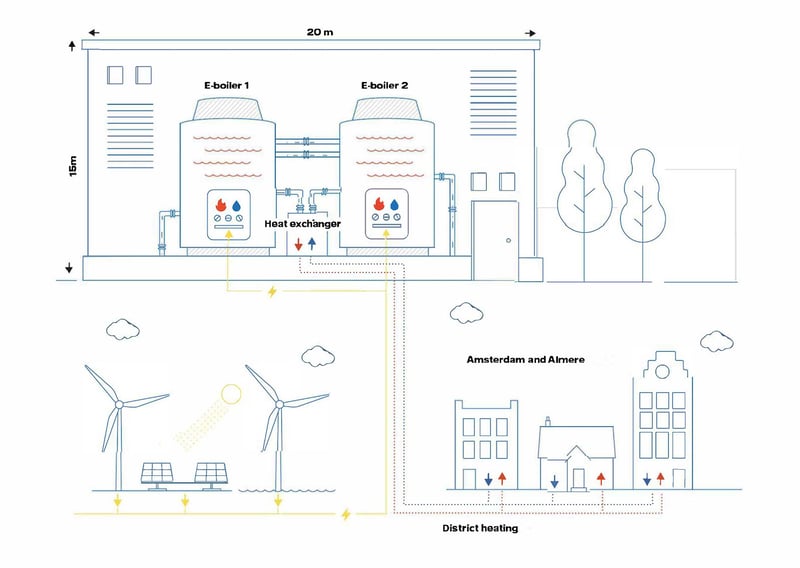
The project is an example of so-called sector coupling, which connects different parts of the energy system: renewable electricity is converted into heat for the district heating network, helping ensure that available renewable electricity is used as efficiently as possible.
“Our goal is to make all our district heating networks fossil-free,” says Bart Dehue, manager System Strategy and Development at Vattenfall. “To achieve that, we are developing new fossil-free heat sources that help make the energy system more flexible.”
From electricity to heat
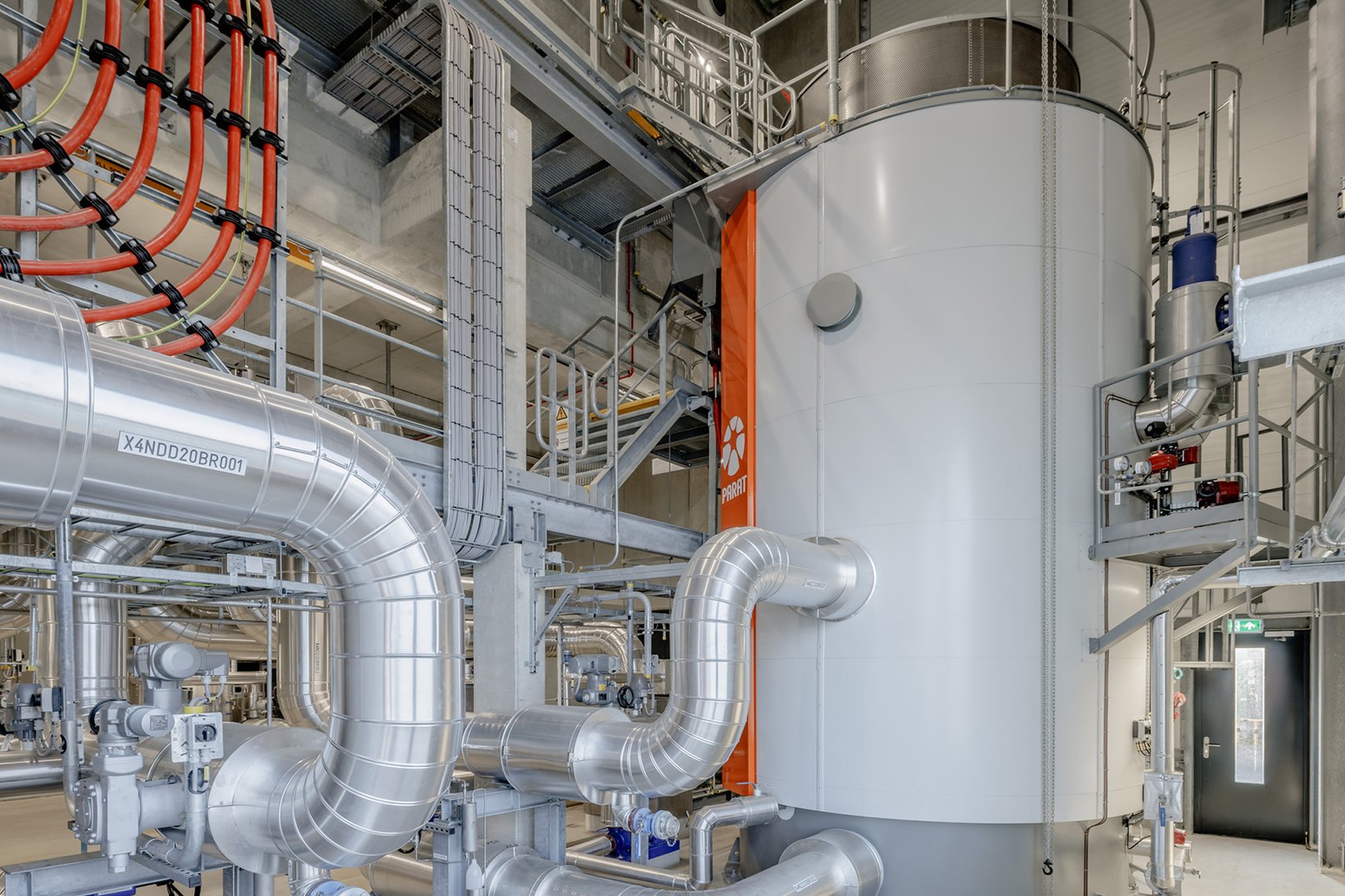
The e-boiler is often described as a giant kettle. The comparison is useful, although the technology works slightly differently from the kettle in your kitchen. Instead of using a metal heating element, the installation generates heat by passing electricity directly through the water.
In Diemen, the boiler vessels together have a capacity of 150 MW. To put that into perspective, that's roughly equivalent to 150,000 household kettles running at the same time.
When large amounts of renewable electricity are available and there is sufficient capacity on the electricity grid, the e-boiler converts that electricity into heat for homes. The energy can either be supplied directly to the district heating network or can be stored in the large thermal energy storage facility located at the Diemen site. This allows Vattenfall to store it for later use, for example when there is less renewable electricity available for the electric boiler or the grid is at full capacity.
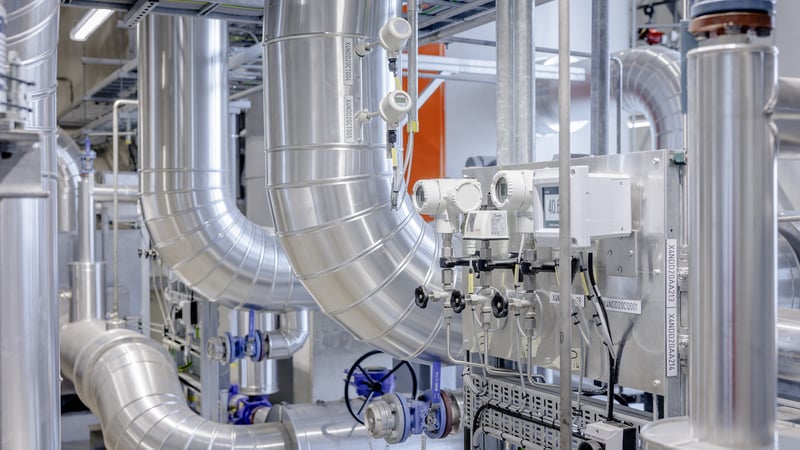
Photo: Vattenfall/Jorrit Lousberg
Why flexibility matters
As wind and solar generation continue to grow, periods of abundant renewable generation are becoming increasingly common. During such periods, electricity prices are often low because supply is abundant. In 2025, for example, the Netherlands recorded 584 hours of negative prices, 28 per cent more than in 2024.* Using that electricity to produce heat or store it for later use is an effective way to maximise the value of renewable energy.
“During these periods, a gas-fired power plant needs to run less to provide heat,” explains Bart Dehue. “The e-boiler can respond quickly by converting electricity into heat, helping to reduce both gas consumption and CO2 emissions. On days when it is very windy and/or sunny, the e-boiler, together with the heat storage facility, acts like a giant battery for renewable heat.”
The plant can generate enough to match the annual consumption of around 20,000 homes in Amsterdam and Almere and is expected to cover around 15 percent of the annual heat demand in the connected district heating networks.
“The e-boiler is not designed to operate continuously,” says Bart Dehue. “You can think of it as the flexible link in our heating system: fast, adaptable, and particularly valuable when conditions are favourable.”
A reliable district heating system of the future requires a variety of heat sources. Some, such as geothermal energy or waste heat from data centres, can provide relatively stable heat throughout the year. Others, such as the e-boiler, add flexibility when there is a lot of renewable electricity available. Together, these sources make district heating more robust, more sustainable, and better aligned with the electricity system of the future.
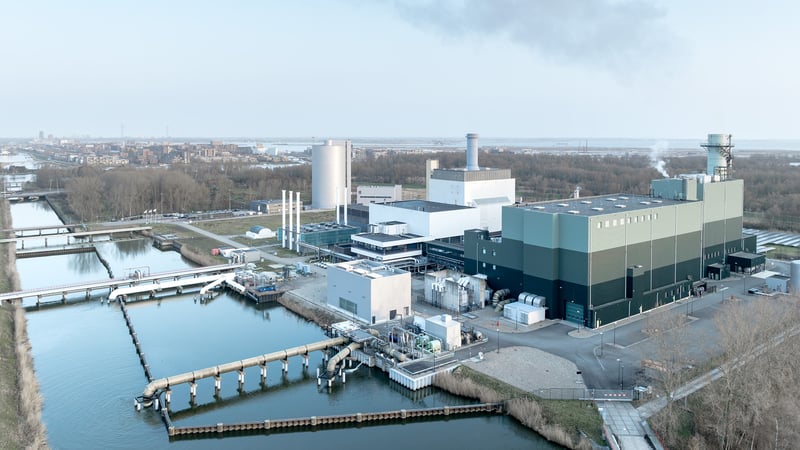
In the foreground is the building housing the electric boilers; in the background, on the left, is the large heat storage tank. Photo: Vattenfall/Jorrit Lousberg
Lessons for industry
The value of the e-boiler extends beyond district heating. The knowledge gained in Diemen can also help other sectors decarbonise.
Many industrial companies need to reduce their gas consumption and CO2 emissions, particularly for process steam and heat that are still produced using gas-fired boilers. E-boilers can also play a role here.
“With the knowledge and experience we have gained in Diemen, we can also support industry in the transition to e-boilers,” says Ruud Stevens, Project Manager at Vattenfall Heat. “We understand what it takes to develop, build, operate and maintain such an installation. This enables us to help companies reduce their gas consumption and CO2 emissions whenever renewable electricity is available while potentially reducing their energy costs.”
Valuable insights
The e-boiler in Diemen demonstrates how heat and electricity can work together more intelligently. The installation not only delivers fossil-free heat today but also offers valuable insights into how future energy systems can become more integrated and flexible.
|
E-boiler at a glance
 Technical specifications
|
Photography: Jorrit Lousberg
See also
Thermal cameras shed new light on bird activity at sea
A thermal camera and AI system tested at Vattenfall’s Hollandse Kust Zuid offshore wind farm in the North Sea monitored bird movements around a turbine, day and night. As the technology work...
What it takes to build one of Europe’s largest offshore wind farms
In the German North Sea, the first visible signs of Nordlicht wind farm are beginning to emerge above the sea surface. By 2029, 112 wind turbines will make a strong contribution to the count...
Vattenfall and Ukrhydroenergo launch knowledge exchange on the future of hydropower
Vattenfall and Ukraine’s state-owned hydropower company, Ukrhydroenergo, have launched a long-term knowledge exchange on the role of hydropower in future energy systems. Through the collabor...