
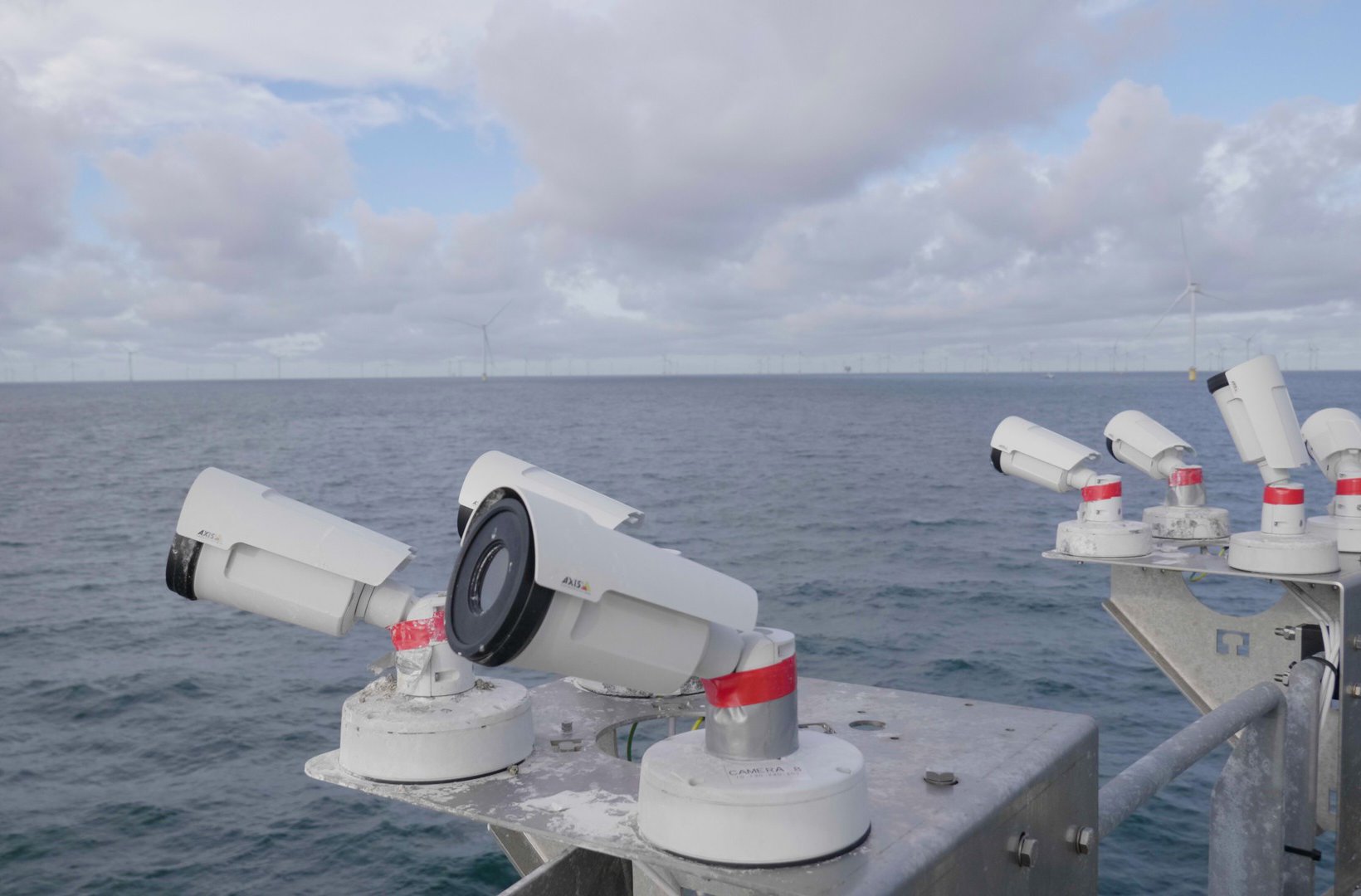
- A thermal‑camera and AI system at Hollandse Kust Zuid enabled continuous monitoring of bird activity around an offshore wind turbine, day and night.
- The study provided direct observations of bird movements and collisions in real offshore conditions.
- The results help strengthen the evidence base for understanding collision risks and improving mitigation measures at offshore wind farms.
A thermal-camera and AI-system tested at Vattenfall’s Hollandse Kust Zuid offshore wind farm in the North Sea monitored bird movements around a turbine, day and night. As the technology works even in darkness and poor visibility, it offers new possibilities to collect reliable, real-world data on how birds interact with offshore wind turbines and how often collisions occur.
Every spring and autumn, millions of songbirds migrate across the North Sea, with some routes passing through areas where offshore wind farms operate. Yet a basic question has remained difficult to answer: How often do birds collide with turbines at sea?
A study at the Hollandse Kust Zuid (HKZ) wind farm tested whether thermal-camera technology could reliably detect and analyse bird movements and potential collisions at sea. The results show that continuous monitoring in real offshore conditions is technically possible. The study also provided the first direct observation data of bird collisions – an important additional outcome. This research forms part of Vattenfall’s voluntary efforts to strengthen the evidence base for developing effective measures to mitigate risks at offshore wind farms.
Closing the evidence gap
On land, researchers can search beneath turbines for bird remains. At sea, direct verification is very challenging: after a collision, a bird may fall into the water, sink or drift away. Researchers have therefore had to estimate collision risk mainly through theoretical models rather than continuous observations under real offshore conditions. Until now, empirical data on bird movements around offshore turbines has also largely been limited to video footage recorded during daylight.
To help close this evidence gap, Vattenfall worked with researchers from Wageningen Environmental Research and technology developer Wildlife Imaging Systems (WIS) to test a thermal-camera and artificial-intelligence system on one turbine at the HKZ offshore wind farm. Sixteen thermal cameras covered the area around the turbine from different angles: twelve pointed outward beneath the rotor area to detect falling objects, while four looked upward to capture bird activity near the blades and help verify potential collisions. Unlike radar systems, the WIS technology enabled continuous monitoring in the immediate vicinity of the turbine. Artificial intelligence helped detect and analyse bird and bat movements during the day, at night, and in poor visibility, including fog and rain.
“At sea, it is extremely difficult to determine the number of fatal collisions, as no remains can be recovered and evidence quickly disappears at sea. With this new study at HKZ, we are adding real observations to improve our understanding of the actual risks. Now we can get the facts on how many birds collide and under what circumstances," Jesper Kyed Larsen, Bioscience Expert at Vattenfall, explains. “This knowledge is essential. By improving the scientific understanding of how wind energy interacts with biodiversity, Vattenfall is supporting a nature-inclusive energy transition. Better insights help us predict collisions at existing and new wind farms and design effective mitigation measures.”
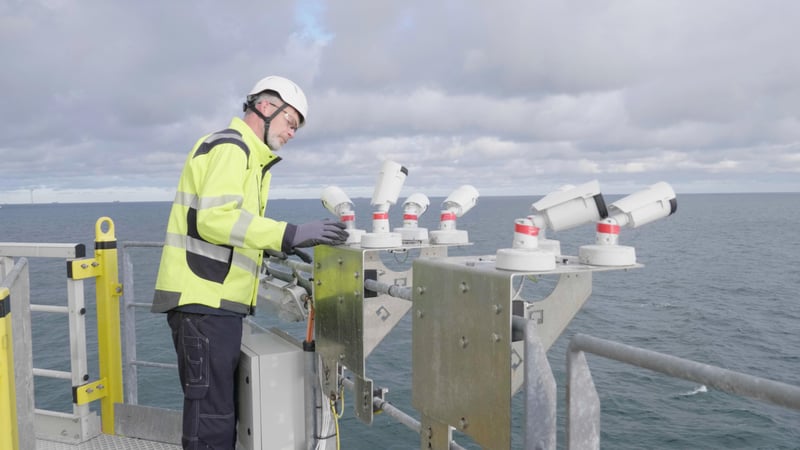
Vattenfall’s bioscience expert Jesper Kyed Larsen inspects the thermal cameras at Hollandse Kust Zuid.
What the first observations show
The system used state-of-the-art machine vision and machine learning to automatically detect and classify tracks of moving objects in the thermal-camera video images. Of the 1.4 million flying object tracks recorded, 21 per cent was classified as birds; the rest as insects and planes. Wageningen University & Research and WIS experts then manually reviewed potential falling objects for signs of a collision. The researchers looked for supporting footage from the upward-facing cameras, fragments following similar paths, rotating or flickering objects, and movements that did not indicate active flight. They independently assessed each event and resolved any differences using a standardised labelling protocol to determine the likelihood that a track represented a bird falling after a collision with the turbine.
Over nine months, the system recorded approximately 1.34 million five-minute videos. Researchers manually evaluated 782 potential downward tracks and identified 22 possible collision events. Two were confirmed as collisions, and one was classified as a high-confidence collision. Birds were frequently present around the turbine, with migration peaks exceeding 4,000 bird-seconds per hour, meaning that birds collectively spent more than 4,000 seconds (about 67 minutes) in the monitored area during a single hour. Collisions were nevertheless rare relative to the volume of bird movements. Most recorded events occurred during periods of relatively low migration activity, suggesting that factors such as weather conditions may influence collision risk more than migration intensity alone.
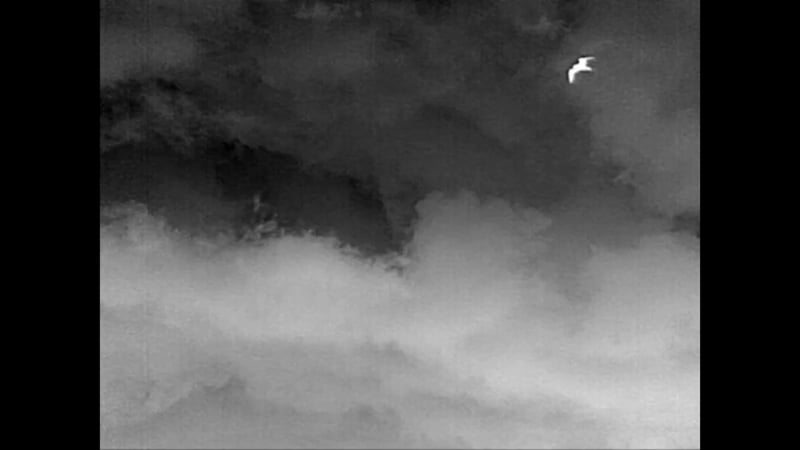
The thermal cameras registered bird activity day and night for 9 months.
The trial shows that the technology can document collisions and provide real-world evidence that researchers have been seeking for years. At first glance, the limited number of collisions – only very few across two migration periods – looks very promising. However, Larsen underscores that the results should be interpreted with care: “The trial monitored only one turbine at one location, and the findings cannot automatically be applied to every wind farm. We need studies over more years and sites to establish the general patterns with more certainty.”
From assumptions to better decisions
Real-world evidence can strengthen the models used to estimate collision risks at wind farms. It can also help authorities, researchers, and operators assess measures to protect migrating birds and bats. In the Netherlands, turbines may be temporarily slowed or stopped when large numbers of birds are expected to cross the North Sea. Better evidence about when, where, and under what conditions collisions occur can help target these measures more effectively, protecting wildlife while allowing renewable energy generation to continue when risks are low.
Further improvements could make the collision monitoring system more efficient, support its use at additional sites, and help researchers examine links between collision risk and bird activity, visibility, weather, and operation of the turbines. Research into birds and wind energy is not limited to collisions. Researchers also study how species move through wind farms, whether they avoid certain areas, how they use feeding grounds, and how their activity varies by location and season.
Long term biodiversity research
For more than 20 years, Vattenfall has conducted research on how wind and solar farms, hydropower stations and energy grids interact with the surrounding natural environment. Working with universities, research institutions, ecologists and nature conservation organisations, its biodiversity research covers species including bats, birds, fish, and other marine life. The study at HKZ builds on this long-term experience and partnerships.
Reliable data is essential to help better understand impacts on biodiversity and find the right balance between expanding offshore wind power and supporting nature. Empirical evidence enables decisionmakers to make informed choices, develop effective measures to protect and enhance biodiversity, and build public trust in the energy transition.
Larsen emphasises the need for further research: “We now need to repeat this monitoring across more turbines and over a longer period to understand how different bird species behave and what is really happening offshore during bird migration.”
Collecting more scientific data
The HKZ study findings are broadly in line with observations made at other Vattenfall offshore wind farms. At Thanet Offshore Wind Farm off the coast of Kent, six collisions were recorded during two years of collaborative monitoring. In a separate two-year study at Aberdeen Offshore Wind Farm, carried out with biodiversity technology company Spoor, researchers found that seabirds generally steered clear of turbine blades and adjust their flight paths well before reaching wind turbines. Although the studies used different techniques, with the Thanet and Aberdeen studies focusing on seabirds during the day, their findings add to emerging evidence that offshore collision rates may be lower than previously assumed.
The next step is to systematically apply the new technique used at HKZ across multiple turbines, wind farms, and seasons to collect the scientific data needed to improve collision-risk models for the offshore wind sector.
Advancing offshore wind research
The full HKZ study report is publicly available and the findings will shortly be submitted to a scientific journal for peer review. The preliminary results have already been presented at several wind energy conferences, with further presentations of the final results planned. Together, this provides a foundation for further knowledge development and the design of future monitoring programmes across the offshore wind sector.
Biodiversity research programme
BioWinS (Biodiversity Protection in Wind and Solar) is Vattenfall’s voluntary biodiversity research programme, supported by an annual budget of €300,000. Since 2007, it has funded scientific research that goes beyond regulatory requirements, helping to improve understanding of how wind and solar farms interact with nature. Together with scientists and research institutes, BioWinS develops and tests research methods and explores ways to avoid or reduce impacts on nature and biodiversity.


Sign up for our newsletter THE EDIT
THE EDIT is Vattenfall's new monthly newsletter. Each issue highlights a new burning issue from the world of sustainable energy and fossil freedom.
See also
Vattenfall Business Area Wind maintains leader status in IRBC assessment
Vattenfall’s Business Area Wind has once again been recognised as a Leader in the IRBC assessment, reflecting continued progress in responsible and sustainable business practices.
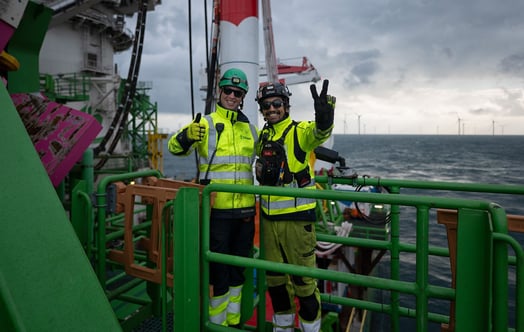
What it takes to build one of Europe’s largest offshore wind farms
In the German North Sea, the first visible signs of Nordlicht wind farm are beginning to emerge above the sea surface. By 2029, 112 wind turbines will make a strong contribution to the count...
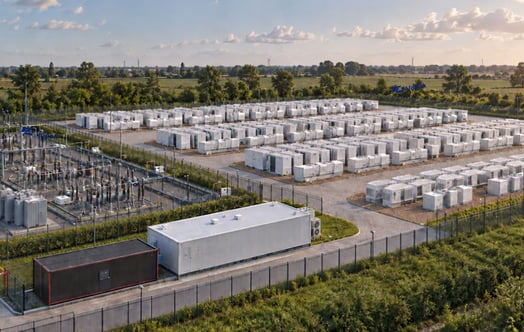
Vattenfall and Royal Vopak team up to further integrate renewable energy into the Dutch power system
Vattenfall has signed a tolling agreement with Royal Vopak (‘Vopak’) for a portion of the planned battery energy storage system near Meeden in the province of Groningen, the Netherlands.