
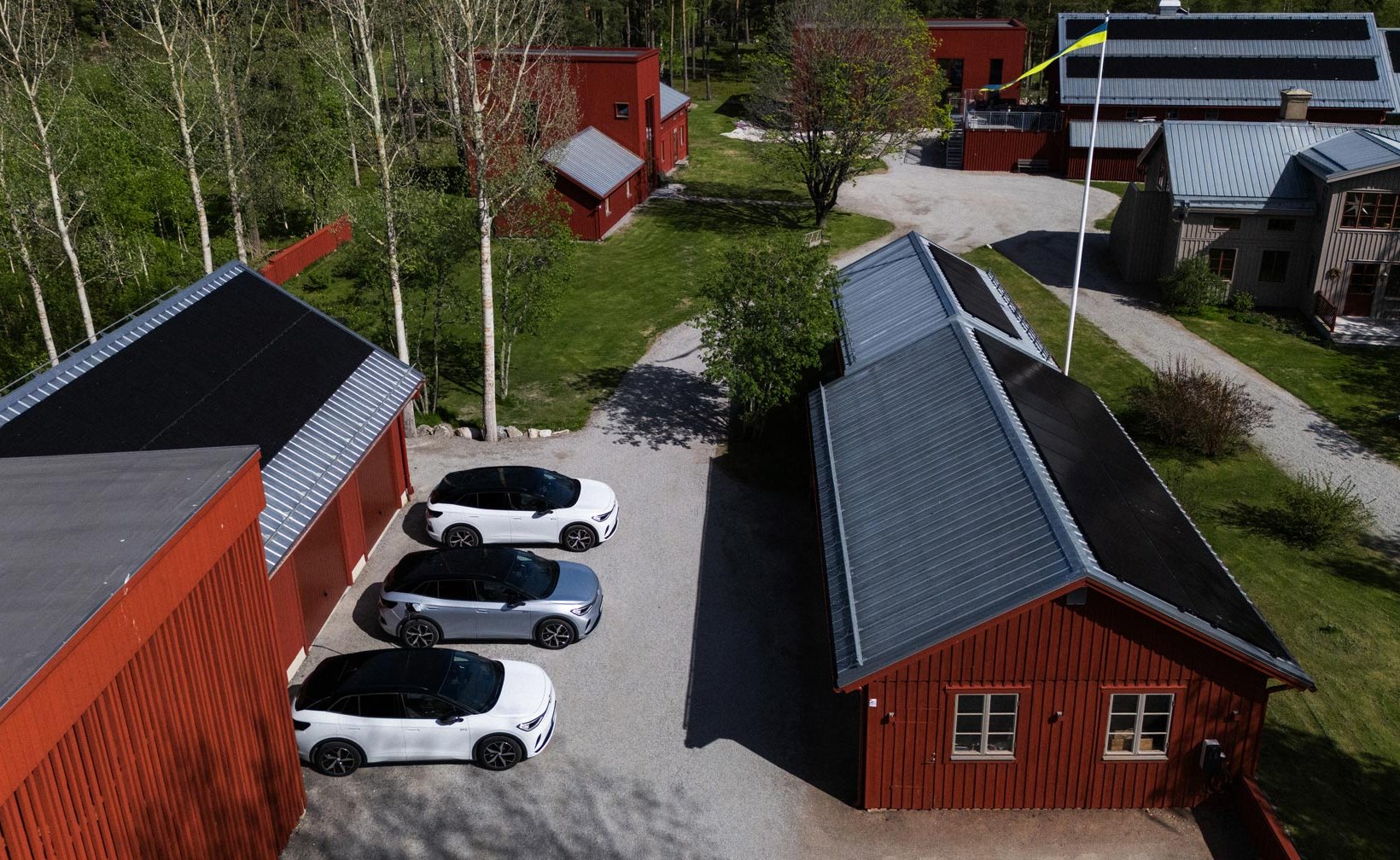
Large-scale pilot in Sweden explores new role for electric vehicles
Vattenfall and Energy Bank, together with Volkswagen, are launching one of the world’s largest pilot projects for bidirectional charging. Around 200 chargers will be installed across central and southern Sweden to test how electric vehicles can support flexibility and stability in the power system.
The electricity system is undergoing rapid change, with rising demand and a growing share of weather-dependent generation. This increases the need for flexible resources that can help balance supply and demand in real time. Bidirectional charging – also known as vehicle-to-grid (V2G) – allows electric vehicles to not only draw power from the grid, but also feed electricity back when needed.
The new pilot builds on the results of a one-year V2G project carried out with the Stenberg housing cooperative in Hudiksvall. Following that initial validation phase, the partners are now moving towards a broader rollout in real-world conditions.
The project includes the installation of around 200 bidirectional chargers, supported by Energy Bank’s software platform for optimising and aggregating charging. As energy partner, Vattenfall will enable the aggregated flexibility to participate across different energy and flexibility markets.
“The results so far show that bidirectional charging can play an important role in an energy system with more fossil-free electricity. Through this collaboration, we are exploring how aggregated EV batteries can provide flexibility and support balance and stability in the power system. If the battery can support the grid while also generating revenue, it could improve the economics and value of owning an electric car and contribute to continued electrification,” says Magnus Berg, Head of Customer Products & Solutions at Vattenfall.
The rollout will take place in Sweden’s electricity price areas SE3 and SE4, covering central and southern parts of the country. Around 200 electric vehicle owners – both households and fleet operators – will participate in the pilot. Participants retain control over their vehicles and will receive compensation linked to the flexibility and energy optimisation they provide.
“Electric cars are often seen only as a means of transport. This project shows that they can also become an active and valuable part of the energy system. Together with Vattenfall and Volkswagen, we are deploying the technology at real scale and taking an important step toward a new market where mobility and energy meet,” says Klas Boman, project owner at Energy Bank.
The pilot project will run until 2028 and is intended to generate insights into how bidirectional charging can be integrated into the electricity system at scale.
See also

Trucks – a potential heavy player in the transition
The heavy transport sector is in the middle of a major structural shift. With more effective charging through Megawatt Charging System (MCS), with twice the effect as its’ predecessor, truck...
Huge road and tunnel project in the UK aims to reshape construction for the future
Construction is one of the hardest sectors to decarbonise. But in the UK, a major infrastructure project aims to reach carbon neutral by using electric machinery and low‑emission materials.
What can the energy transition mean for European competitiveness?
European industries are still dependent on imported fossil fuels, which can increase energy prices – and create a situation where the continent will always be third best after USA and China....