
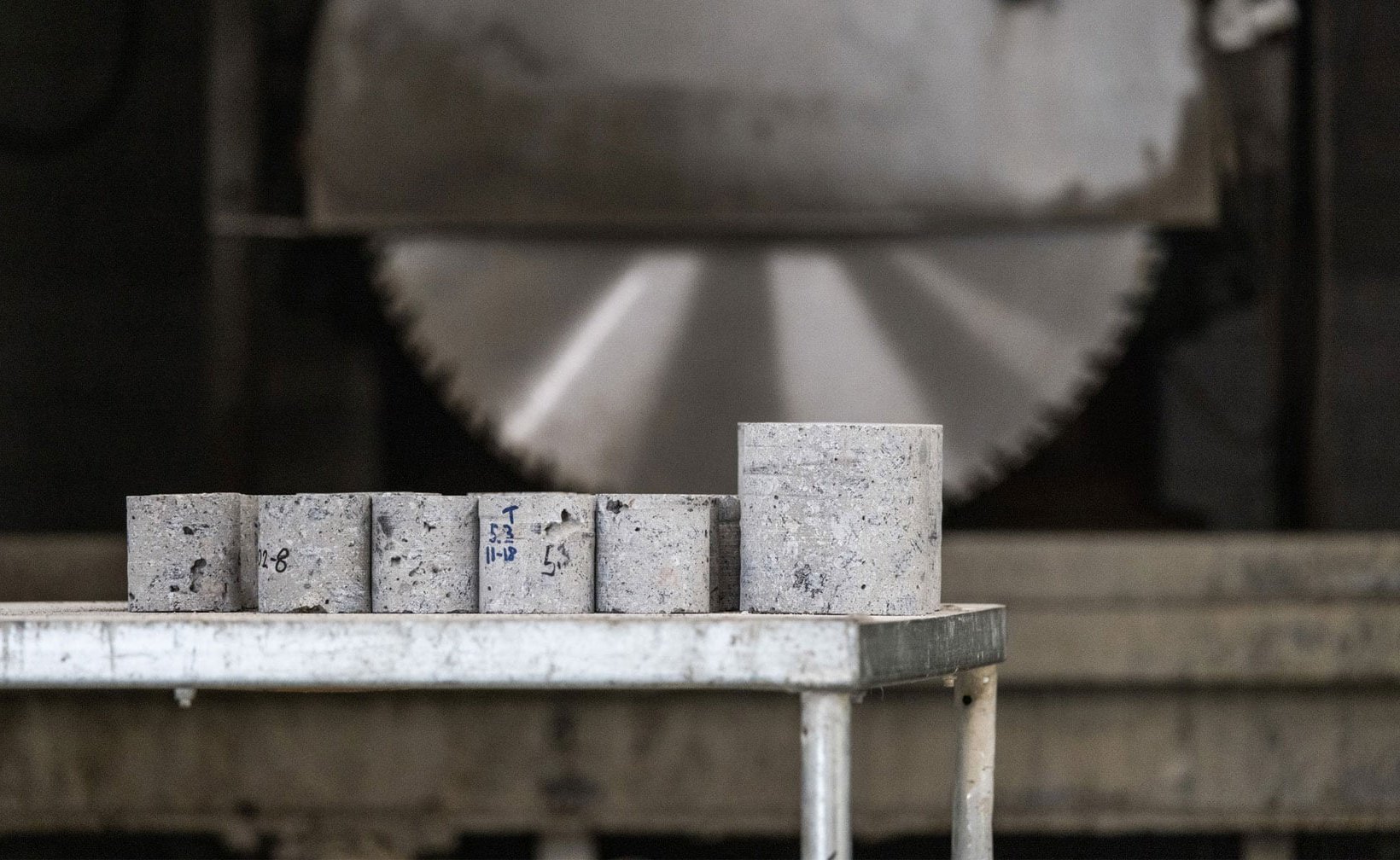
Cement is one of the world’s most widely used construction materials – but also one of the largest sources of emissions. That insight marked the starting point for Swedish company Cemvision, aiming to transform a deeply entrenched industry from the ground up. Today, the company’s limestone‑free cement is used both in test environments and in real industrial projects.
Cement is everywhere: in homes, bridges, roads and energy infrastructure. At the same time, the cement industry accounts for around eight per cent of global carbon dioxide emissions. Despite this, the pace of change has long been slow. For Cemvision, this became the catalyst for a business idea that would challenge an entire industry – by removing the very cause of emissions.

“We saw that the cement industry was moving too slowly. To make a real difference, small, incremental adjustments were not enough – we needed to question the entire process,” says Oscar Hållén, CEO and co-founder of Cemvision.
Limestone‑free cement changes the playing field
The largest share of the climate impact from traditional Portland cement comes from the use of limestone. When the stone is heated, carbon dioxide is released – emissions that are difficult to eliminate through energy efficiency measures or renewable energy alone.
Cemvision’s solution is to replace limestone with recycled by‑products from the steel industry, using kilns powered by fossil‑free energy. Compared with conventional cement production, where emissions arise from both virgin limestone and fossil fuels, the company can reduce the carbon footprint by up to 95 per cent.

“We went to the root of the problem instead of trying to deal with it afterwards. That is a fundamental difference in approach,” says Claes Kollberg, CTO and co-founder of Cemvision.
A conservative industry under pressure
The cement and concrete industry is often described as conservative. The materials used today have remained largely unchanged for decades. Driving change requires acceptance across the entire value chain – from producers and material suppliers to clients, designers and contractors.
In addition, the cement industry is governed by regulations and standards that largely focus on material composition rather than actual performance. This makes it difficult for new solutions to gain approval, even when they meet or exceed technical requirements.
“There is an inherent inertia in the system. Combined with current regulations, this risks locking the industry into existing solutions and slowing down innovation,” says Oscar Hållén.
Another challenge is the long‑term availability of raw materials in the form of by‑products from the steel industry. While supply is currently good, volumes are expected to decrease as the steel sector itself decarbonises. Cemvision is therefore developing methods to use next‑generation steel slag.
“Securing future material supply will require new technical solutions and
partnerships. We have developed and patented a technology that enables steel to be treated and upgraded into valuable material. Recently, we launched a feasibility study with Tata Steel to explore how slag can be converted into input material for our cement, while also recovering valuable metals, and recycling these into their process,” says Claes Kollberg.
From test environments to real construction projects
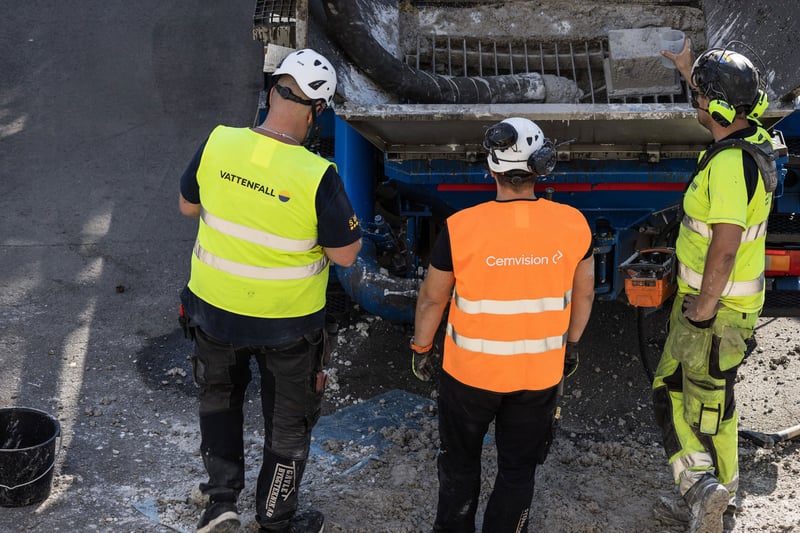
Cemvision’s test production currently takes place in Poland, where cement is manufactured in small batches for pilot projects. One of these projects is being carried out together with Vattenfall, where tests have been conducted in the company’s concrete laboratory. The collaboration has also resulted in a commercial agreement for future wind power projects in Europe, where Cemvision’s cement has several potential applications – including foundations for wind turbines, power distribution and prefabricated concrete elements.
“Being able to work with a partner like Vattenfall, which combines technical expertise with a willingness to test new solutions, has been crucial for us,” says Claes Kollberg.
Eyes on commercial production
The next step for Cemvision is to build its own industrial production facility, with the goal of reaching commercial production in 2028.
“Because our process does not rely on virgin limestone, our plants differ from traditional cement factories. They can be built on a smaller scale and are not tied to limestone quarries, which allows for greater flexibility, both geographically and industrially,” says Claes Kollberg.
Competitive without a climate premium
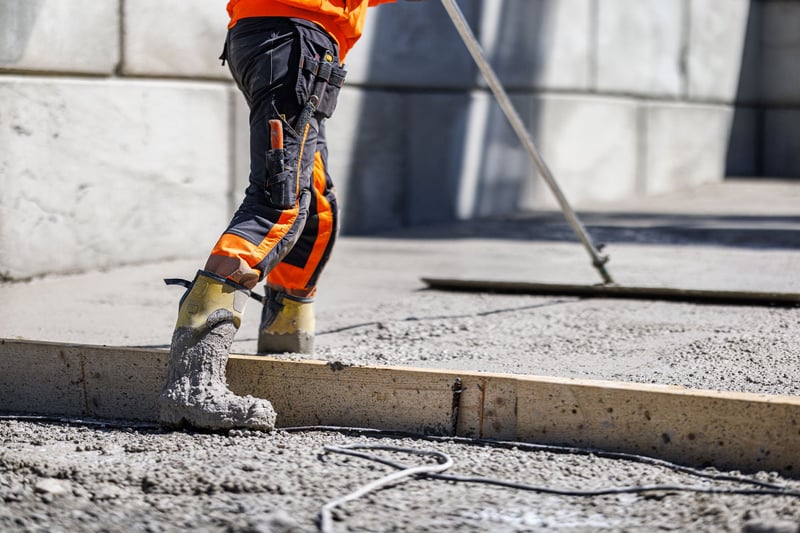
Despite the significant climate benefits, Cemvision does not aim to position itself as a niche or premium alternative within the cement market. Instead, the goal is to be competitive in both price and performance.
“For sustainable materials to gain widespread adoption, they need to perform just as well as conventional ones and cost roughly the same. The climate benefit should not be a special requirement – it should simply be part of the offer,” says Oscar Hållén.
When partnerships make the difference
Partnerships are central to Cemvision’s strategy – for technology development and learning, building market trust, and securing financing. Vattenfall plays a particularly important role as partner and a driving force in the energy transition. The company is also one of the founders of the First Movers Coalition, an initiative that aims to create demand for climate‑neutral materials and technologies.
“We need players who are willing to lead the way and try new solutions in practice. Without these kinds of partnerships, the transition of the construction industry would take far longer than we can afford,” says Oscar Hållén.
With its ambition to transform one of the world’s most emissions‑intensive industries from the ground up, Cemvision has positioned itself as a clear challenger. And with its forward‑looking plans, cement – a material that has existed since the time of the Colosseum – could soon play a whole new role in the energy transition.
Facts
- The cement industry currently accounts for around 8 per cent of global carbon dioxide emissions, while demand for cement is expected to increase.
- The production of Portland cement, today’s dominant cement standard, results in total emissions of around 850 kg CO₂e per tonne.
- Approximately 60 per cent of these emissions come from the chemical reaction that occurs when limestone is heated, while 40 per cent stem from the fossil fuels required to reach the necessary high temperatures.
Read more on the Cemvision homepage


Sign up for our newsletter THE EDIT
THE EDIT is Vattenfall's new monthly newsletter. Each issue highlights a new burning issue from the world of sustainable energy and fossil freedom.
See also
Vattenfall Business Area Wind maintains leader status in IRBC assessment
Vattenfall’s Business Area Wind has once again been recognised as a Leader in the IRBC assessment, reflecting continued progress in responsible and sustainable business practices.
Thermal cameras shed new light on bird activity at sea
A thermal-camera and AI-system tested at Vattenfall’s Hollandse Kust Zuid offshore wind farm in the North Sea monitored bird movements around a turbine, day and night. As the technology work...
What it takes to build one of Europe’s largest offshore wind farms
In the German North Sea, the first visible signs of Nordlicht wind farm are beginning to emerge above the sea surface. By 2029, 112 wind turbines will make a strong contribution to the count...