
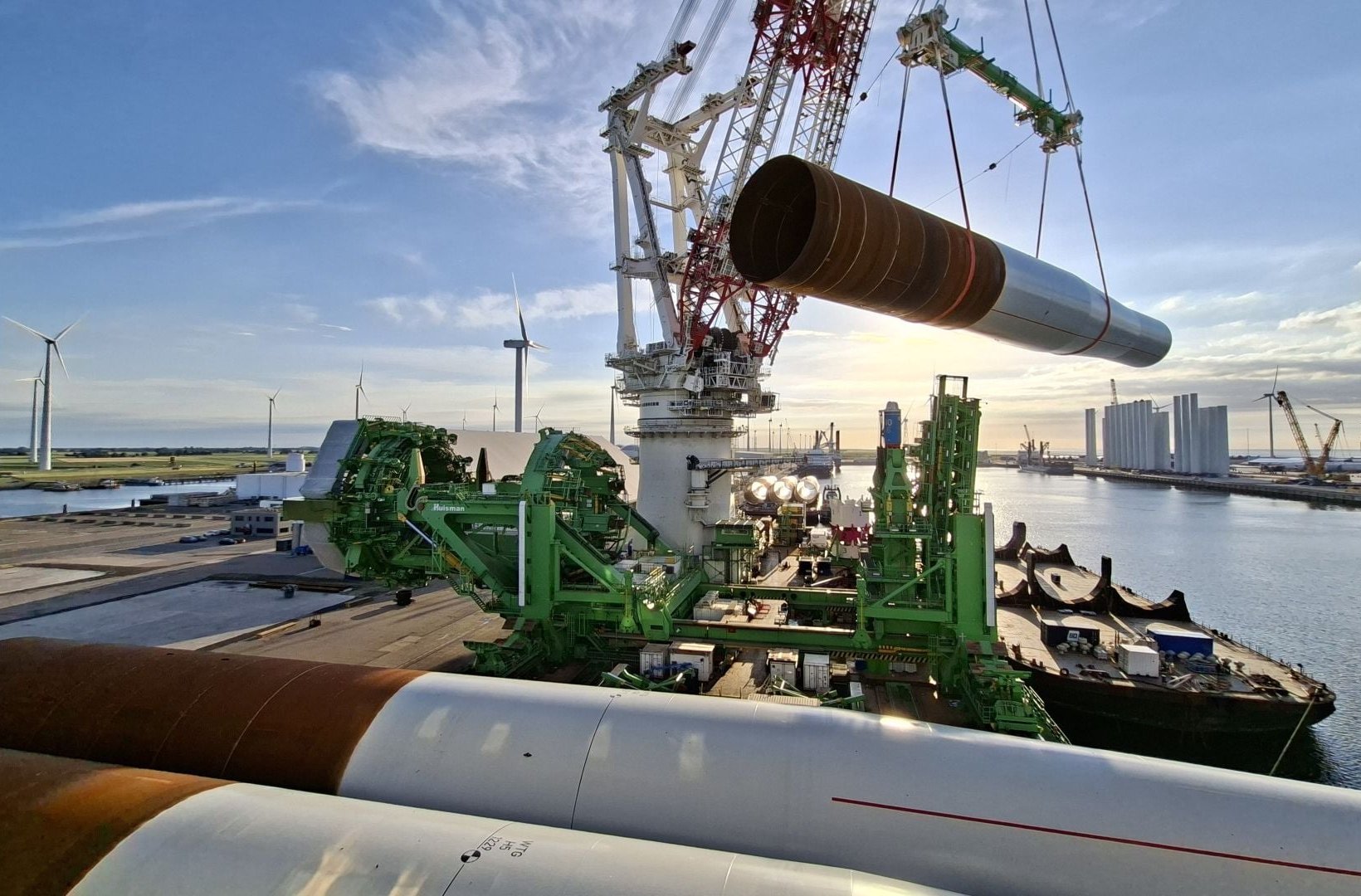
Vattenfall has reached an important milestone in the construction of the Nordlicht offshore wind cluster: on July 1st, the first monopile for the Nordlicht I offshore wind farm was installed in the German North Sea.
This marks the start of a key offshore construction phase for Germany’s largest offshore wind project, strengthening Vattenfall’s offshore portfolio and supporting the large-scale expansion of other fossil-free energy in Europe.
“With the installation of the first monopile, Nordlicht is visibly taking shape in the waters of the North Sea. It’s an important step forward for Vattenfall and at the same time a meaningful contribution to the energy transition, strengthening energy security and competitiveness in Europe. Projects of this scale require precise planning, strong partnership across the supply chain, and a clear focus on safety and execution. Seeing the project take shape offshore is a proud moment for the entire team.” says Cyril Moss, Project Director Nordlicht at Vattenfall.
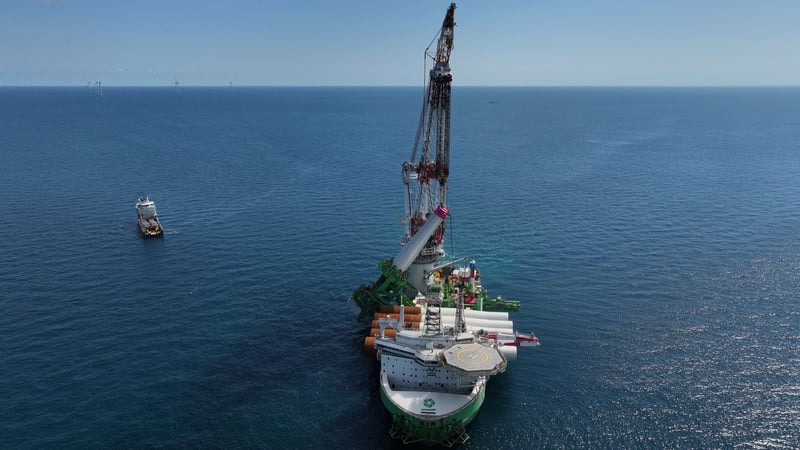
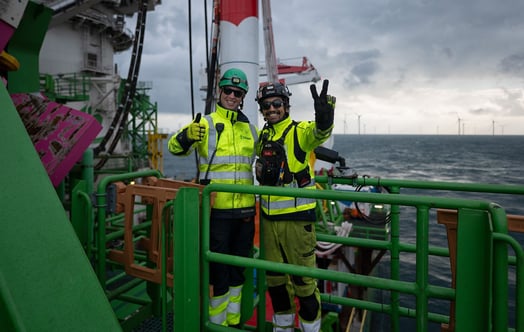
Nordlicht Monopile Installation. Image: Vattenfall.
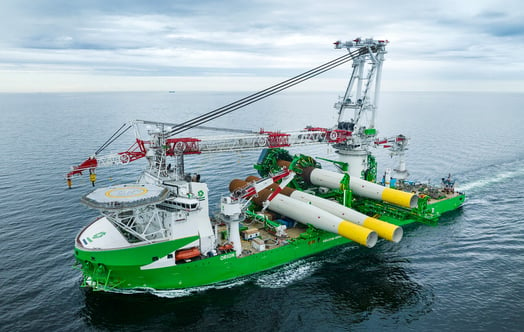
The installation was carried out by DEME, which is responsible for the transport and installation of the foundations and transition pieces for Nordlicht I and II. The monopiles are being manufactured by EEW Special Pipe Constructions in Rostock whereas transition pieces are being manufactured by CSWind in Aalborg. Nordlicht I will comprise 68 monopile and transition piece foundations. Each monopile is up to 80.5 metres long, making it almost as long as a football pitch, and weighs up to 1,290 tonnes.
Earlier this year, Vattenfall tested key offshore work steps on land in order to prepare interfaces, processes and safety aspects ahead of construction at sea. Nordlicht II is planned to follow around one year later.
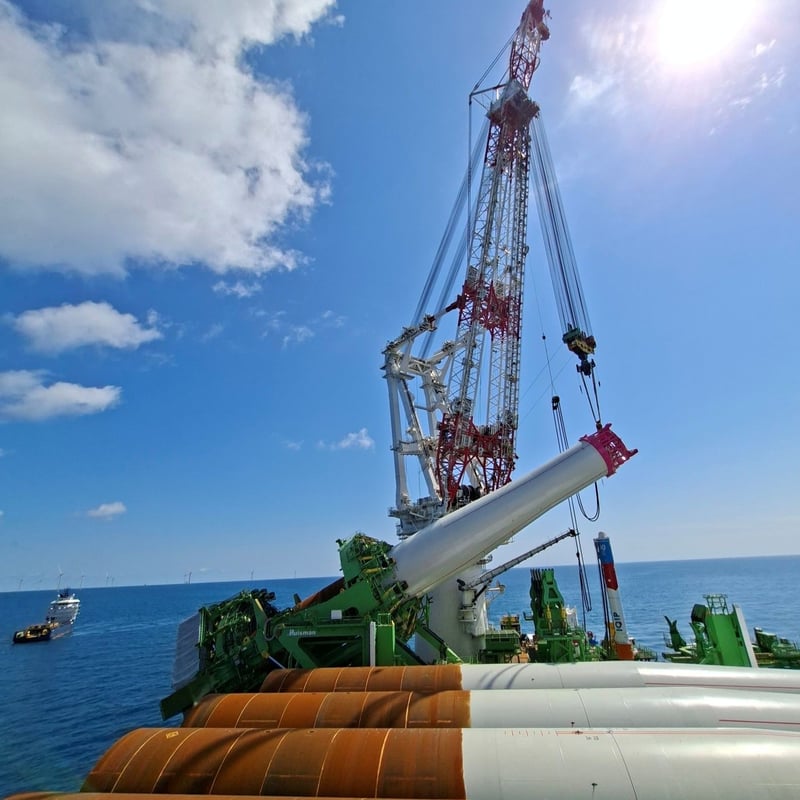
Nordlicht Monopile Installation. Photo: DEME.
The Nordlicht offshore wind cluster is located around 85 kilometres north of the island of Borkum in the German North Sea and consists of two separate projects: Nordlicht I, with a capacity of around 980 megawatts, and Nordlicht II, with around 630 megawatts. Once fully commissioned, the cluster is expected to generate around 6 terawatt hours of electricity per year. The project marks another step in meeting the growing demand for reliable, fossil-free and locally produced electricity in Europe. Both wind farms are scheduled to become operational in 2028.
As part of Vattenfall’s sustainability efforts, the wind farms will feature turbine towers partially made with low-emission steel, reducing their overall carbon footprint by around 16 percent.
See also
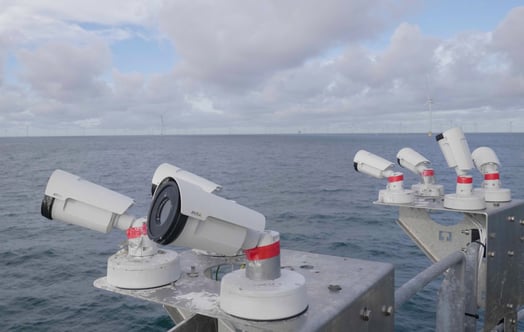
Thermal cameras shed new light on bird activity at sea
A thermal-camera and AI-system tested at Vattenfall’s Hollandse Kust Zuid offshore wind farm in the North Sea monitored bird movements around a turbine, day and night. As the technology work...
What it takes to build one of Europe’s largest offshore wind farms
In the German North Sea, the first visible signs of Nordlicht wind farm are beginning to emerge above the sea surface. By 2029, 112 wind turbines will make a strong contribution to the count...
Vattenfall and Copenhagen Infrastructure Partners award DEME contract for foundation installation at Zeevonk offshore wind farm
Vattenfall and Copenhagen Infrastructure Partners (CIP), through their joint venture Zeevonk, have awarded a contract to DEME for the transport and installation of foundations for phase 1 of...