
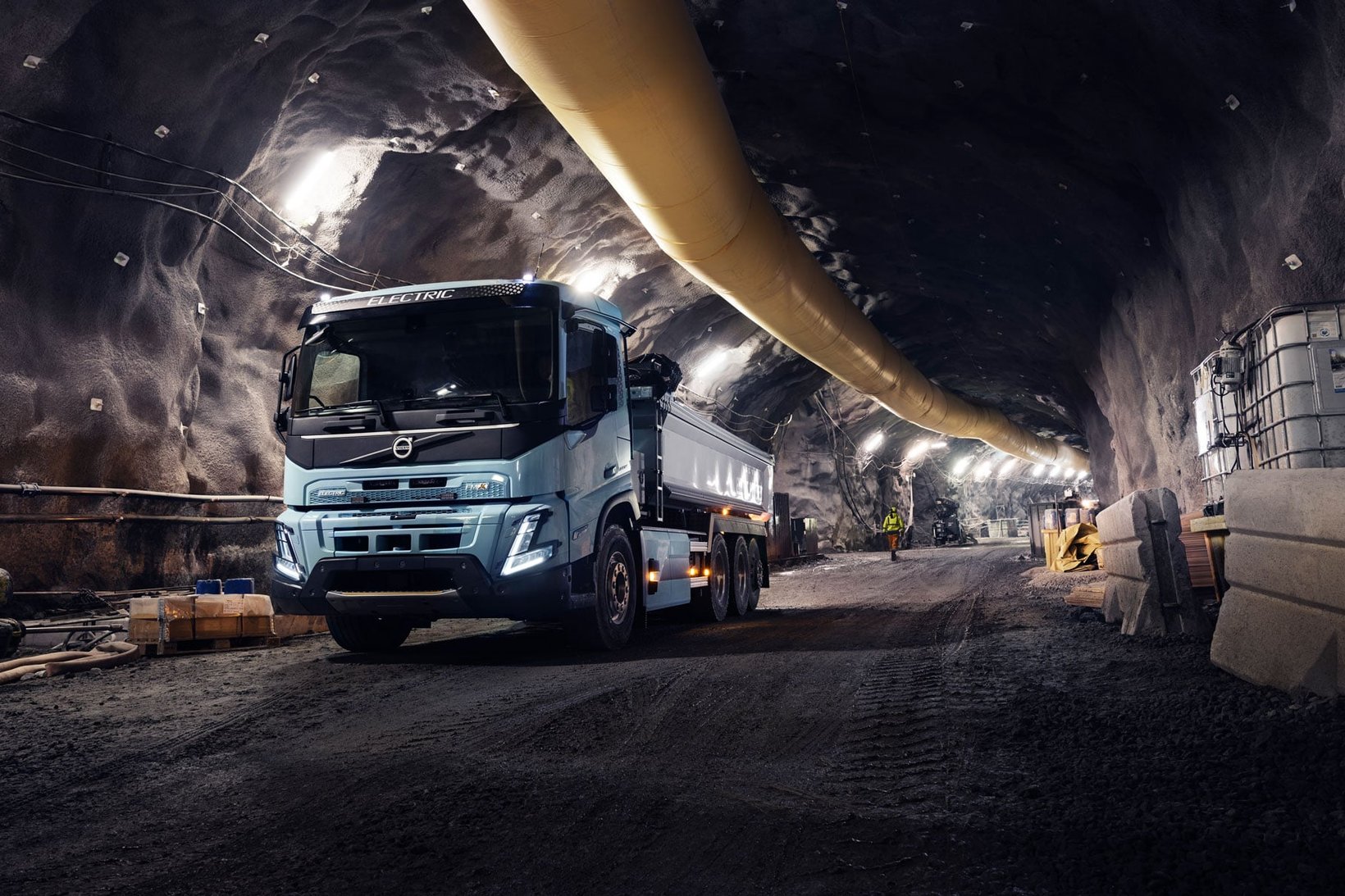
European industries are still dependent on imported fossil fuels, which can increase energy prices – and create a situation where the continent will always be third best after USA and China. Could the energy transition make Europe more competitive again?
On March 17 this year a number of representatives from some of the biggest Swedish industrial and energy companies sent an open letter to EU commission president Ursula von der Leyen. The message from the collection of CEO:s and presidents from among others Vattenfall, Ellevio, Scania, Alfa Laval, Volvo Cars, LKAB and SSAB was clear: Europe can’t be dependent on imported fossil fuel and stay competitive. Disruptions to the supply chain – like the situation in the Middle East right now – will undoubtedly create increases in energy prices which will impact European industries.
In the letter the companies refer to the report that Mario Draghi, economist and Italy’s former prime minister, wrote about the EU’s competitiveness in 2024. Draghi’s conclusion was that EU is at the forefront only when it comes to one area: the energy transition. In areas such as hydropower, wind power, geothermal energy and hydrogen, the European Union was regarded as a global leader.
Even then, however, Draghi noted that China was catching up in many areas — and a couple of years later, the giant in the east has overtaken Europe in many ways. Much of the EU’s transition now relies on Chinese input goods, and cutting-edge technology is increasingly being developed there rather than here.
Transport sector leading the way
In one sense, Europe’s transition is being driven by necessity. The continent does not have the same fossil-fuel resources as other competing superpowers – compared with US oil or Chinese coal, for example. But precisely for that reason, Europe also has an opportunity to take the lead and show that it is possible to run a large-scale electricity system and an industrial society based on fossil-free sources.
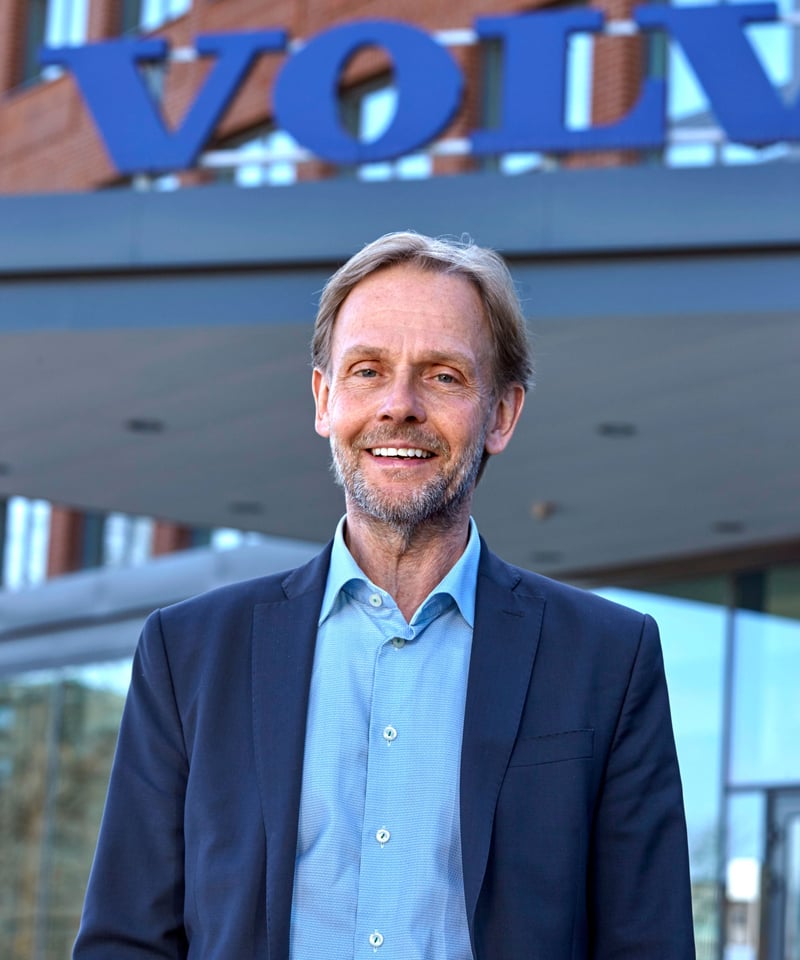
Anders Berger, Director of Public Affairs at Volvo Group
One of the sectors that could lead the way in that turn away from fossil fuels is the transport sector. Volvo Group is one of Europe’s biggest manufactures of heavy transport vehicles. For Anders Berger, the company’s Director of Public Affairs, the need for a transition is without questioning.
“In Europe, we essentially have no alternative but to push ahead with the transition. Energy costs are an important foundation, alongside factors such as expertise and innovation, for a competitive industry. If we can become self-sufficient in fossil-free energy at a competitive cost, that will be a strong way for Europe to compete,” says Anders Berger.
Sometimes somewhat toothless
One challenge for the EU in relation to China and the US is precisely that it is a union, not a nation. Processes such as legislation move more slowly when the interests of different countries are involved, and when institutions such as the EU Commission, Parliament and Council must work together.
“Clearly, Europe is at a disadvantage there. Sometimes, when rapid change is required, I can agree with the Draghi report that Europe can become somewhat toothless. At the same time, in many ways we can also benefit from pluralism and from having different conditions across the continent. There are, of course, strengths in Europe’s model as well. ‘Fast and wrong’ is not a good alternative either, as we have seen countless examples of elsewhere in the world.”
Volvo Group, which manufactures trucks, buses and various types of construction equipment, was an early mover in the transition to electric vehicles and has long been a driving force in the shift towards a heavy-vehicle fleet less dependent on fossil fuels.
To secure its supply of renewable power, Volvo signed a power purchase agreement with Vattenfall on half of the fossil-free electricity produced at the Bruzaholm wind farm in southern Sweden. The windfarm consists of 21 wind turbines with a total capacity of 139 MW and an estimated annual output of 460 GWh.
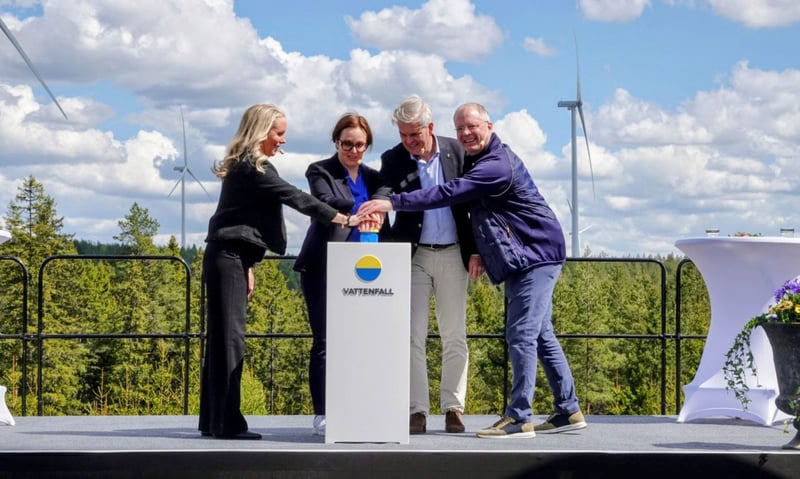
“Being among the first to make the shift to electronic trucks has undoubtedly been a competitive advantage for us. In the small market that emerged, we gained a very large market share and a great deal of visibility. The brand was strengthened by the fact that we were a first mover.”
Accumulated knowledge
It is clear that other manufacturers of heavy transport vehicles have since moved in the same direction. Berger says the industry is now back in a competitive situation in which virtually all European manufacturers have strong product offerings, meaning that leadership tends to move in cycles. Manufacturers launch different models, and competition drives development forward under more equal and traditional market conditions than in the early phase, when Volvo Group was more dominant.
At the same time, there is still a clear competitive advantage in having been early in the energy transition of heavy transports.
“We have accumulated far more electric kilometres and miles across our organisation than those who came later and then had to rush to catch up. Now, when everyone is on a more equal footing, the competitive advantage may instead lie in understanding customers’ needs, learning the market and having a clear idea of how charging infrastructure should be expanded. That knowledge accumulates as we have many vehicles out on the road, generating feedback for us.”
A more fossil-free future
The global situation, with war both in Ukraine and in Iran — which also has a major impact on many of the nearby oil-producing countries — may also affect the transition and competitiveness. Berger says that the unrest of recent years and the major disruptions in fossil-based energy systems show how important it is for the future to be more fossil-free. This is evident not least in his own area.
“We are already seeing signs that something is about to happen. In our sector, interest in the transition had otherwise slowed somewhat when it comes to heavy trucks, buses and machinery. Now, after just two months of energy unrest or crisis, we are seeing interest in investments in electric trucks, for example — which are the dominant alternative in our industry today — slowly beginning to rise again.”


Sign up for our newsletter THE EDIT
THE EDIT is Vattenfall's new monthly newsletter. Each issue highlights a new burning issue from the world of sustainable energy and fossil freedom.
See also
Vattenfall Business Area Wind maintains leader status in IRBC assessment
Vattenfall’s Business Area Wind has once again been recognised as a Leader in the IRBC assessment, reflecting continued progress in responsible and sustainable business practices.
Thermal cameras shed new light on bird activity at sea
A thermal-camera and AI-system tested at Vattenfall’s Hollandse Kust Zuid offshore wind farm in the North Sea monitored bird movements around a turbine, day and night. As the technology work...
What it takes to build one of Europe’s largest offshore wind farms
In the German North Sea, the first visible signs of Nordlicht wind farm are beginning to emerge above the sea surface. By 2029, 112 wind turbines will make a strong contribution to the count...