
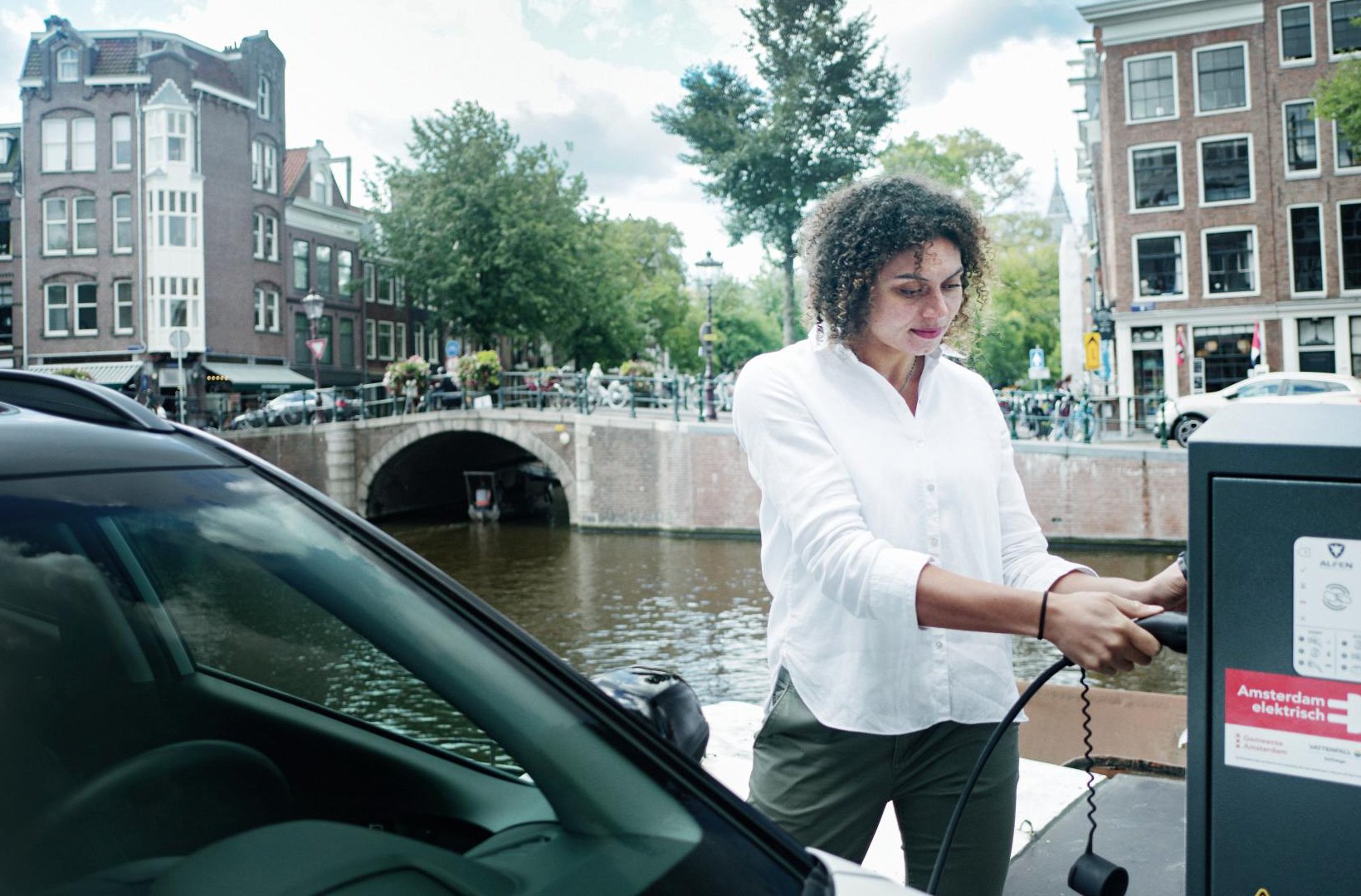
Electric driving is growing rapidly across Europe. But without reliable, affordable and smart charging infrastructure, that growth will stall. As markets mature, new pressures are emerging. In the Netherlands – one of Europe’s most mature EV markets – Vattenfall InCharge Netherlands plays a key role, not only for motorists, but also for municipalities, grid operators and policymakers.
The Netherlands was an early adopter of electric driving. With its short distances, high population density and urban focus, it was a natural testing ground in the early phase of EV adoption. What began as an initiative to improve air quality has developed into a nationwide charging network.
In 2025, more than 40 percent of the new cars were electric and today the Netherlands has one of the world’s densest EV charging networks, with over 200,000 public charge points. The system is built around a “public-first” model, with extensive on‑street public chargers for daily use and a growing number of fast chargers for longer trips.
A mature market with high expectations
As a major charging network operator in the country Vattenfall InCharge NL focuses primarily on public charging through large-scale municipal tenders. These often lead to long-term concessions – exclusive public permits to install and operate charging infrastructure over extended periods, often around a decade.
“In recent years, we have made a very deliberate choice to focus even more strongly on public charging infrastructure. At the moment, we are the market leader in the Netherlands, but the number two is close behind, so that position cannot be taken for granted,” says Alied Wessels Boer, Director of Vattenfall InCharge.
"In this highly competitive market, maintaining a leading position depends on continuous innovation."

Alied Wessels Boer, Director of Vattenfall InCharge. Photo: Hans-Peter van Velthoven.
People, technology and development as differentiators
Vattenfall InCharge NL’s success lies in a combination of people and systems. “What I really sense and see is the enormous drive of our people. Ultimately, they make the difference,” says Wessels Boer. “But objectively, it also helps that we have our own back end.”
The back end – the digital heart of the charging infrastructure – manages communication between the charging station, the car, the user, the grid operator and the payment system. Developing and managing this system in-house enables faster innovation and greater control over how the network evolves.
"It requires significant investment, but once you have scale, you benefit from it. We can decide for ourselves what we develop and when,” she says.
Flexibility is not enough
Grid congestion – limited capacity on the electricity grid – is a growing challenge. Smart charging can help reduce pressure on the grid, because electric cars are often plugged in for longer than needed.
“You can shift charging sessions to quieter moments and relieve the grid that way,” says Wessels Boer.
As more electric cars come onto the road and charging points are used more intensively, that flexibility is reaching its limits. “At some point, there is little left to shift. Then you simply need more grid capacity,” she says. “Flexibility is important, but it is not a silver bullet.”
Expansion of the electricity grid is therefore unavoidable and requires faster action by governments and grid operators.
The Dutch concession model under scrutiny
The Dutch concession model is regularly criticised: The tendering process is legally complex, time-consuming and costly for both local authorities and tenderers. It is also often unclear to the end user why one charging point on the same street is significantly more expensive than another. But the concession model also offers clear advantages.
“The strength of this model is that governments can use large concessions to make clear agreements on price, quality and innovation,” says Wessels Boer. “That scale not only delivers competitive tariffs but also makes it possible to genuinely drive innovation.”
The model also makes it easier to align on smart charging and cooperation with grid operators. “If everyone operates separately, it becomes almost impossible for governments to pursue a consistent strategy,” she adds.
Looking ahead: more variety in charging
Although regular charging is sufficient for most motorists, demand for fast charging in cities is growing, for example among taxis and delivery services. Urban fast-charging projects, sometimes combined with battery storage, illustrate how the infrastructure is evolving.
“It is not a case of either regular charging or fast charging,” says Wessels Boer. “You need both. The right mix will become clearer over the coming years.”
Local frontrunner with European relevance
The nationwide Dutch charging network is unique, but the challenges are present across Europe: rapid growth in electric cars, pressure on the grid and the need for smarter solutions.
“The Netherlands started early and benefited from that,” says Wessels Boer. “We can now also use that experience in other countries.”
Experience from the Netherlands is now informing how charging infrastructure is developed in other European markets, where similar pressures are emerging. This contributes to Vattenfall’s ambition to make fossil-free living possible and achieve net zero by 2040.
Making smart charging attractiveSmart charging is a good way to minimise the load on the grid and avoid congestion. To make it happen, charging must be simpler, more transparent and more reliable for the users. One important area is the interaction at the charging point. New generations of public charging points are being equipped with screens and, as a next step, touchscreens. “Given the challenges facing our electricity grid, smart charging is becoming increasingly important. It shifts charging to cheaper times, when demand and grid load are low,” says Pieter van Ommeren, Director Digital Solutions & Hardware. “It is crucial that smart charging is simple and attractive for EV drivers.” 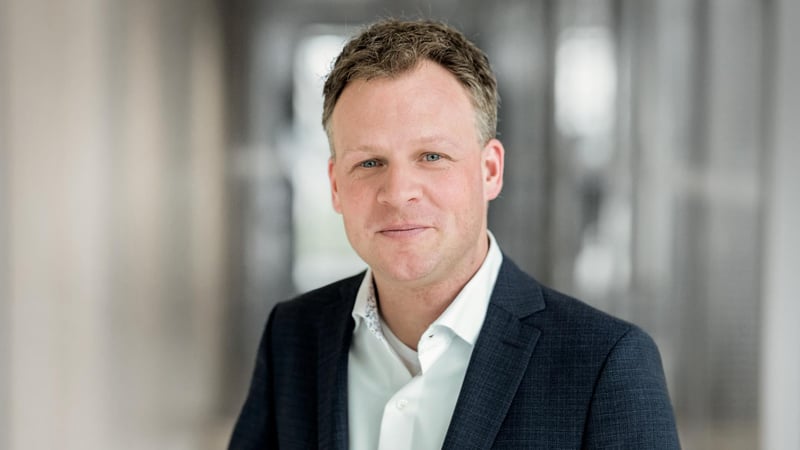 Pieter van Ommeren, Director Digital Solutions & Hardware. Photo: Hans-Peter van Velthoven. EV drivers will gain real-time insight into tariffs, charging speed and energy consumption, regardless of which charging card they use or which provider has issued it. They will also be able to actively manage their charging session – charging more cheaply if they have more time or faster at a higher cost when needed. “Electric cars add flexibility to the energy system. They create opportunities to shift charging to moments when capacity is available. At the same time, grid congestion is not constant everywhere. A charging session can automatically take account of grid load, prices and the driver’s preferences,” says Van Ommeren. Vattenfall InCharge is also working on seamless payment and charging. “Customers of a limited number of car brands, including Tesla and Volvo, can already charge completely automatically. In the future, all charging points will recognise your car once you have registered it,” he says. Data and AI are also playing an increasingly important role in managing the charging network. By continuously analysing data, faults can be predicted and prevented earlier. “Ultimately, it is about reliability for the customer: if your car’s battery is almost empty, the charging station simply has to work. We want to identify and resolve faults before the customer notices anything. And if something does go wrong, support must be immediate and effective,” says Van Ommeren. |
See also
Thermal cameras shed new light on bird activity at sea
A thermal-camera and AI-system tested at Vattenfall’s Hollandse Kust Zuid offshore wind farm in the North Sea monitored bird movements around a turbine, day and night. As the technology work...
What it takes to build one of Europe’s largest offshore wind farms
In the German North Sea, the first visible signs of Nordlicht wind farm are beginning to emerge above the sea surface. By 2029, 112 wind turbines will make a strong contribution to the count...
Giant water heater makes district heating more flexible
In Diemen, the Netherlands, Vattenfall converts renewable electricity into heat for thousands of households.