
- A strong ETS drives investment and strengthens Europe’s competitiveness
- Lower carbon prices risk slowing down the transition
- Short-term relief measures can lead to greater challenges in the long term
As energy prices rise, pressure mounts to reduce the price of carbon emissions. But making the EU’s emissions trading system cheaper risks becoming a costly outcome for Europe – both for the climate and for long-term competitiveness.
Three acronyms to keep in mind
ETS (EU Emissions Trading System)
The EU’s system where companies must pay for their carbon dioxide emissions. The higher the emissions, the higher the cost.
LRF (Linear Reduction Factor)
The total amount of emissions permitted within the system is defined by an emission cap, which is gradually reduced each year. The pace is currently set at -4.3 % per year from 2024 and -4.4 % per year from 2028.
CBAM (Carbon Border Adjustment Mechanism)
The EU’s carbon tariff on imported goods, designed to level the playing field and reduce the risk of carbon leakage, i.e. production moving to countries with lower climate standards.
This summer, the EU is set to review its Emissions Trading System (ETS) at a time when both households and industry are under pressure from high energy costs and geopolitical uncertainty. Calls to relax the system are growing. The question is what this would mean in the longer term.
Since its launch in 2005, the ETS has helped reduce emissions in the sectors covered by around 40 per cent. It remains the EU’s most important tool for driving the energy transition and phasing out fossil fuels. At the same time, climate ambitions have been raised. The target is now to reduce net emissions by 90 per cent by 2040, which places greater demands on stable and predictable policy frameworks.
Pressure to reduce costs is mounting
The upcoming review of the EU ETS Directive is taking place in a challenging situation, says Erik Filipsson, Public and Regulatory Affairs Advisor at Vattenfall:

“The pressure on industry and private customers in many European countries makes the upcoming EU negotiations particularly difficult. Energy prices in Europe are already high by international standards, and geopolitical developments risk driving them up further.”
This has led to increased calls to reduce costs linked to the ETS. At the same time, Vattenfall and many other stakeholders warn that weakening the system risks undermining the investment incentives and confidence in the EU’s climate policy.
Risk that short-term measures will slow down the transition
According to Erik Filipsson, it would be a strategic mistake to weaken the emissions trading system.
“A strong ETS is crucial, not only to reduce emissions, but also to strengthen Europe’s competitiveness in the long term. If the price signal weakens, it will be harder to drive the investments required for the transition, which risks making the EU even more vulnerable,” he says.
High energy prices are primarily linked to Europe’s dependence on imported fossil fuels. Reducing that dependence requires a faster roll-out of domestic, fossil-free energy – something the ETS contributes to by making emissions more expensive and fossil-free alternatives more attractive.
The price signal is at the heart of the system
The core of the system is precisely to put a price on emissions. This means that the cost of carbon dioxide becomes part of companies’ investment decisions, which directs capital towards solutions with lower emissions.
“The system is designed so that the most cost-effective emission reductions take place, regardless of where in the EU or in which sector they are implemented. The market sets the price and creates incentives to invest, whilst at the same time providing political certainty that emissions will decrease in line with the number of emission allowances.”
When policymakers seek to bring down carbon prices
At the same time, measures to curb carbon prices are being discussed. One proposal currently under discussion that could have this effect is to auction more emission allowances, thereby also freeing up funds for investment.
“A concrete example currently on the table is the so-called ‘ETS Investment Booster’ announced by the European Commission in April. We are by principle supportive to 30 billion euros from auction revenues being used to support industry decarbonisation and electrification in particular, as a complement to the CO2 price signal,” Erik Filipsson says. “However, this is on the condition that the approximately 400 million emission allowances they intend to use for this are not taken from the surplus in the Market Stability Reserve and suddenly dumped on the carbon market within a short period of time.”
The Market Stability Reserve (MSR) is a ‘buffer’ within the EU Emissions Trading System that adds or removes allowances from the auctions to the market to counteract events with excessive surpluses and shortages, with the aim of keeping the price of carbon stable and creating more predictable conditions for making investments in the transition.
Revenues from the ETS are very significant (around 40 billion euros per year) and can therefore play an important role in financing the transition. However, influencing the supply of allowances with the aim of increasing revenues even further in the short term risks weakening the price signal on which the system is based.
“Short-term interventions may appear attractive from a political perspective, as they can both increase revenue and dampen the price of emissions, but they risk having far-reaching effects in terms of increasing regulatory uncertainty and thereby weakening the incentives to invest in fossil-free solutions.”
Differences between countries are becoming clearer
The effects of the higher energy prices resulting from the conflict in the Middle East also vary between Member States. Countries that remain heavily dependent on fossil fuels are more vulnerable, whilst those that have expanded fossil-free electricity generation are in a stronger position. This also tends to influence how countries view the EU ETS and the upcoming revision for the period after 2030.
Stability determines willingness to invest
Another key component of the system is the gradual reduction of the emissions cap over time. The linear reduction factor (LRF), by which the supply of allowances declines every year, is the very backbone of the EU ETS and it creates a unique predictability for businesses and investors, which is crucial for long-term investments.
“There are many calls to lower this factor, but changing course now would risk undermining confidence in the system. Stability in the regulatory framework is crucial to maintaining the pace of the transition, and it would be most unfortunate if decisions were taken that penalise those frontrunner companies that have invested early in the decarbonisation.”
A balance between the present and the future
Ahead of this summer’s legislative proposal from the European Commission, the political debate essentially revolves around a major trade-off: between curbing carbon and energy costs in the short term and maintaining a clear direction for the future.
“There is no doubt that we need to safeguard Europe’s competitiveness. But weakening the ETS is not the right way forward. It risks undermining climate investments and creating even greater problems in the event of similar crises in the future,” says Erik Filipsson.
Reducing the dependence on fossil fuels is crucial if the EU is to become more competitive and less vulnerable to crises. However, according to Erik Filipsson, the EU ETS could also contribute to strengthening the EU’s competitiveness if auction revenues were used to a greater extent to support industry’s climate efforts. At the same time, the EU is phasing in a new carbon leakage protection regime called Carbon Border Adjustment Mechanism (CBAM) that sets a carbon price on imports from countries that do not pursue an equally ambitious climate policy.
The decisions now facing the EU will have implications far beyond emissions trading – for the industry’s transition, the development of the energy system and Europe’s position in the global economy.


Sign up for our newsletter THE EDIT
THE EDIT is Vattenfall's new monthly newsletter. Each issue highlights a new burning issue from the world of sustainable energy and fossil freedom.
See also
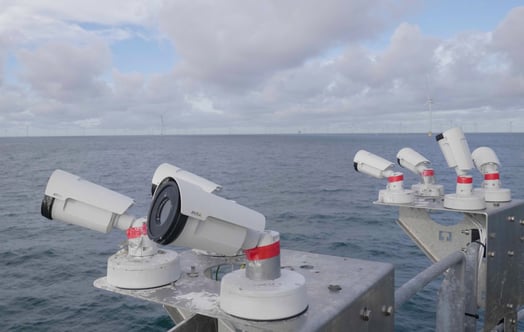
Thermal cameras shed new light on bird activity at sea
A thermal-camera and AI-system tested at Vattenfall’s Hollandse Kust Zuid offshore wind farm in the North Sea monitored bird movements around a turbine, day and night. As the technology work...
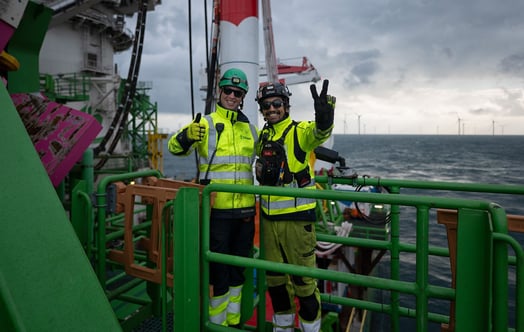
What it takes to build one of Europe’s largest offshore wind farms
In the German North Sea, the first visible signs of Nordlicht wind farm are beginning to emerge above the sea surface. By 2029, 112 wind turbines will make a strong contribution to the count...
Giant water heater makes district heating more flexible
In Diemen, the Netherlands, Vattenfall converts renewable electricity into heat for thousands of households.