
Laxeleratorn: exploring innovative solutions for safe fish passage
Over the next 20 years, all Swedish hydropower production will be environmentally tested and equipped to meet modern environmental standards.
Short facts
- Vattenfall’s Älvkarleby Laboratory, Sweden
- Eel and post-spawning salmon (kelt)
- Innovate solutions for up and downstream fish migration, investigate guidance efficiency, and study fish behaviour towards different rack designs and bypass systems
- Continuous
The challenge is to find solutions that reduce negative effects on ecosystems and biodiversity while minimising the impact on electricity generation.
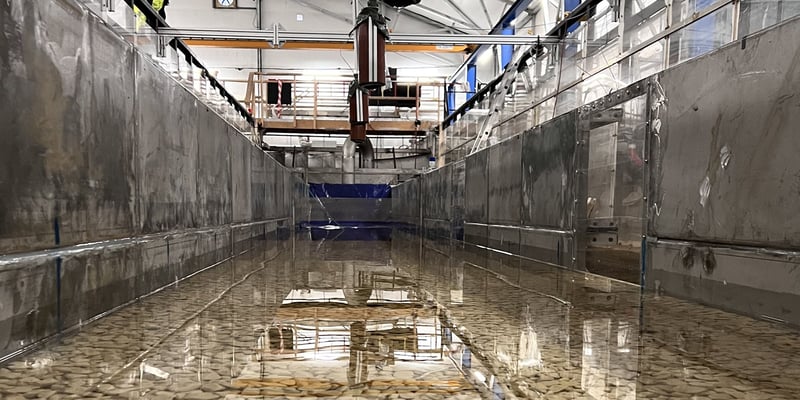
In 2017, Vattenfall invested in “Laxeleratorn,” a large-scale laboratory for hydropower-related environmental and hydraulic experiments. The facility focuses on innovations for safe fish passage, including intake racks and behavioural guiding systems.
Research has been conducted on the efficiency of various guidance solutions, eel behaviour, and how salmon reacts to changes in water conditions to establish design criteria for bypass systems.
Over the past two years, several studies have been conducted on different behavioural guidance systems, including “dancing rods” and improved bypass solutions. During 2025 and 2026, we are carrying out a behavioural study on fish, focusing on feeding behaviour under different hydropeaking flow regimes. The aim of the study is to increase knowledge of how hydropower regulation affects growth and population development in regulated rivers.
More about biodiversity
Biodiversity and nature protection are a priority at Vattenfall. It is one of the focus areas in our environmental policy and therefore also a central part in our environmental work.
How we make a difference for nature
Biodiversity is an important and integrated part of our work. Here, we show concrete examples of how we care for nature through our projects.
See also
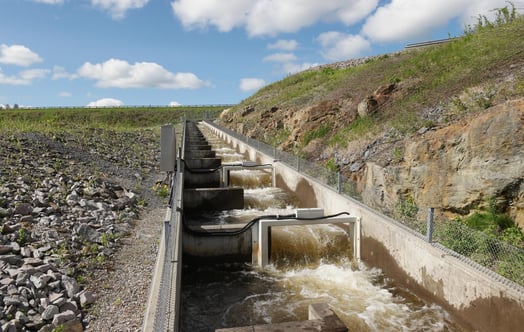
Building fish ladders at hydropower stations
Hydropower plants create barriers in rivers, limiting the ability of migrating fish species to travel.
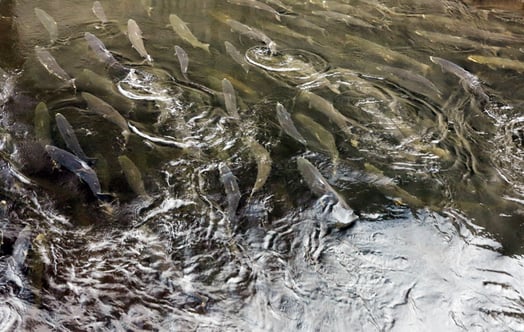
Exploring efficient fish passage: monitoring fish using AI
To ensure that the fish passage works efficiently, we initiated a project to test how AI can be used.
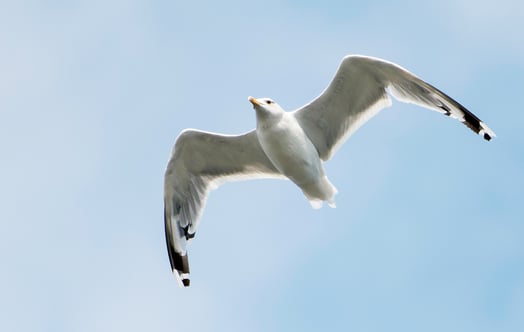
Adapting flight paths: a study on seabird behaviour around wind turbines
Flight behaviour has been studied in the EOWDC research programme.