
Building fish ladders at hydropower stations
Hydropower plants create barriers in rivers, limiting the ability of migrating fish species to travel upstream and downstream.
Short facts
- Sweden and Finland
- Migrating fish
- Improve fish migration
- Continuous
Migrating fish like salmon and sea trout face challenges in passing through hydropower stations, impacting their ability to reach spawning areas.
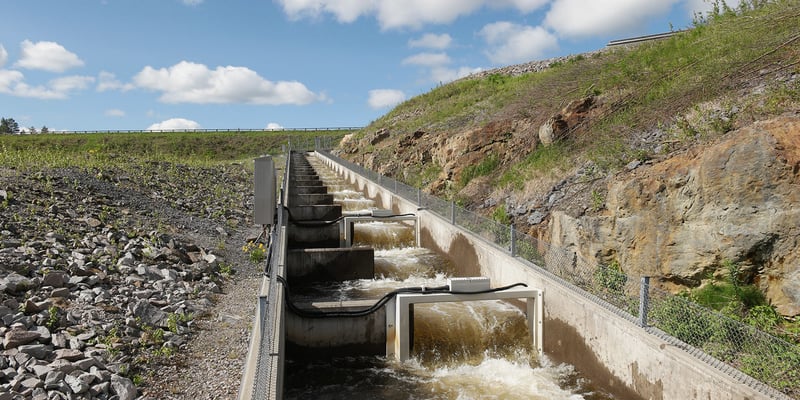
Fish ladders have been constructed at several hydropower stations, including Stornorrfors (Ume River), Hietamankoski, and Leuhunkoski (Kymmene River), to enable passage capacity for migrating fish.
In 2025, over 10,000 salmons and 400 sea trouts passed through the Stornorrfors fish ladder on their way to spawning areas in the river Vindelälven. Additional measures have been taken to facilitate fish migration in the old riverbed downstream of the hydropower plant.
The 300-meter-long ladder was put into operation in 2010. Vattenfall is, in collaboration with the Swedish University of Agricultural Sciences (SLU), also analyses how the downstream passage of salmon and troult kelts through Stornorrfors can be improved.
In Finland, Vattenfall is planning to build a fishway together with the Finnish state at a dam that is jointly owned and operated. The dam divides the flow between the artificial Lake Hirvijärvi, where Vattenfall owns a hydropower plant, and the original stream that bypasses the lake. A constant flow is already maintained in the original stream, but the fishway will enable migration of local fish populations. The project is currently in the design phase and does not yet have a permit.
More about biodiversity
Biodiversity and nature protection are a priority at Vattenfall. It is one of the focus areas in our environmental policy and therefore also a central part in our environmental work.
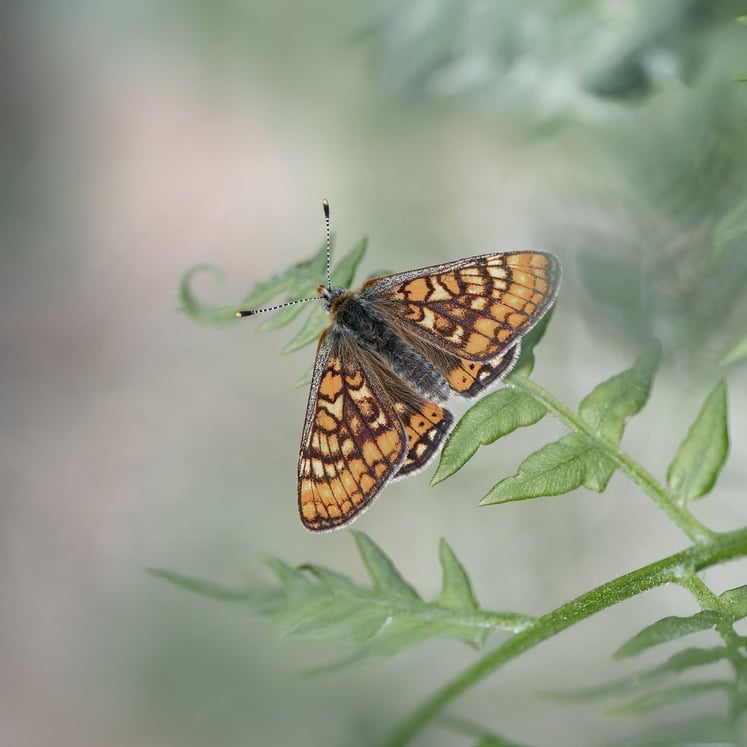
How we make a difference for nature
Biodiversity is an important and integrated part of our work. Here, we show concrete examples of how we care for nature through our projects.
See also
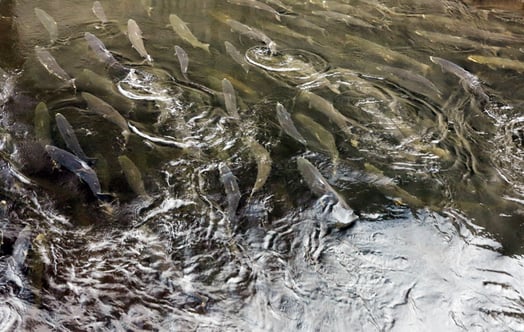
Exploring efficient fish passage: monitoring fish using AI
To ensure that the fish passage works efficiently, we initiated a project to test how AI can be used.
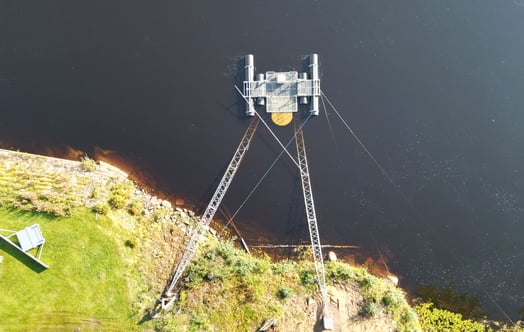
Ensuring safe fish passage: guiding fish using pumps
At large hydropower plants, guiding fish is complex and conventional intake racks are often too costly or impractical.
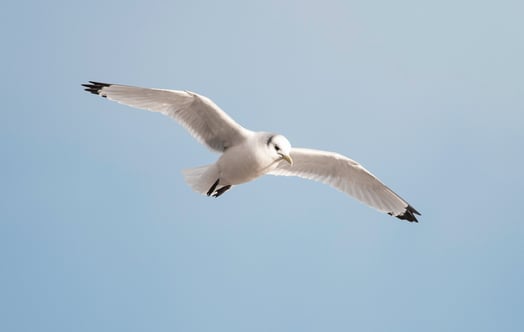
Advancing understanding of seabird collision risk using AI
The EOWDC study shows current tech can’t effectively track seabird 3D flight near wind turbines.