
Trialling camera and AI-based system for documenting bird collisions offshore
Understanding how often and under what circumstances birds collide has been a longstanding challenge for offshore wind development.
Short facts
- Hollandse Kust Zuid, the Netherlands
- Migrating small birds (passerines)
- Documenting the efficacy of a novel thermal camera and AI-based solution for documenting collisions at offshore turbines
- 2024–2025
Carcass searches, which are used at onshore wind farms, are not feasible offshore, and as a result there is very little available evidence to inform collision risk assessments for new developments.
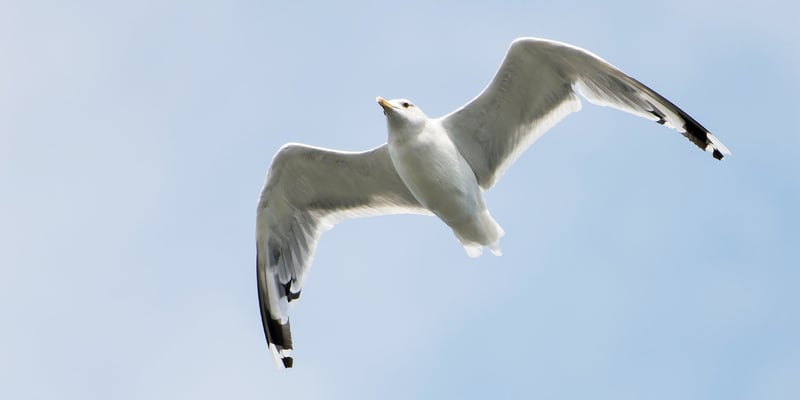
This could be about to change. Recent technological advances show great potential to finally provide robust evidence. To test this, we deployed a solution combining thermal cameras and AI to document collisions at one of the turbines at Hollandse Kust Zuid.
The solution provided by Wildlife Imaging System consists of 12 outward-looking cameras deployed at the base of the turbine. These monitor the entire area below the rotor for falling objects. This is complemented by four upward-looking cameras that provide context on activity in the rotor area.
A full year of data collection, including the spring and autumn migration periods, has now been completed, and data analysis is being carried out by independent experts from Wageningen Environmental Research. Results will be reported in mid-2026.
Read more at Sealab - windpark Hollandse Kust Zuid.
More about biodiversity
Biodiversity and nature protection are a priority at Vattenfall. It is one of the focus areas in our environmental policy and therefore also a central part in our environmental work.
How we make a difference for nature
Biodiversity is an important and integrated part of our work. Here, we show concrete examples of how we care for nature through our projects.
See also
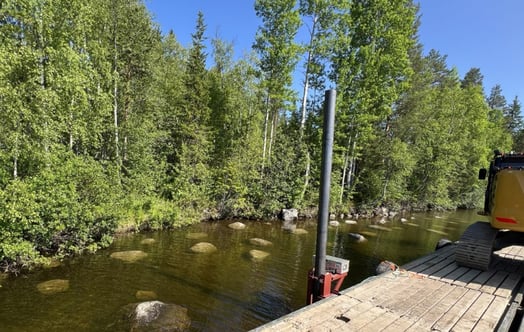
Restoring riparian vegetation in Umeälven
In regulated rivers with a high degree of hydropeaking (rapid, short-term fluctuations in river flow), natural erosion and sedimentation processes are altered resulting in unnaturally high e...
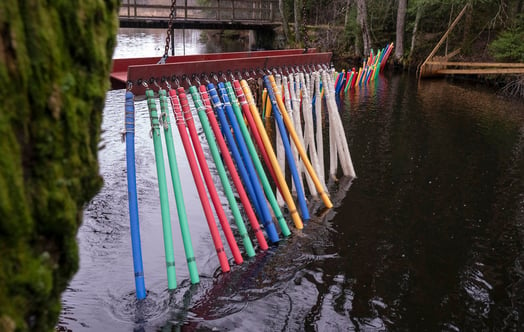
Testing “dancing rods” in practice
Vattenfall is testing new, behavioural guiding-methods to improve fish migration past hydropower stations.
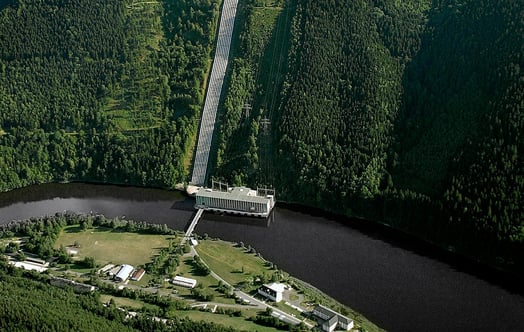
Biodiversity measures connected to hydropower in Germany
Working with biodiversity and various species is an integrated part of hydropower operations in Germany.