
Vattenfall invests in two offshore wind projects outside Gothenburg
Vattenfall is buying the majority share in two offshore wind projects off the coast of Gothenburg from wind power company Zephyr. Once fully developed, the projects are expected to generate 10.5 TWh of fossil-free electricity annually.
The two wind projects, named Vidar and Poseidon, are located between 25 and 27 kilometers off the Swedish west coast, north of Gothenburg. After the acquisition, Vattenfall’s ownership will amount to 85 per cent. Together with Zephyr, the early stage projects will be further developed and the necessary permits for establishment applied for. Vidar and Poseidon, which will primarily consist of floating wind turbines, are expected to have a combined capacity of 2.8 GW and an annual production of 10.5 TWh.
"Vattenfall aims to enable fossil-free living and to support industries and society at large on the Swedish west coast by providing more renewable electricity and this is an important step towards that target. These two projects will add significant volume of cost-effective fossil free electricity in an area with high demand. They will also support our development of the important floating technology which is expected to reduce the environmental impact of the wind farms, as well as enable offshore energy production at sites further away from shore," says Helene Biström, Head of Business Area Wind at Vattenfall.
"Zephyr is delighted to be able to continue with the development of the Poseidon and Vidar projects together with Vattenfall. There is a pressing need to ensure that new electricity generation can become a reality in southern Sweden, both for the climate and our society, which is facing a sharp increase in electricity consumption. Poseidon and Vidar, as large-scale offshore wind power projects, are in a good position to contribute significantly towards this," says Martin Pettersen, CEO of Zephyr Renewable.
About Zephyr:
Zephyr promotes renewable electricity generation, primarily through the development, construction and operation of wind farms. The company started in Norway in 2006 and since then has expanded its operations to Iceland and Sweden, the company’s Swedish office is located in Gothenburg. Since its inception, Zephyr has developed and built around 800 MW of wind power. It is owned by the Norwegian publicly owned power companies Østfold Energi, Vardar and Glitre Energi.
About Vattenfall:
Vattenfall is a leading European energy company which, for over 100 years, has electrified industries, supplied energy to people’s homes and modernized our way of life through innovation and cooperation. Vattenfall employs approximately 19,000 people and operates mainly in Sweden, Germany, the Netherlands, Denmark and the UK. Vattenfall is a leading player in offshore wind power with around twelve active off shore wind farms in Europe and a capacity of 9 GW under development.
See also
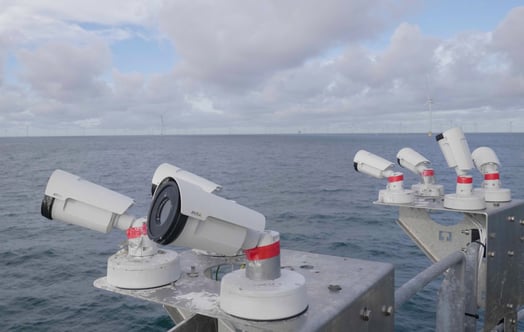
Thermal cameras shed new light on bird activity at sea
A thermal-camera and AI-system tested at Vattenfall’s Hollandse Kust Zuid offshore wind farm in the North Sea monitored bird movements around a turbine, day and night. As the technology work...
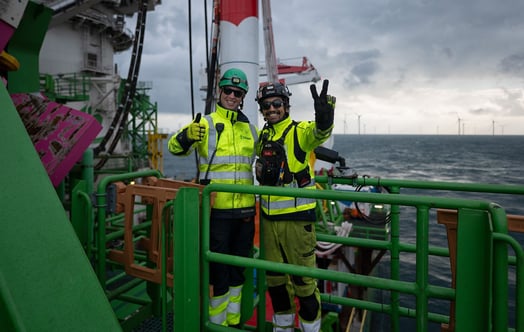
What it takes to build one of Europe’s largest offshore wind farms
In the German North Sea, the first visible signs of Nordlicht wind farm are beginning to emerge above the sea surface. By 2029, 112 wind turbines will make a strong contribution to the count...
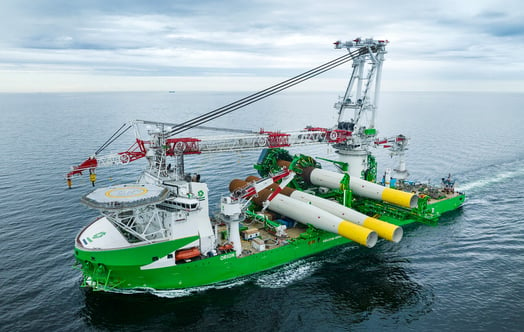
Vattenfall and Copenhagen Infrastructure Partners award DEME contract for foundation installation at Zeevonk offshore wind farm
Vattenfall and Copenhagen Infrastructure Partners (CIP), through their joint venture Zeevonk, have awarded a contract to DEME for the transport and installation of foundations for phase 1 of...