
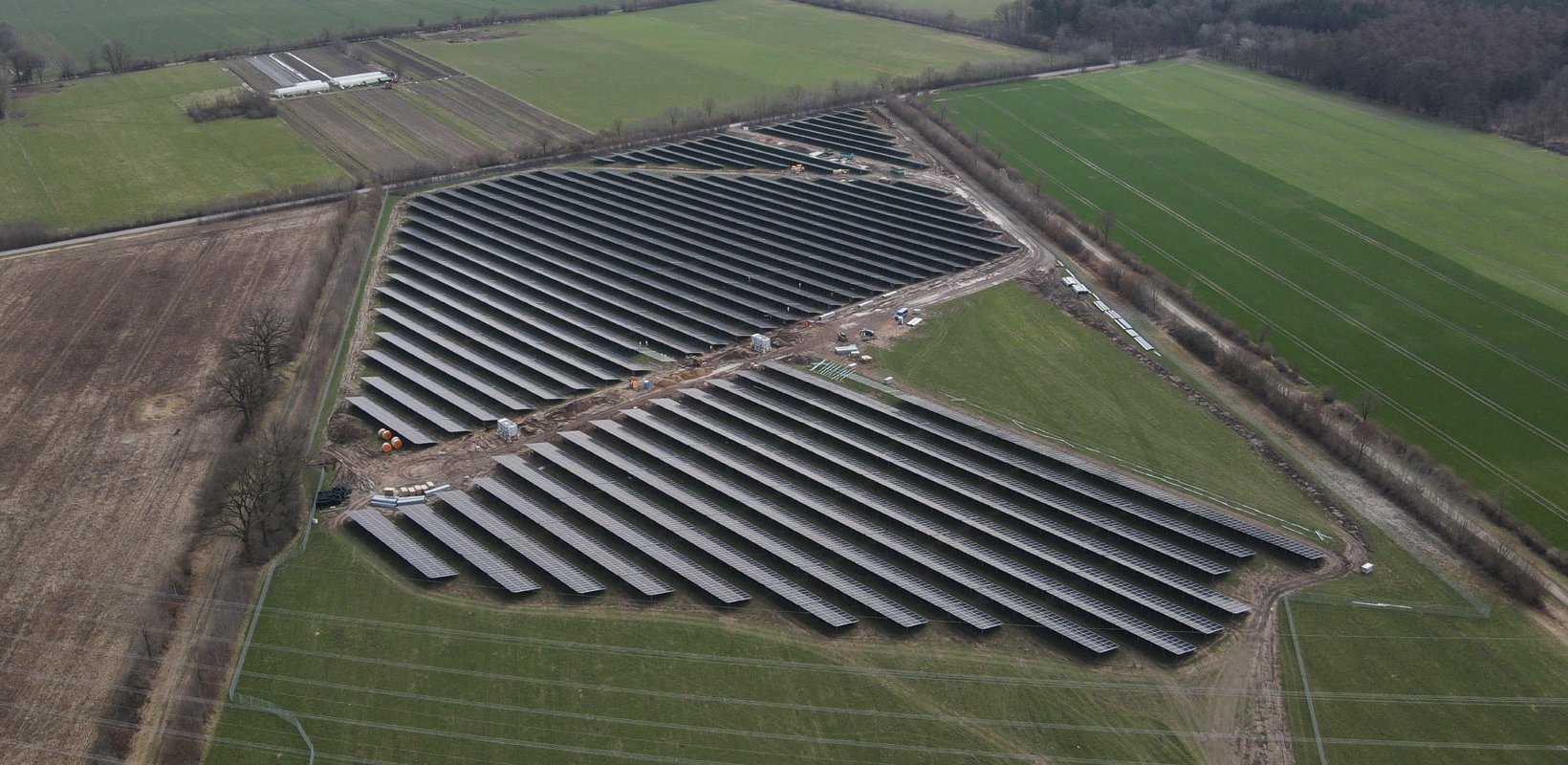
Vattenfall builds first solar park using low-emission steel
When building the large-scale solar park Juliusburg/Krukow in Germany, Vattenfall is reducing CO₂ emissions in the construction and supply chain by 67 percent by using low-emission steel from Swedish SSAB.
Generating solar power already makes a significant contribution to climate protection in Germany today. What has so far received little attention is the fact that the construction of solar parks also results in CO2 emissions. Vattenfall therefore aims to build solar and wind farms using materials produced with the lowest possible emissions.
At the Juliusburg/Krukow solar park project, Vattenfall is now using low emission steel for the substructures of the solar modules for the first time on the Krukow section of the site. The steel was produced from almost 100 percent scrap by the Swedish steel producer SSAB, resulting in a significantly reduced carbon footprint. Compared with conventional steel, SSAB Zero emits 67 percent less CO2.
Video player requires marketing cookies.
To view this content please click here to allow marketing cookies.
“The electricity generated from this solar farm will help reduce Germany’s dependence on imported fossil fuels. But for us fossil freedom does not end with electricity generation – it starts right at the beginning of the supply chain. That is why we are pleased to take this pioneering step together with our partner SSAB, using low emission steel for the substructures. By leading the way as a company, we support the long-term societal goal of becoming fossil free” says Claus Wattendrup, Head of Solar & Batteries at Vattenfall.
“This project shows that when clean energy generation such as solar power is combined with low‑emission materials, the climate footprint is reduced across the entire value chain. With SSAB Zero™, we are delivering decarbonised steel with the same performance and quality as conventional steel. Vattenfall’s decision to use it in this solar park is an important example of how ambitious customers can help scale solutions that reduce emissions and build demand for cleaner materials," says Matts Nilsson, VP & Head of Sales, SSAB Europe.
Facts about Juliusburg/Krukow solar park:
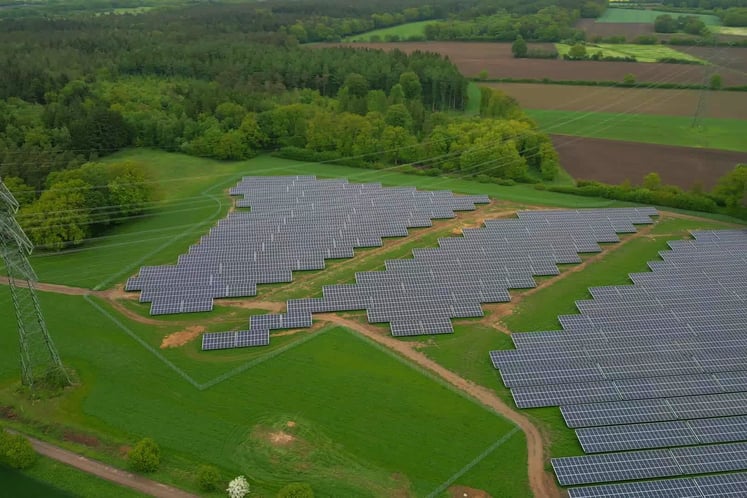
- The Juliusburg/Krukow solar park is in the district of Herzogtum Lauenburg in n the German state of Schleswig-Holstein, close to the municipalities of Juliusburg and Krukow from which it takes its name.
- With a nominal capacity of 80 megawatts (MWp), the solar park will be able to generate up to approximately 80 GWh of fossil-free solar electricity per year.
- The total site covers an area of approximately 74 hectares.
- Vattenfall is using low-emission steel from its Swedish partner SSAB for the substructures of the solar modules (PV mounting systems) on the Krukow section of the site. Compared with the use of conventional steel, this reduces CO2 emissions in the construction and supply chain by 67 percent – from 460 tonnes of CO2 to 153 tonnes.
For further information, please contact:
Lutz Wiese, Vattenfall Media Relations Germany, +49 1 736 263 882, lutz.Wiese@vattenfall.de
Vattenfall Media Relations, +46 8 739 50 10, press@vattenfall.com
See also
Vattenfall and Royal Vopak team up to further integrate renewable energy into the Dutch power system
Vattenfall has signed a tolling agreement with Royal Vopak (‘Vopak’) for a portion of the planned battery energy storage system near Meeden in the province of Groningen, the Netherlands.
Vattenfall Business Area Wind maintains leader status in IRBC assessment
Vattenfall’s Business Area Wind has once again been recognised as a Leader in the IRBC assessment, reflecting continued progress in responsible and sustainable business practices.
Vattenfall batteries secure fossil-free electricity for Way Out West festival
The Way Out West festival in Gothenburg is one of the biggest in Northern Europe. This year the music festival it is powered by fossil-free electricity and battery storages from Vattenfall.