
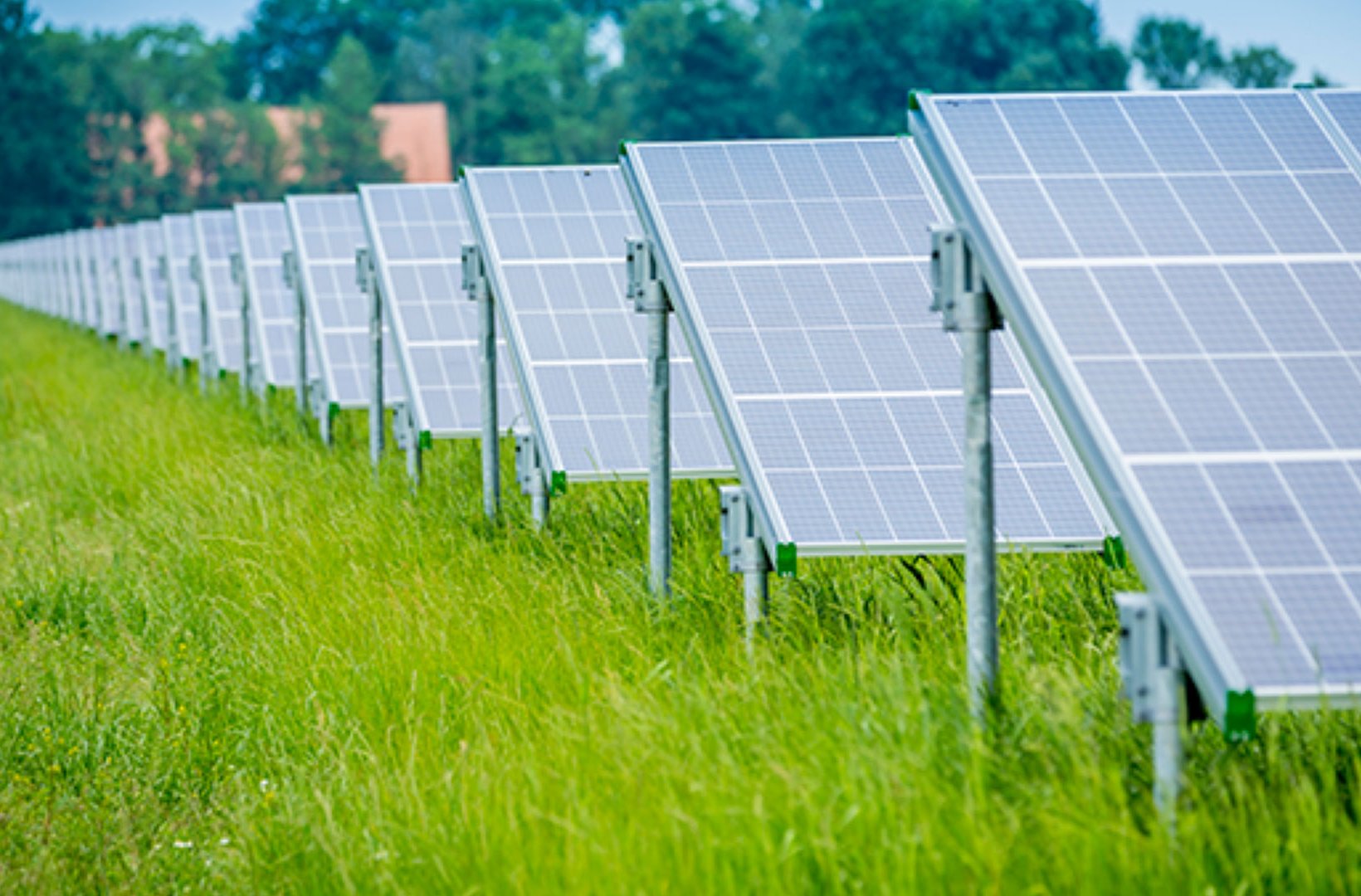
Smart land use: solar power and farming combined
Could farming and solar energy be combined to use valuable land twice? Vattenfall wants to investigate the important issue and is looking for collaboration with knowledge institutions to test this in practice.
In addition to the realization of solar panels on roofs of its customers, Vattenfall develops large solar park projects, primarily in The Netherlands.
Now Vattenfall wants to investigate how to combine agricultural land and solar panels.
“We regularly hear from farmers, politicians and nature organizations that they think it is a shame to use agricultural land for solar parks. By investigating whether we can also combine solar parks with agriculture, we want to increase the acceptance of our solar parks in the area,“ says Margit Deimel, Director of Large-scale Sun at Vattenfall.
Feasibility studies
Vattenfall first wants to investigate the feasibility of the concept. The effect on crops is examined and the technical consequences are mapped. By making double use of the scarce agricultural land in the Netherlands, the yield of each plot can increase significantly.
"From 100 percent yield from only agriculture or only solar panels on a plot, we expect the turnover to be 160 percent when both options are combined. The plot then supplies agricultural crops and sustainable energy,” she says.
“We want to work at different locations in order to find out what the optimal design is for such a solar park and what the optimal operating model is. For example, sufficient light must fall on the solar panels to generate energy, but also on the ground below so that crops can grow. The crops also need sufficient water and this must be provided. Of course we are not farmers, so we have to look for the right parties to use each other's knowledge.
Anything could potentially grow under the solar panels, but Vattenfall will focus on crops that do not grow too high.
“So most probably no corn, asparagus or bamboo. Think instead of crops such as cabbages, onions, potatoes, carrots or soft fruit," says Margit Deimel.
See also
From theory to practice – how circularity could permeate companies’ value chains
Most companies recognise the importance of circularity, but turning ambition into action remains a challenge. What does it take to move from ambition to action – and make circularity part of...
There’s a way to build a solar park using low-emission steel
In its new German solar park Vattenfall is using recycled, low-emission, steel for the mounting structures, offering 67 per cent CO2 reduction compared to conventional steel.
Why electrification cannot wait
When fossil-fuel prices rise, households and businesses feel the impact. Switching to fossil-free electricity can reduce that exposure. Europe worked hard to increase fossil-free electricity...