
Ruminating cattle account for a large part of agriculture's climate impact through methane emissions. Researchers are investigating how cultivated seaweed can be an important part of the solution.
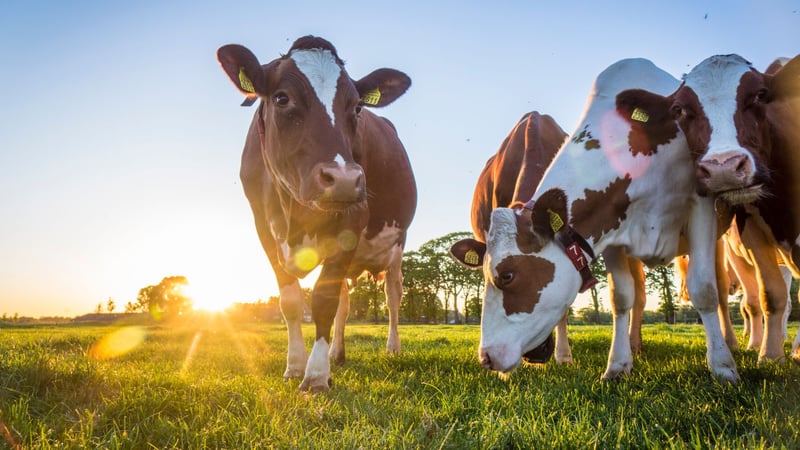
Cows who get red seaweed in their feed produce less methane, which is a potent green house gas. Researchers try to fine tune the mix. Photo: Adobe Stock.
In Vattenfall's current commercial campaign, iconic actor Samuel L. Jackson holds a bag of snacks made from seaweed grown at Vattenfall's Vesterhav Syd wind farm in Denmark. But seaweed can also contribute to climate change mitigation, such as the large climate emissions caused by cows ruminating.
Most promising is is the red algae Asparagopsis taxiformis. Studies have shown that mixing the algae in the cow’s feed reduces the production of methane in the rumen - one of the four stomachs of cows: the red algae contains certain substances that inhibit the microorganisms in the rumen that are responsible for methane production.
Methane reduced in both ends of the cow
Several studies have been carried out around the world to investigate the potential of the compound feed and possible drawbacks. Studies at the Swedish University of Agricultural Sciences showed that methane from feed digestion was reduced by 61 per cent when cows were supplemented with the red algae in their feed. In addition, emissions from cow faeces were reduced by 44%.
Studies have also been carried out at Aarhus University in Denmark, using another species of red seaweed that can be grown in the Nordic waters, Bonnemaisonia hamifera. These studies are also promising and show significant reductions in methane production.
"Some of the seaweed species grown at our latitudes are able to reduce the formation of methane in laboratory experiments. Now, we have to identify the responsible bioactive components and their influence in the cow", explains Mette Olaf Nielsen, Professor at Aahus University said in to The Cattle Site. Aarhus University professor wants to decriminalise cows | The Cattle Site.
EU authorisation for seaweed as a feed additive is still pending, but interest is growing rapidly. With the right regulation and production techniques, cultivated seaweed can become an important part of future climate-smart agriculture.
Register for our monthly newsletter THE EDIT
THE EDIT is Vattenfall's new monthly newsletter. Each issue highlights a new burning issue from the world of sustainable energy and fossil freedom.
See also
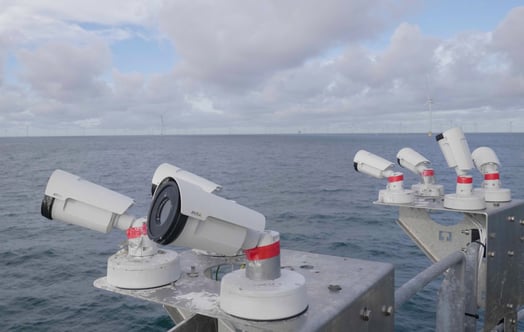
Thermal cameras shed new light on bird activity at sea
A thermal-camera and AI-system tested at Vattenfall’s Hollandse Kust Zuid offshore wind farm in the North Sea monitored bird movements around a turbine, day and night. As the technology work...
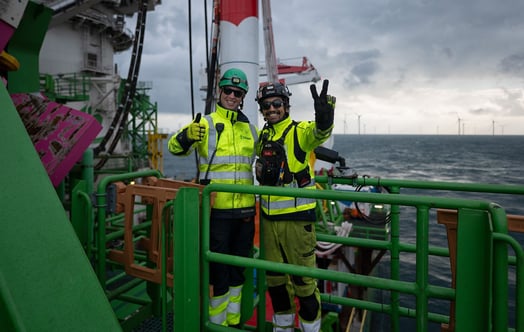
What it takes to build one of Europe’s largest offshore wind farms
In the German North Sea, the first visible signs of Nordlicht wind farm are beginning to emerge above the sea surface. By 2029, 112 wind turbines will make a strong contribution to the count...
Giant water heater makes district heating more flexible
In Diemen, the Netherlands, Vattenfall converts renewable electricity into heat for thousands of households.