
Vattenfall delivered a strong result for the first half of 2026. The result was impacted by high Nordic prices especially in the first two months of the year. In addition, higher hydro and wind power generation and positive developments in the customer business and distribution contributed. During the second quarter, Vattenfall has progressed on a range of projects across our portfolio, driving the electrification of the markets we operate in.
Video player requires marketing cookies.
To view this content please click here to allow marketing cookies.
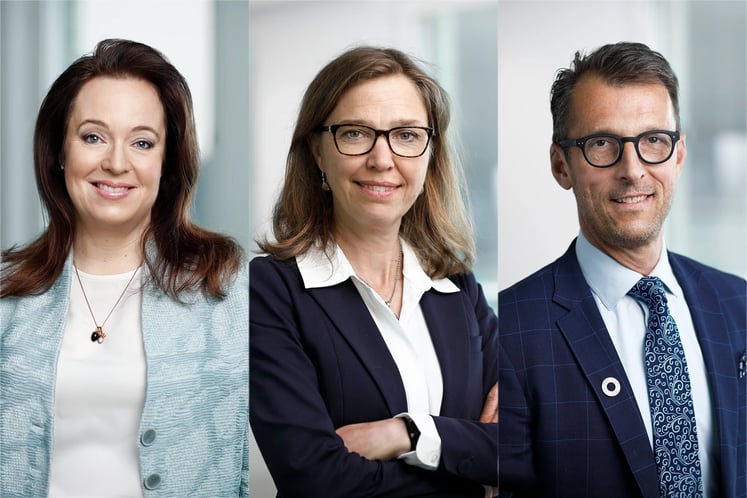
Click for an audiocast presentation with CEO Anna Borg and CFO Kerstin Ahlfont hosted by Head of Strategic Development Andreas Regnell.
Vattenfall’s President and CEO Anna Borg comments on the interim report for January-June 2026:
“Vattenfall remains determined to enable the fossil freedom that drives society forward. But to succeed, a stable and long-term investment framework is necessary. That is why we have been a consistent and clear advocate for maintaining the EU emission trading system (ETS), keeping it stable and free from ad hoc intervention. The frameworks provided by the European Commission will determine the investment climate for Vattenfall, our customers, and European industry as a whole.
High Nordic electricity prices at the beginning of the year
Average electricity prices in Vattenfall’s markets were higher during the first half of the year compared to the same period last year. The electricity prices in the Nordics were more than twice as high, mainly due to weak hydrology and higher consumption driven by cold weather. In Vattenfall’s continental markets, electricity prices were about 9% higher, mainly due to higher gas prices. Volatile times causes legitimate concerns among our customers, where many value predictability. We do what we can to support, and one way of doing that is through our offering of long-term contracts.
Positive development in underlying operating profit
Underlying operating profit for the first half-year increased by SEK 6.8 billion to SEK 22.1 billion, mainly due to higher prices in Vattenfall’s hydro and nuclear operations, higher volumes from hydro and wind power, as well as higher earnings from our German customer business and from distribution. However, the result in the second quarter was weighted down by lower nuclear volumes as well as lower earnings from ancillary services and pumped hydro. Profit for the period increased by SEK 12.7 billion to SEK 23.5 billion.
Supplier selection and agreement for new nuclear power
In June, the nuclear power company Videberg Kraft selected Rolls-Royce SMR as supplier for new nuclear power in Sweden. Detailed planning will now begin for three modular reactors at the Värö Peninsula, next to Ringhals. Later the same month, Vattenfall and the industry consortium Industrikraft reached an agreement with the Swedish state on risk-sharing, financing and future ownership of Videberg Kraft. The new ownership structure is expected to come into effect in 2027, with the Swedish state owning 60% of the shares in the company, while Vattenfall and Industrikraft will retain 20% each. The financing model and joint ownership together with the state is unique. The next step is for the Government to notify the project to the European Commission for state aid assessment. We now have an agreement in which the risks are shared between commercial actors and the state, based on the principle that the party best able to control a risk is also responsible for it.
Driving the energy transition through business partnerships
During the quarter, we made progress in a range of projects across the value chain. In southern Sweden, we inaugurated the Bruzaholm hybrid park, which combines wind power (139 MW) with battery storage (38 MW). Through a ten-year power purchase agreement with Volvo for 50% of the production, Vattenfall is providing long-term access to competitive electricity for Swedish industrial production. In our service operations business, we entered an eight-year strategic partnering collaboration with NCC and Svenska Kraftnät to expand and upgrade 450 kilometres of transmission grid in Västra Götaland. Through close collaboration, the partners aim to strengthen the operational capabilities and enable a more efficient build-out of the transmission grid.
In Germany, we commissioned the Juliusburg/Krukow solar power park (80 MWp), built with low emission steel that reduced emissions in construction and supply chain by 67%. Finally, in early July, Vattenfall installed the first monopile for the Nordlicht I offshore wind farm in the German North Sea. This is a milestone for Vattenfall, but also a meaningful contribution to the energy transition in our markets. Europe’s vulnerability from its dependence on fossil fuels has once again been exposed during the spring, with immediate effects on customers and businesses. Continued electrification, enabled by stable investment signals, is the way forward to ensure a competitive and secure Europe.”
First six months 2025
Business highlights, April–June 2026
- The nuclear company Videberg Kraft has selected Rolls-Royce SMR as supplier for new nuclear power at the Värö Peninsula in Sweden
- Agreement signed for sale of majority share in Videberg Kraft AB to the Swedish State
- Inauguration of the Bruzaholm hybrid park in Sweden, combining wind power (139 MW) with battery storage (38 MW / 38 MWh)
- Commissioning of two large-scale solar power parks in Germany with a total capacity of 126 MWp
- Vattenfall’s service operations business, NCC and Svenska kraftnät have initiated an eight-year collaboration to expand and upgrade 450 kilometres of transmission grid
Financial highlights, January–June 2026
- Underlying operating profit increased by 45% to SEK 22,132 million (15,316)
- Operating profit increased by 100% to SEK 28,860 million (14,434), whereof items affecting comparability SEK 6,728 million (-882)
- Profit for the period increased by 117% to SEK 23,529 million (10,828)
Financial highlights, April–June 2026
- Underlying operating profit decreased by 30% to SEK 4,739 million (6,814)
- Operating profit decreased by 20% to SEK 4,878 million (6,067), whereof items affecting comparability SEK 139 million (-747)
- Profit for the period increased by 14% to SEK 5,553 million (4,867)
See also
First quarter 2026: Vattenfall's CEO Anna Borg comments on the report
Vattenfall delivers strong results in the first quarter of 2026 driven by improved earnings across all operating segments.
Full-year 2025: Vattenfall's CEO Anna Borg comments on the report
In 2025, the underlying operating profit increased due to improved development of price hedging on the continent and improved results from the nuclear operations.
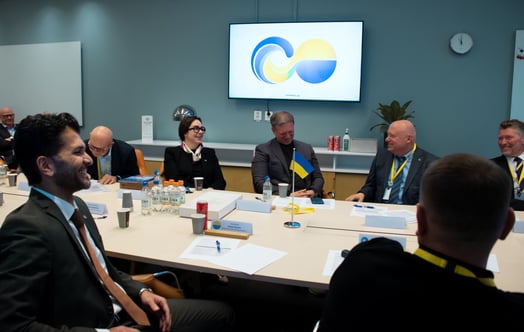
Vattenfall and Ukrhydroenergo launch knowledge exchange on the future of hydropower
Vattenfall and Ukraine’s state-owned hydropower company, Ukrhydroenergo, have launched a long-term knowledge exchange on the role of hydropower in future energy systems. Through the collabor...