
Mapping bat movements offshore: The Kattegat West Baltic Bats Project
Understanding bat movements over the sea between Denmark, Sweden, and the German Baltic coasts is crucial for offshore wind farm impact assessments. This knowledge also informs curtailment procedures to mitigate collision risks.
Short facts
- Kattegat Sea and Southwest Baltic
- Bats (nathusius’ pipistrelle, common noctule, parti-coloured bat, and soprano pipistrelle)
- Understand bat movements and mitigate collision risks through curtailment procedures
- 2023–2025
However, current knowledge in this area remains limited. To address this gap, the Kattegat West Baltic Bats Project (KABAP) coordinates multiple site-specific studies and compiles data to develop a comprehensive geographical overview of bat migration patterns in spring and autumn.
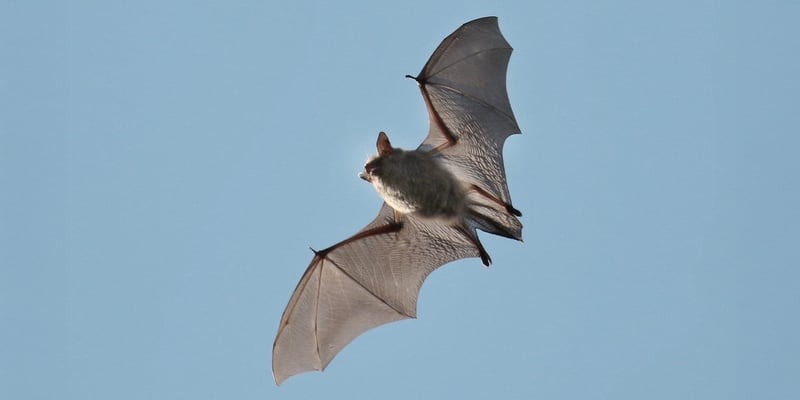
The project focuses on most common bat species in the area, such as Nathusius’ pipistrelle, common noctule, parti-coloured bat, and soprano pipistrelle. As bats are primarily nocturnal, their monitoring relies on recording calls with bat detectors.
In 2023, a large number of bat detectors were successfully installed on buoys and structures across the Kattegat Sea and the Southwest Baltic, west of the Island of Bornholm to collect data on bat movements.
The data were processed and analysed during 2024 and 2025. The data will contribute to two major offshore bat studies conducted by Danish Centre for Environment and Energy at Aarhus University.
One study examines the distribution of bats in Danish waters, while the other investigates interactions between bat occurrences, weather parameters, and turbine operational status to assess the need for curtailments that minimise collision risks.
Final report of Bat activity offshore, from Danish Centre for Environment and Energy (DCE)
The latter study demonstrated a very clear correlation between bat activity and wind direction in the North Sea. Other parameters, such as wind speed, temperature, and turbine operational status, also showed indications of interaction; however, none of these reached statistical significance.
Follow-up studies are planned for the period 2026–2029 in order to strengthen the statistical basis for these findings.
More about biodiversity
Biodiversity and nature protection are a priority at Vattenfall. It is one of the focus areas in our environmental policy and therefore also a central part in our environmental work.
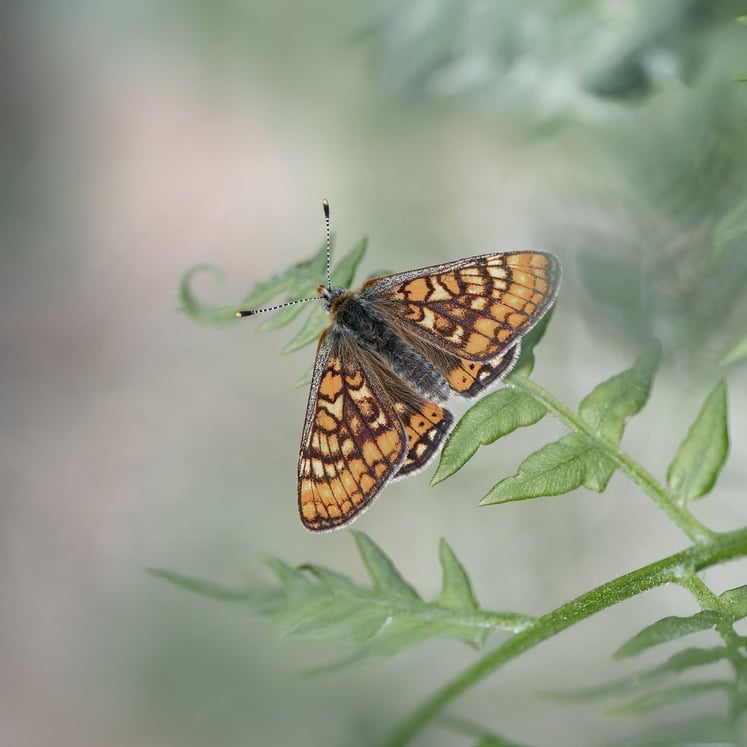
How we make a difference for nature
Biodiversity is an important and integrated part of our work. Here, we show concrete examples of how we care for nature through our projects.
See also
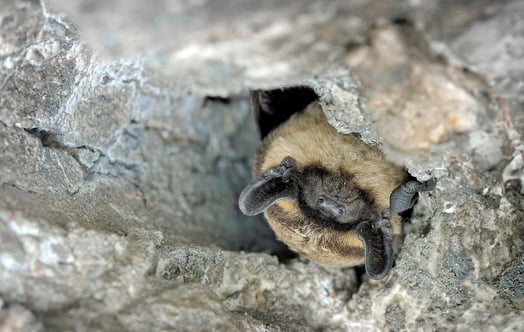
Biotope restoration and species protection
Biotope restoration and species protection play a vital role in adapting hydropower to the environment.
Advancing understanding of seabird collision risk using AI
The EOWDC study shows current tech can’t effectively track seabird 3D flight near wind turbines.
Nature inclusive design at Hollandse Kust Zuid
Nature-inclusive offshore wind design adds features to support native species.