Human rights
Respecting human rights is one of our fundamental responsibilities.
Vattenfall acknowledges that, as a company, we have a responsibility to respect all internationally recognised human rights and to contribute positively wherever possible.
We believe that social sustainability strengthens trust between companies, employees, and the communities we serve. We regard ethical labour practices and respect for human rights as fundamental responsibilities, recognising that upholding these values also contributes to an inclusive and resilient organisation.
We are aware that social impacts may occur in our value chain. We are committed to identifying, assessing and managing these potential impacts, while also evaluating social risks and opportunities.
Sustainability is an integral part of Vattenfall’s strategy and business model, and managing social impacts is a key element of our journey towards fossil freedom.
Our commitment
Our human rights commitments are grounded in internationally recognised frameworks, including:

Policies and key documents
Our commitments are reflected in our policies and key documents. Together, these documents set out our expectations for employees, suppliers, partners, and other business relationships.
- Human rights policy (PDF 343 kB)
- Human rights action plan (PDF 2 MB)
- Human rights assessment & gap analysis (PDF 2 MB)
- Human rights progress report 2025 (PDF 2 MB)
- Approach towards indigenous people in Sweden (PDF 347 kB)
- Code of conduct and integrity (PDF 687 kB)
- Code of conduct for suppliers and partners (PDF 522 kB)
- Guide to code of conduct for suppliers and partners (PDF 5 MB)
- Statement on slavery and human trafficking (PDF 665 kB)
- Privacy policy
- Whistleblowing policy
Governance and accountability
The Board of Directors and Executive Group Management oversee human rights matters as part of Vattenfall’s overall governance and risk management framework on an annual basis. The Executive Group Management and CEO have overall accountability for human rights within the Group.
Operational responsibility for managing human rights risks and impacts lies within each business area and staff function. The Corporate Sustainability team supports the business with expertise, guidance and coordination, including prioritisation and continuous improvement.
Human rights topics are reviewed annually as part of strategic planning, risk management and sustainability follow-up.
Human rights due diligence
Vattenfall applies a risk-based due diligence approach to human rights across its value chain. This includes:
- identifying and assessing actual and potential impacts
- integrating findings into relevant processes and decision-making
- taking action to prevent or mitigate adverse impacts
- tracking effectiveness
- enabling access to remedy
Human rights due diligence is integrated into project development, procurement, supplier management, and stakeholder engagement processes.
In 2021, Vattenfall engaged a third party to conduct a comprehensive human rights assessment across the value chain, which identified key areas of salient human rights risk. The findings continue to inform our prioritisation and actions.
Salient human right risks
Based on our assessment, the most salient human rights risks relate to:
Affected communities: Communities’ economic, social and cultural rights
Due to the nature of Vattenfall's operations, our activities may affect communities in the areas where we operate.
To identify and address potential impacts, our business areas conduct local consultation and engagement processes with affected communities before projects start. These processes typically involve landowners, local community representatives, neighbouring stakeholders, and other relevant parties. Engagement is supported through transparent, accessible and context-specific communication channels.
Recognising that each project and location is unique, our approach to engagement is designed to be flexible and proportionate to local circumstances. Where relevant, project-specific feedback and dialogue channels are provided to enable concerns to be raised and addressed.
For examples of our work related to community engagement, livelihoods and cultural heritage, please see our information on community investment in the UK, as well as our broader stakeholder engagement activities.
Affected communities: Rights of indigenous people
Indigenous peoples hold distinct rights under international human rights standards, including the right to be consulted on matters that may affect them. In Sweden, this includes the Sámi people, whose traditional livelihoods, such as reindeer husbandry, may be affected by activities in certain areas.
Vattenfall recognises that our operations may affect indigenous peoples and has established stakeholder engagement processes, guidelines and best practices to support respect for their rights. These are applied across relevant activities and are expected to be followed by workers in our own operations as well as by workers in the value chain employed by suppliers and partners.
Indigenous stakeholders are encouraged to engage directly with Vattenfall regarding concerns or perceived adverse impacts. Access to grievance and whistleblowing channels is also available.
Further information:
Approach towards indigenous people in Sweden (PDF 347 kB)
Grievance mechanisms and access to remedy
To provide access to remedy in cases where we may have caused or contributed to adverse impacts, we have a web-based Whistleblowing channel available in 11 languages, 24/7, 365 days a year.
We encourage any affected stakeholder, including but not limited to workers in our own operations and workers in the value chain (employed by suppliers and partners), to report concerns or irregularities caused by or linked to our activities, with the option to remain anonymous.
To learn more about our Whistleblowing channel and how reported issues are handled, see our Whistleblowing page.
Own workforce: Health and safety
Vattenfall's purpose of enabling fossil freedom that drives society forward can only be realised in a safe, inspiring and caring work environment for everyone who works at and for Vattenfall. Therefore, Health and Safety is at the heart of Vattenfall's strategy and a key component of running a sustainable business.
Health and Safety is managed systematically and proactively in line with the principles of ISO 45001. Our goal is zero accidents, injuries and work-related ill health, and we do not tolerate harassment of any kind.
We focus on sharing best practices and actively reporting hazards to identify and mitigate serious risks before they result in incidents. When incidents do occur, they are followed up through root cause analysis, continuous assessment, risk identification and training. Safe operating procedures are then developed and implemented, supported by preventive and corrective actions.
Own workforce: Diversity, equity and inclusion
At Vattenfall, our commitment to fossil freedom is inseparable from our commitment to people. Diversity, equity, and inclusion (DEI) are embedded in our core strategy, ensuring that diverse perspectives drive innovation and better decision-making. We aim to be the most inclusive workplace in the energy industry, creating an environment where every individual acts as a unique contributor to a sustainable future.
Workers in the value chain: Sourcing from conflict-affected or high-risk areas
Vattenfall’s own operations are not located in conflict-affected or high-risk countries. However, we recognise the potential for indirect exposure through the sourcing of minerals, fuels and other materials in our supply chain.
To mitigate this risk, our Code of Conduct for Suppliers and Partners includes additional requirements for suppliers and partners to assess whether their own supply chains source from conflict-affected or other high-risk areas, and to implement enhanced due diligence measures suited to the specific context. We have a risk evaluation methodology in place to identify the social and environmental impacts of mineral extraction for critical supply chains (for example wind turbines, e-mobility, batteries, solar panels) and assess the need for subsequent action plans.
In addition, we are actively engaged in industry initiatives such as Wind Europe and the Solar Stewardship Initiative, to collaborate with peers and advance collective efforts to address supply chain challenges.
For more information, see our Supply chain responsibility page.
Workers in the value chain: Supplier and contractor labour conditions
Vattenfall’s responsibility to respect human rights extends beyond our own operations. As our activities may impact workers throughout the value chain, we aim to ensure that labour rights are respected at supplier and contractor sites.
We expect labour conditions to be fair and just, including appropriate working hours, fair wages, safe working conditions and respect for freedom of association. We recognise that labour conditions and challenges vary across countries and sectors, and that risks may arise due to the nature of the energy industry and the complexity of supply chains.
To address these risks, Vattenfall has management systems and operational tools in place to assess, monitor, and promote responsible labour practices throughout the supply chain. Where suspected or actual labour-related concerns are identified, we apply audit processes and corrective action plans to mitigate adverse impacts on workers.
We also encourage suppliers and contractors to pursue continuous improvement in their own operations and supply chains.
For more information, see our Supply chain responsibility page.
Expectations on our suppliers and partners
We strive to work with others who are committed to conducting business in an ethical manner. Our Code of Conduct for Suppliers and Partners (the Code) sets out Vattenfall's sustainability requirements and expectations for suppliers and partners. We expanded the scope of the Code to include partners as part of our ambition to take greater responsibility and drive positive change across the value chain.
The Code is based on internationally recognised standards and principles, including the UN Global Compact, the UN Guiding Principles, and the OECD Guidelines, and is guided by the UN Sustainable Development Goals.
The Code explicitly addresses issues such as:
- modern slavery and human trafficking
- child labour and young workers
- forced labour
- working hours, wages, leave and benefits
- health and safety
- freedom of association and collective bargaining
- equality and nondiscrimination
- community engagement and protection of third-party rights
- information security
We require our suppliers to respect the rights of indigenous and tribal peoples and their social, cultural, environmental and economic interests, including their connection with lands and other natural resources.
Just transition and responsible decommissioning
Just transition is, in essence, about ensuring that no one is left behind in the transition to a decarbonised society. Vattenfall's ambition to enable fossil freedom that drives society forward, and the actions we are taking to achieve it, make the concept of a just transition highly relevant to us. The transition to a fossil-free society will inevitably affect both society and individuals, including local communities, customers, and employees throughout the value chain.
It is important to recognise that the transition will involve trade-offs and that, in some cases, it will not be possible to achieve outcomes that are favourable for all stakeholders. This is why keeping people at the centre of the transition is so important. By doing so, we can continue to identify and understand these trade-offs and engage with affected stakeholders to minimise negative impacts and maximise positive outcomes wherever possible.
Read more about Vattenfall’s ambitions for a just transition
Human rights defenders
Vattenfall does not currently have operations in countries considered to pose a high risk to human rights defenders. However, we are aware that some of the products we source may originate from, or be processed in, high-risk areas.
Vattenfall recognises that human rights defenders play an important role in identifying risks in our value chain. To reflect this, we have updated our Code of Conduct for Suppliers and Partners to state that we expect suppliers and partners not to engage in activities that undermine civil society or restrict civic freedoms.
Environmental impacts and human rights
A safe, clean and healthy environment is closely linked to the enjoyment of human rights. Vattenfall recognises that environmental impacts, if not properly managed, may adversely affect rights such as health, access to water and livelihoods.
We therefore apply environmental policies and management systems designed to prevent, reduce and mitigate adverse environmental impacts, including impacts on people.
Read more about our approach to preventing environmental impacts on the page Our environmental responsibility.
Working with human rights is an ongoing process
Our aim is to continuously improve our ability to identify, assess and manage human rights risks. This is an ongoing journey and will be driven not least by raising awareness of human rights related issues among our employees, suppliers, and other stakeholders.
We stay vigilant to be able to respond to new impacts/risks stemming from changes to our geographic presence, our business activities or products, or our business relationships. We aim to follow up and track the performance of our actions to mitigate negative impacts.
Future focus on human rights
Looking ahead, Vattenfall will place additional focus on addressing the salient human rights risks, particularly in areas where we see opportunities to further strengthen our management practices. This includes continued assessment of risks and impacts in high-risk sourcing contexts, engagement with external stakeholders, and deeper integration of human rights considerations into our processes, decision-making, and supplier evaluations.
Related content
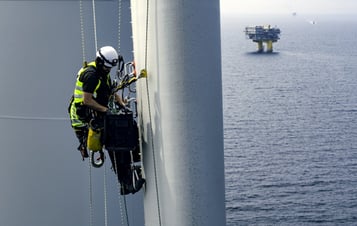
Health and Safety is a key component in running a sustainable business.
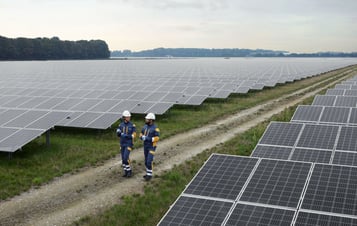
Our transformation should benefit society, local communities, and biodiversity.
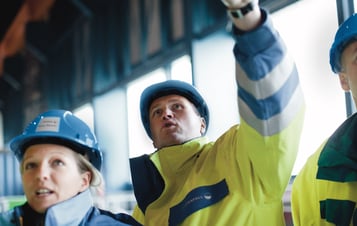
Ongoing dialogue helps us balance diverse stakeholder interests.