
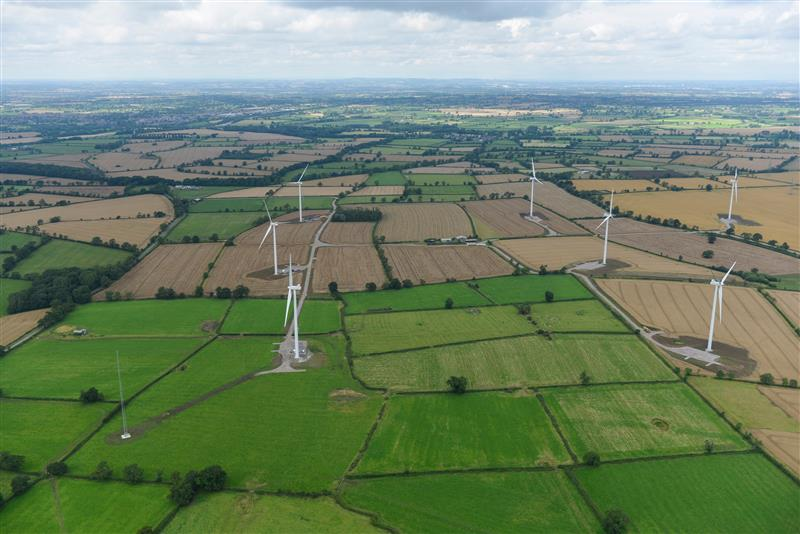
84% of UK public show support for local renewable energy infrastructure
- 84%1 of UK residents show support for the development and construction of renewable energy infrastructure, such as wind turbines or solar farms near their homes.
- 81%2 of respondents say they would be more likely to vote for a political party that supports low carbon energy initiatives.
- 57%3 of those surveyed believe that the increased use of renewables will cause energy costs to decrease or stay the same in the long term.
84%1 of UK residents show support for the development and construction of renewable energy infrastructure, such as wind turbines or solar farms near their homes, according to the Vattenfall Energy Barometer. The findings highlight growing public concern about the effects of climate change and a clear willingness to support renewable infrastructure in local communities.
The Vattenfall Energy Barometer has produced insights into the attitudes and behaviours of the UK population towards climate change. The barometer compares the UK results with four other countries: Germany, Finland, the Netherlands and Sweden.
As well as strong support for local renewable energy infrastructure, the research revealed that energy policy remains a decisive factor for voters, with large majorities favouring political parties that back low carbon energy and climate action. According to the survey of 1,000 UK respondents, 60% say a political party’s approach to energy policy will have a high influence on how they vote in the next general or local election. Only one in five (18%) say energy policy will not influence their vote at all4.
The data shows overwhelming support for political parties that champion low carbon energy projects and climate measures. 81%2 of respondents say they would be more likely to vote for a party that supports low carbon energy initiatives.
Among those surveyed, 57%3 believe that the increased use of renewables will cause energy costs to decrease or stay the same in the long term. Following this trend, a separate study recently conducted by the University College London, found that wind power generation between 2010 to 2023 reduced UK energy bills by approximately £104 billion5, a saving driven by lower wholesale electricity prices and reduced gas demand.
In addition, the research also found that a large majority of UK residents feel personally affected by climate change, most commonly through rising living costs, with more than half of respondents experiencing higher costs for essentials such as food and energy (59%), as well as hotter summers and more extreme weather (55%).
Further information
The Vattenfall Energy Barometer was carried out in partnership with Statista+. The survey was carried out between 13th November 2025 and 26th November 2025 and is the second time this research has been carried out. The survey method was an online survey in an access-panel (a pre-recruited group of individuals who have agreed to participate in online surveys). The target group was the general population aged 18 and above in Sweden, Finland, the Netherlands, Germany and the United Kingdom, quoted online representative by gender, age, and region. 1000 people were surveyed per country. The data within this press release covers the UK only.
A first wave of this research was carried out between October 10th 2024 and October 22nd 2024. The target group and research method was the same, but with the addition of France. The two waves were designed to capture developments over time, but no comparisons between both sets of data have been referred to within the above press release. The news release for the first wave can be found here.
- When asked "To what extent would you support the construction of renewable energy infrastructure (e.g., wind turbines, solar farms) near your home?", 84% said they would strongly support it or rather support it and 16% said they would strongly oppose it or rather oppose it.
- When asked "If a political party supports clean energy projects and measures to address climate change, would this make you more or less likely to vote for that party?", 81% said they would be much more likely or somewhat more likely.
- When asked "In your opinion, how will the increased use of renewable energy sources (such as wind farms and solar panels) affect energy costs in the long term?", 44% said energy costs will increase, 37% said energy costs will stay about the same, 20% said energy costs will decrease. Note: The 101% total here is due to each individual percentage being rounded to zero decimal places. This can result in a small discrepancy when the rounded figures are added together.
- When asked "When thinking about the next general or local election, how much will a political party’s energy policy influence your voting decision?", 17% said very much – it is a decisive factor in my voting decision , 43% said somewhat – it will play a role among several other issues, 22% said only a little – it will have only little influence; other factors matter more, 18% said not at all – it will not influence my vote.
- Wind power delivers £104 billion net benefit to UK consumers | UCL News - UCL – University College London
- When asked "In which of the following ways, if any, have you personally felt affected by climate change?", 59% said higher costs (e.g., for energy, food), 55% said hotter summers or more extreme weather, 38% said changes in nature or the environment in my area, 26% said emotional stress or worry about the future, 1% said other and 12% said I haven’t felt affected by climate change.
See also
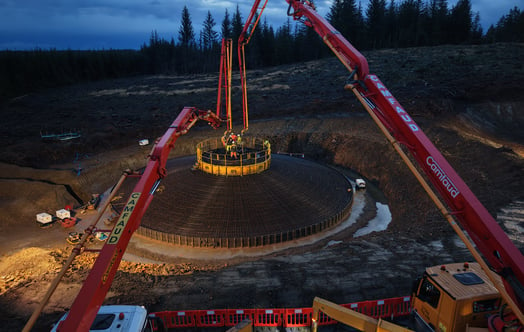
Lower-carbon foundations completed at Clashindarroch II wind farm
Vattenfall has completed all 14 turbine foundations at its 63MW Clashindarroch II Wind Farm in Aberdeenshire, a major construction milestone delivered in 11 weeks.
Early work starts on proposed Adlingfleet wind farm
Vattenfall is exploring proposals for a new onshore wind farm in the East Riding of Yorkshire and North Lincolnshire.
Vattenfall unveils plans for two new onshore wind farms in East Anglia
Vattenfall has revealed plans to develop two new onshore wind farms in East Anglia.