
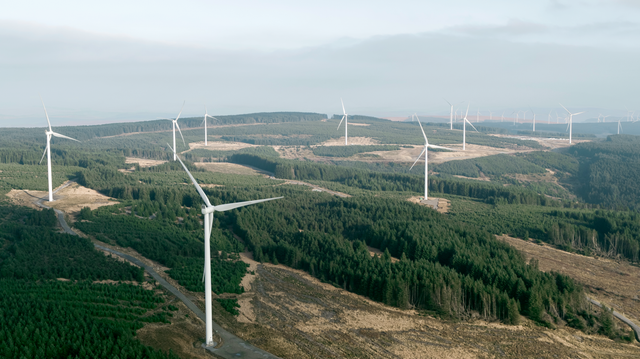
The cost of net zero? Lower bills and energy independence
Lisa Christie, Director of Public and Regulatory Affairs, outlines the importance and benefits of continuing the low carbon transition.
Achieving the UK’s net zero target by 2050 is more than an environmental necessity. It is an investment in resilience and economic stability.
Russia’s invasion of Ukraine has shown that energy security is now national security. So the shift from imported fossil fuels to domestic renewables strengthens our energy independence.
Every new wind and solar farm, and every new heat network reduces our dependence on volatile global gas markets. It also keeps more of the economic value of energy generation within the UK, supporting jobs, supply chains, and regional growth.
The volatility caused by overreliance on imported gas also exposed households and businesses to record price shocks. Renewable energy has proved to be the strongest defence against such price volatility.
A recent University College London study1 found that wind power generation from 2010 to 2023 reduced UK energy bills by approximately £104 billion, a remarkable saving driven by lower wholesale electricity prices and reduced gas demand.
This illustrates a crucial truth. Renewable power isn’t just better for the planet: it’s better for people’s wallets. As more low-cost wind and solar projects are developed and connect to the grid, they will help make energy more affordable and stable for years to come.
To secure this future, we must continue to expand and modernise our energy infrastructure. The UK needs stronger transmission and distribution networks capable of connecting clean generation to where it’s needed most.
It’s also crucial to remember that the UK does not “own” its oil and gas. The North Sea’s resources are extracted by private companies and sold on global markets. That means we are exposed to the same price volatility as everyone else, regardless of where production takes place.
There is no guarantee of cheap, home-grown power from fossil fuels, only the illusion of control. By contrast, renewables like wind, solar, and heat networks generate energy right here in Britain, reducing imports, increasing energy sovereignty, and keeping more economic value within our borders.
Those who claim that renewables are too expensive imagine a world where climate change carries no financial burden; where droughts, floods, and storms cause no damage to homes or infrastructure; where energy demand never grows; and where existing systems need no maintenance or replacement.
They also assume that oil and gas come without cost. In truth, it is more expensive to build and run fossil-fuel generation over the lifetime of an asset.
To reach net zero, we must continue dismantling outdated myths that renewables are unreliable or costly. They provide reliable, home-grown energy that strengthens energy security, reduces carbon emissions and drives down consumer costs.
However, the pace of progress depends critically on the strength of regulation and clarity of legislation. Investors, developers and local authorities need certainty to plan and deliver the projects that will power our low-carbon future.
By maintaining a clear policy focus, the UK can harness renewables to deliver affordable, stable and low carbon energy for generations to come. The path to net zero is not just about reducing emissions. It is also about building a stronger, more secure, lower cost future for all.
See also
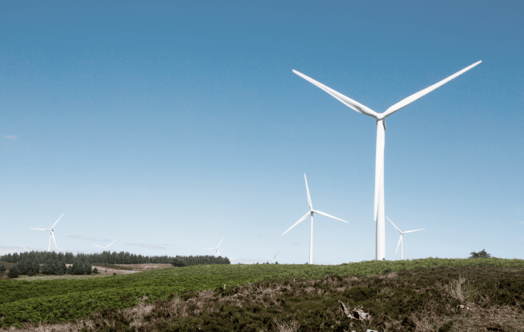
Vattenfall unveils plans for new Nottinghamshire wind farm
Vattenfall is exploring plans for a new onshore wind farm near the villages of Misson and Gringley-on-the-Hill in Nottinghamshire.
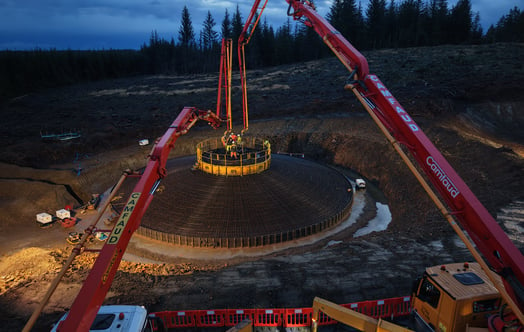
Lower-carbon foundations completed at Clashindarroch II wind farm
Vattenfall has completed all 14 turbine foundations at its 63MW Clashindarroch II Wind Farm in Aberdeenshire, a major construction milestone delivered in 11 weeks.
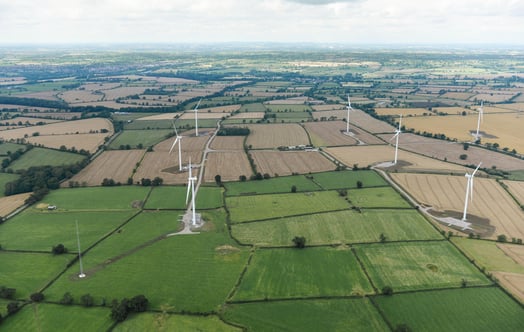
Early work starts on proposed Adlingfleet wind farm
Vattenfall is exploring proposals for a new onshore wind farm in the East Riding of Yorkshire and North Lincolnshire.